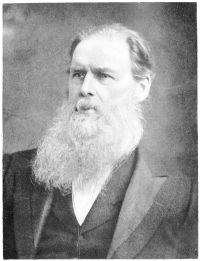
Edward B. Tylor

Edward B. Tylor

Summary

Portrait of Edward B. Tylor Edward B. Tylor Primitive culture, vol. 1 (of 2… (1871)

The myths shaped out of those endless analogies between man and nature which are the soul of all poetry, into those half-human stories still so full to us of unfading life and beauty, are the masterpieces of an art belonging rather to the past than to the present. The growth of myth has been checked by science, it is dying of weights and measures, of proportions and specimens—it is not only dying, but half dead, and students are anatomising it. In this world one must do what one can, and if the moderns cannot feel myth as their forefathers did, at least they can analyse it.
Source: Gutenberg

Portrait of Edward B. Tylor Edward B. Tylor Primitive culture, vol. 1 (of 2… (1871)

The battle of the storm against the forest and the ocean is still waged before our eyes; we still look upon the victory of man over the creatures of the land and sea; the food-plants still hide in their mother earth, and the fish and reptiles find shelter in the ocean and the thicket; but the mighty forest-trees stand with their roots firm planted in the ground, while with their branches they push up and up against the sky. And if we have learnt the secret of man’s thought in the childhood of his race, we may still realize with the savage the personal being of the ancestral Heaven and Earth.
Source: Gutenberg

Portrait of Edward B. Tylor Edward B. Tylor Primitive culture, vol. 1 (of 2… (1871)

The ordeal of the Key and Bible, still in use, is a survival; the Midsummer bonfire is a survival; the Breton peasants’ All Souls’ supper for the spirits of the dead is a survival. The simple keeping up of ancient habits is only one part of the transition from old into new and changing times. The serious business of ancient society may be seen to sink into the sport of later generations, and its serious belief to linger on in nursery folk-lore, while superseded habits of old-world life may be modified into new-world forms still powerful for good and evil.
Source: Gutenberg

Get perspective with Kwize: daily news enlightened by great literature