AI-generated from sources
The Universal Language and the Native Tongue, Music Between Art and Identity
In Brief
- Music faces a foundational tension between being a universal language of pure feeling and an authentic expression of specific cultural identity.
- The universalist perspective views music as an autonomous art form, operating in a self-contained world of emotion, independent of national or racial considerations.
- Conversely, the culturalist view asserts that music is inextricably linked to its origin, reflecting a people's temperament, history, and collective character.
- A genuine national music, exemplified by American compositional development, emerges as an organic byproduct of sincere artistic expression rather than a deliberate programmatic goal.
Main authors

A foundational tension has long animated the world of music, posing a fundamental question about its very nature and purpose. Is music a universal language, an art of pure feeling that transcends the specificities of time and place to communicate directly with a shared human spirit? In this view, its highest aspirations are formal beauty and emotional expression, governed by internal aesthetic laws that are independent of any national or racial identity [4, 7]. Or is music, conversely, an art form deeply rooted in the soil of a particular culture, an organic expression of a people's unique temperament, history, and experience? This perspective sees music's value in its authenticity, its ability to articulate the soul of a nation and serve as a vessel for collective identity [12, 13].
This enduring debate between the universal and the particular reveals a persistent conflict in how cultural value is defined. Composers and critics have historically navigated the crosscurrents between these two ideals, often feeling the pull of both simultaneously. The desire to create a work of timeless, 'supernational' merit can seem at odds with the imperative to forge a distinct national sound, especially for cultures seeking to establish their artistic independence [3, 22]. The path an artist chooses—or the balance they strike between these poles—shapes not only their creative output but also the way their work is received and understood, raising questions about whether music's power lies in its ability to erase borders or its capacity to draw them with vibrant, meaningful color.
The Autonomy of Pure Art
The conception of music as a universal and autonomous art form rests on the idea that its essence is fundamentally non-representational . Unlike painting or poetry, music offers no definite images or concrete ideas; it operates in a self-contained world of pure feeling, providing emotional tones without the specific objects or events that might have inspired them . This perceived independence from external reference has led thinkers like Walter Pater to posit music as the 'true type or measure of perfected art,' a condition of pure form and expression that all other arts aspire to but never fully achieve [6]. In this framework, music's ultimate purpose is beauty itself, an end rather than a means to convey a story or a moral . Its appeal is absolute, demanding no intellectual justification or association with the changing ideals of life, thereby standing as a reminder to all other arts of the essential artistic quality [5].
This view suggests that music is governed by permanent, universal psychological laws, which are distinct from the transient scientific rules or stylistic conventions of a particular era [8]. Critics who fail to distinguish between these temporary rules and the deeper, coeval laws of human psychology often make disastrous judgments . Consequently, proponents of musical autonomy argue that a composer's true personality and artistic worth will manifest naturally, without being forced into prescribed channels by non-musical considerations like nationalism or racial consciousness . To deliberately fetter art with such external purposes is seen as a dangerous step toward constraining life itself [9]. James Weldon Johnson's narrator is warned that limiting music to race or country is a fallacy, for 'anybody's music belongs to everybody' [1].
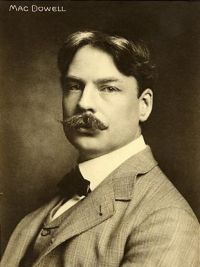
From this perspective, nationalism is seen not as a source of artistic vitality, but as an 'extraneous thing' that has no place in pure art [2]. Edward MacDowell argued that the national character of a melody resides in its superficial 'mannerisms,' which can be stripped away to reveal a universal musical theme, or even contradicted through harmonization . Therefore, attempts to engineer a national music based on popular or folk idioms are viewed with suspicion. Such efforts risk confusing mass appeal with artistic quality, a fallacy Daniel Gregory Mason identifies as a danger to the genuine development of American music [11]. Forcing an artistic identity based on what Charles Ives's contemporary called the 'jerk and rattle' of popular culture could lead to the creation of bad music, which is worse than no music at all, ultimately dishonoring the art form [10].
The Voice of the Soil
In direct opposition to the universalist ideal, another powerful tradition asserts that music is inextricably linked to the culture from which it springs. This viewpoint holds that no artist can fully escape the influence of their country and era, as the politics, customs, and temperament of a people invariably shape their creative output . A nation's music is thus seen as a direct and accurate reflection of its collective character; one could, it is suggested, discern the temperament of a race by the music it favors . This leads to a conceptual polarity between 'universal music,' exemplified by European masters like Mozart and Beethoven, and the 'folk song,' which is intensely local and smacks of the soil where it grew [14].
Folk music, in this context, is often described as a 'racial inheritance,' the common property of a people passed down through generations [15]. Its simple, seemingly artless character is seen as a natural and unconscious expression of the popular soul, disarming formal criticism . Even consciously created patriotic anthems, typically born in moments of national crisis, are believed to reflect the character of the people who sing them [16]. For some thinkers, this connection is so profound that to sever a nation from its cultural stories and music is to inflict a deep spiritual injury [17]. Each culture, in this analogy, is a unique instrument—a harp cannot play music written for a violin—and its people can only truly express themselves through their native melodies .
The creation of a genuine national music, therefore, cannot be a calculated or artificial process. It must arise organically from artists who are themselves part of the people and who pour the nation's life into their work [18]. This belief is often tinged with a sense of urgency and loss, as many observers at the turn of the 20th century believed the age of authentic folk song was over, killed by the advance of 'civilization' and the rise of musical experts who create music for the people, rather than allowing people to create it for themselves [19]. This perceived lack of a rich folk tradition in the United States fueled calls for American composers to find a distinctive voice by turning to indigenous sources—whether Native American, African American, or the emergent sounds of ragtime—as a bulwark against a 'featureless cosmopolitanism' and subservience to European models [20, 21].
The American Synthesis, Forging an Identity
The musical development of the United States provides a compelling case study of the tension between universal aspirations and the quest for a particular identity. The nation's musical life has long been defined by a conflict between the impulse to import European traditions and musical opinions, and the desire for a truly indigenous form of expression [27]. The central challenge has been to find a way to articulate a distinct national character that can still achieve universal appeal, allowing each nation to use the common language of music in its own way [23]. Writing in the mid-20th century, Roger Sessions offered a crucial insight, arguing that a genuine national character cannot be imposed from without as a programmatic goal. Instead, it must emerge organically as a 'by-product' of authentic artistic expression, growing from within the artist's own vision [26].
This points toward a potential synthesis where music can be both national and universal. The American school of composition has been seen as working toward a form of 'individualized cosmopolitanism,' where the artist, as a citizen of the world, draws on global expressions while remaining spontaneous and sincere [29]. In this model, the whole is greater than any of its parts, and the individuality of the creator is paramount . Country music has been cited as a contemporary example of this synthesis, a genre that speaks from the American heart yet captures universal themes of life, struggle, and joy, crossing cultural and linguistic barriers [24]. This suggests that art rooted in a specific experience can resonate globally when it taps into shared human emotions.
The evolution from a simple folk song, or Volkslied, to a complex symphonic work illustrates how music can retain its national character while advancing in sophistication. As a country's music develops, it inevitably incorporates methods and forms inherited from the broader international artistic tradition, yet the ancestral line to its humble, local origins remains traceable [25]. By the mid-20th century, a growing consensus in the United States recognized that the 'great line of western tradition' offered the most fertile source for American music's maturation, signaling a move away from overt nationalism [30]. This perspective emphasizes the importance of distinguishing between aesthetic or sociological theories about what music should be and the intrinsic artistic merit of individual works, which must ultimately stand on their own terms [28].
The discourse surrounding music's cultural value has been shaped by a persistent dialectic between the universal and the particular. On one side, a powerful tradition champions music as an autonomous art, whose highest achievement lies in its transcendence of national boundaries to express pure, unmediated feeling . This view values formal beauty and a supernational aesthetic, often regarding programmatic nationalism as an artistic constraint . On the other side, an equally compelling argument grounds music firmly in the cultural soil from which it grows, viewing it as the most authentic voice of a people's collective soul and unique experience . This tension has profoundly influenced composers and critics, particularly within the American context, where the struggle to reconcile imported European models with the search for an indigenous voice has been a central theme .
Ultimately, a lasting resolution seems to lie not in a victory for one pole over the other, but in a dynamic synthesis. The most resonant and enduring music often proves to be that which is at once deeply rooted in a specific cultural context and capable of speaking a universal language. National character, it seems, asserts itself most powerfully not when it is a self-conscious aim, but when it emerges as an unforced byproduct of an artist's sincere and individual vision . As global interconnectedness continues to dissolve cultural barriers, the challenge for artists evolves. It is less about choosing between a national or a universal identity and more about creating work that is profoundly personal and authentic, drawing nourishment from local roots to produce art that can resonate across a shared humanity .