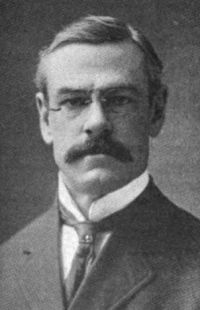
Walter Raymond Spalding

Walter Raymond Spalding

Summary

Portrait of Walter Raymond Spalding Walter Raymond Spalding Music: An Art and a Language

The day has passed when a composer could dash off symphonies by the dozen; quality and genuine personality in each work are the modern requirements. Thus from Brahms we have four symphonies, from Tchaikowsky six, from Bruckner nine—a dangerously large number!—from Sibelius five, from Elgar two, from d'Indy three; and, even if a composer write but a single really inspired and noble symphony—as for example, César Franck—he is in so far immortal. For the symphonic form is the product of too much intense striving (think of Beethoven's agonies of conception!)
Source: Gutenberg

Portrait of Walter Raymond Spalding Walter Raymond Spalding Music: An Art and a Language

Every one likes to listen to beautiful sounds merely for their sensuous effect, just as everyone likes to look at the blue sky, the green grass and the changing hues of a sunset; so the rhythm of music, akin to the human heart-beat and to the ceaseless change and motion, which is the basic fact in all life, appeals at once to our own physical vitality. This fact may be observed at a symphony concert where so many people are wagging their heads, beating time with their hands or even tapping on the floor with their feet
Source: Gutenberg

Portrait of Walter Raymond Spalding Walter Raymond Spalding Music: An Art and a Language

In all worthy music, in fact, the chief point of interest is the music itself which speaks to us in its own language of sound and rhythm. A knowledge of form is but a means to an end: for the composer, that he may express himself clearly and convincingly, and for the listener, that he may readily receive the message set forth. In Haydn's music we find the expression of a real personality—though of an artless, child-like type, without great depth of emotion or the tragic intensity of a Beethoven.
Source: Gutenberg

Get perspective with Kwize: daily news enlightened by great literature