Summary

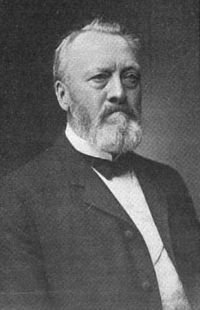
Portrait of W. S. B. Mathews W. S. B. Mathews The Masters and Their Music

We are still very far from understanding the relation between music and feeling. The most that is known about it as yet is that to a listener of even a very slight amount of experience the minor chord suggests unhappiness, while the major chord sounds brighter and more agreeable; a pleasant rhythm, somewhat lively, betokens cheerfulness; a slow and heavy rhythm betokens seriousness, perhaps sadness; but beyond this elementary beginning of musical feeling, which is common to the most insignificantly endowed individuality, there is a vast world of finer sensibilities connected with music.
Source: Gutenberg

Portrait of W. S. B. Mathews W. S. B. Mathews The Masters and Their Music

We have seen already how Bach managed to compose truly expressive music which, nevertheless, is first of all strong music, yet highly humoristic and fanciful. Then Haydn and Mozart introduced various types of pleasing and simply expressive melody, but it is only in occasional moments that their music touches the deeper feelings of the heart. It is music to admire for its cleverness, to enjoy at times for its sweetness and tenderness, and its fresh melodic symmetry; but it is only in very rare moments that the accent of emotional individuality is given.
Source: Gutenberg

Portrait of W. S. B. Mathews W. S. B. Mathews The Masters and Their Music

Symmetry in music is much more exactly observed than in literary composition, even in verse, since music itself is a matter of time and vibration, and the proportionate and mathematical relation of parts belongs to the very essence of the art. Every musical form, therefore, whether large or small, consists essentially of one leading idea and of two or more subordinate ideas, brought in with whatever cleverness of treatment the composer may find convenient, and the whole turned over and diversified according to his fancy.
Source: Gutenberg

Get perspective with Kwize: daily news enlightened by great literature