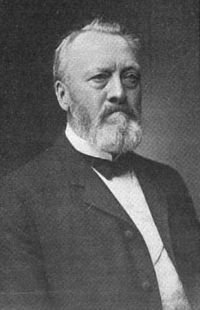
W. S. B. Mathews

Biographical details

Portrait of W. S. B. Mathews W. S. B. Mathews,  A Popular History of the Art of Music

“ The ninth symphony belongs to the period when Hegel was delivering his lectures upon the deepest questions of philosophy, and laying it down as a fundamental principle that it is the place of art to represent everything whatever, which sinks or swells in the human spirit; not alone all the noble and the lovely, but also the ignoble, the vicious, the unworthy, and particularly the tragic—to the end that the soul may learn to know itself, and awaken to a deeper and better self-consciousness. Beethoven felt the mental movement of his day. ”
Source: Gutenberg

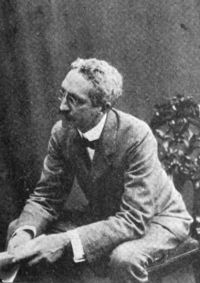
Portrait of W. S. B. Mathews W. S. B. Mathews,  The Masters and Their Music

“ We have seen already how Bach managed to compose truly expressive music which, nevertheless, is first of all strong music, yet highly humoristic and fanciful. Then Haydn and Mozart introduced various types of pleasing and simply expressive melody, but it is only in occasional moments that their music touches the deeper feelings of the heart. It is music to admire for its cleverness, to enjoy at times for its sweetness and tenderness, and its fresh melodic symmetry; but it is only in very rare moments that the accent of emotional individuality is given. ”
Source: Gutenberg

Portrait of W. S. B. Mathews W. S. B. Mathews,  A Popular History of the Art of Music

“ There were sonatas, or rather veiled symphonies; songs whose poetry might be understood without words; piano pieces both of a demoniac nature and of the most graceful form; sonatas for piano and violin; string quartettes, each so different from every other that they seemed to flow from many different springs. Whenever he bends his magic wand, there, when the powers of the orchestra and chorus lend him their aid, further glimpses of the magic world will be revealed to us. May the highest genius strengthen him! ”
Source: Gutenberg

Get perspective with Kwize: daily news enlightened by great literature