Summary

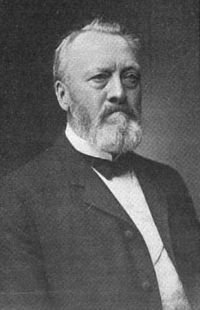
Portrait of W. S. B. Mathews W. S. B. Mathews A Popular History of the Art of Music

The ninth symphony belongs to the period when Hegel was delivering his lectures upon the deepest questions of philosophy, and laying it down as a fundamental principle that it is the place of art to represent everything whatever, which sinks or swells in the human spirit; not alone all the noble and the lovely, but also the ignoble, the vicious, the unworthy, and particularly the tragic—to the end that the soul may learn to know itself, and awaken to a deeper and better self-consciousness. Beethoven felt the mental movement of his day.
Source: Gutenberg

Portrait of W. S. B. Mathews W. S. B. Mathews A Popular History of the Art of Music

That form was the Sonata, which having been begun earlier, was developed further by the sons of Bach, but which received its characteristic touches from the hands of Haydn and Mozart. This was the crowning glory of the eighteenth century—the sonata. A form had been created, into which the greatest of masters was even then beginning to breathe his mighty soul, producing thereby a succession of master works, which stand without parallel in the realm of music.
Source: Gutenberg

Portrait of W. S. B. Mathews W. S. B. Mathews A Popular History of the Art of Music

And wherever there are lovers of refined, noble melody, there will the music of Mozart be loved. Moreover, in his best symphonies, such as the one in G minor, and the "Jupiter" in C, there is a boldness and freedom of flight which Beethoven scarcely surpassed. He was at his best as a composer of operas. He was one of the fathers of the artistic song, with music for every stanza differing according to the sentiment of the words; and while the dramatic coloration is not forgotten in his operas, they are a constant flow of charming, inexhaustible melody, which sings most divinely.
Source: Gutenberg

Get perspective with Kwize: daily news enlightened by great literature