Lohengrin

Definition and stakes

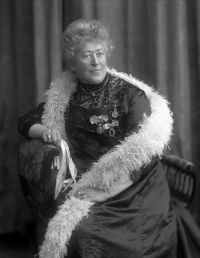
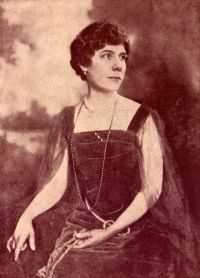
Portrait of Gertrude Hall Brownell Gertrude Hall Brownell,  The Wagnerian Romances

“ But Lohengrin had not been too far, nor too engrossed in going, to hear her words. The Knight of the Grail has sunk on his knees and joined his hands in prayer. All eyes are upon him, his eyes earnestly heavenward. For a long moment all is in motionless suspense. A white dove flies into sight, and hovers over the boat. With the gladness of one whose prayer is heard, Lohengrin rises and unfastens the chain from the swan; this vanishes from sight, leaving in its place a beautiful boy in shining garments, whom Lohengrin lifts to the bank. "Behold the Duke of Brabant! Your leader he shall be!" ”
Source: Gutenberg

John F. Runciman,  Old Scores and New Readings: Discussions on Music & Certain Musicians

“ Lohengrin, knight of the Grail, redeemer, yet with a touch of tragedy in his fate, drawn down the river in his magic boat by the Swan from a far mysterious land, a land of perpetual freshness and beauty, is an infinitely more poetic notion than the commonplace angel flapping clumsily down from heaven; and even if we feel it to be absurd that he should have to beg his wife to take him on trust, yet, after all, he takes his wife on trust, and he tells her at the outset that he cannot reveal the truth about himself. ”
Source: Gutenberg

H. A. Guerber,  Legends of the Middle Ages

“ Regretfully Lohengrin led her into the great hall, where, in the presence of the assembled knights, he told her that he was Lohengrin, son of Parzival, the guardian of the Holy Grail. Then, embracing her tenderly, he told her that "love cannot live without faith," and that he must now leave her and return to the holy mountain. When he had thrice blown his magic horn, the sound of faint music again heralded the approach of the swan ”
Source: Gutenberg

Get perspective with Kwize: daily news enlightened by great literature