Summary

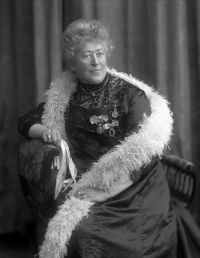
Portrait of Clara Tschudi Clara Tschudi Ludwig the Second, King of Bavaria

There are strange contrasts in Ludwig’s character; on the one side a yearning to escape from humanity, with its unnatural and stilted aspects, to unalloyed nature, to the stillness, the prayerful solemnity of solitude; on the other, even in his early years, an enthusiastic love of plastic art, combined with a delight in effective representations, for artificial brilliancy and pomp. So much, indeed, was this the case, that the thought cannot but arise in the mind that he was intended rather for the stage than for a throne.
Source: Gutenberg

Portrait of Clara Tschudi Clara Tschudi Ludwig the Second, King of Bavaria

On one occasion, when Nachbaur was ill, Ludwig wrote to him: “Take care of yourself. Do it for your family’s sake and to preserve your divine voice. Do it, too, for my sake. I ask it of you, I, the King, who otherwise am not wont to ask.” On another occasion he wrote to him: “We are both opposed to all that is meretricious and bad, and we glow with holy enthusiasm for everything that is lofty and pure. We will, therefore, all our lives be faithful and sincere friends.”
Source: Gutenberg

Portrait of Clara Tschudi Clara Tschudi Ludwig the Second, King of Bavaria

The sorrow at the demise of a highly venerated prince was mingled with sympathy for his successor, who had been brought up so strictly and in such loneliness. A heavy burden had with the mantle of kingship been laid on his shoulders; the father’s early death was no doubt a misfortune to the son. The seeds of mental morbidness which were slumbering within him would hardly have shot so soon into growth, nor perhaps would Maximilian’s principles of education have brought about such distressing consequences, had not Ludwig become King when he was in the midst of his development.
Source: Gutenberg

Get perspective with Kwize: daily news enlightened by great literature