“ THE LEGEND OF THE GRAIL. IN the history of mediæval romances there is none so complicated as that of the romance of the Holy Grail. Many a scholar has tried to solve the problem of its origin, and yet a final solution is still wanting. No one who has ever trodden the enchanted land on which the castle which contained the Holy Grail stood could entirely escape the charm that overhangs it. Just as difficult as was the ancient quest in romance, is the modern quest after the origin and sources of this remarkable and weird tale. ”
Grail
Definition and stakes
The Grail, a central motif in medieval literature, embodies mystery, spiritual pursuit, and symbolic depth. From the intricate origins of its legend to its depiction as a mystical vessel granting eternal youth or divine insight, the Grail has inspired a wide range of interpretations.
Scholars like Jessie Laidlay Weston emphasize its textual complexity, while Henry Osborn Taylor portrays it as a miraculous stone sustaining knights. Alfred Nutt connects it to Celtic folklore, and Sabine Baring-Gould underscores its sacred, almost divine characteristics. Across these viewpoints, the Grail remains a fluid symbol, reflecting both human aspiration and the enigma of transcendent truth.
Quotes about “Grail”
 Henry Osborn Taylor,
The Mediaeval Mind
(1911)
Henry Osborn Taylor,
The Mediaeval Mind
(1911)
“ Parzival did not say that he had been there too; but asked about the Grail. His host then told him of the valiant Templars who dwelt on Munsalvaesch, and rode thence on adventures as penance for their sins. "They are nourished by a Stone of marvellous virtue; no sick man seeing it could die that week; it gives youth and strength, and is called the Grail. To-day, as on every Good Friday, a dove flies from heaven and lays a wafer on the Grail, from which the Grail receives its share of every food and every good the earth or Paradise affords. ”
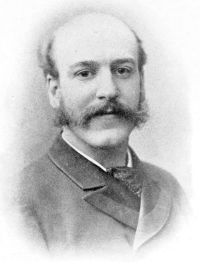 Alfred Nutt,
Studies on the legend of the Holy Grail
(1888)
Alfred Nutt,
Studies on the legend of the Holy Grail
(1888)
“ In the Grail romances the idea of wisdom is not associated with the Grail, the vessel, at all; it is either bound up with the fish, as in the Irish tale, or is the possession of the Fisher King as the wonder-working spells are the possession of Finn-eges. ”
Jessie Laidlay Weston, 1911 Encyclopædia Britannica (1911)
“ Students of the original romances are aware that there is in these texts an extraordinary diversity of statement as to the nature and origin of the Grail, and that it is extremely difficult to determine the precise value of these differing versions. [1] Broadly speaking the Grail romances have been divided into two main classes: (1) those dealing with the search for the Grail, the Quest, and (2) those relating to its early history. ”
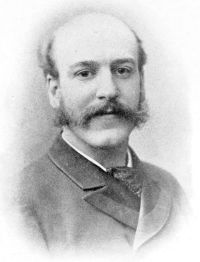 Alfred Trübner Nutt,
Studies on the Legend of the Holy Grail
Alfred Trübner Nutt,
Studies on the Legend of the Holy Grail
“ All night Perceval thinks of the lance and of the Grail, and in the morning, on waking, finds neither man nor woman. He sets forth to seek some one, but in vain, and is greatly distressed. (12) He finds a damsel weeping bitterly, who, seeing him, cries out: “Percevaux le Gallois, be accursed, unhappier art thou than ever, having been in the house of the rich Fisher King, and not having asked concerning the Grail. Thy Lord hates thee; and ’tis wonder the earth do not open beneath thee.” Had he not seen Grail and lance pass? ”
Alfred Trübner Nutt,
Studies on the Legend of the Holy Grail
“ If we rid our minds of the idea that there is a Grail legend, a definite fixed sequence of incidents, we need not be discouraged if we fail to find a prototype for it in Celtic tradition or elsewhere. We shall be prepared to examine every incident of which the Grail is a feature upon its own merits, and satisfied if we can find analogies to this or that one. And by so doing we are more likely to discover the how and why of the development of the legends as we find them in the romances. ”
 Sabine Baring-Gould,
Curious Myths of the Middle Ages…
(1866)
Sabine Baring-Gould,
Curious Myths of the Middle Ages…
(1866)
“ Spiritual blessings attended on the vision and custody of the sacred vessel; the guardians, and those who were privileged to behold it, were conscious of a mysterious internal joy, a foretaste of that of heaven. The material blessings are easier to be described. The Grail stood in the place of all food, it supplied its worshippers with the meats they most desired and the drinks most to their taste; it maintained them in perpetual youth. The day on which the Grail had been seen, its guardians were incapable of being wounded or suffering any hurt. ”
Alfred Nutt,
Studies on the legend of the Holy Grail
(1888)
“ Parzival and Conduiramur—The Parzival Quest and Faust—Wagner's Parsifal—The Christian element in the Legend—Ethical Ideas in the folk-tale originals of the Grail Romances: the Great Fool, the Sleeping Beauty—Conclusion. Few legends have attained such wide celebrity, or been accepted as so thoroughly symbolical of one master conception, as that of the Holy Grail. Poets and thinkers from mediæval times to our own days have used it as a type of the loftiest goal of man's effort. ”
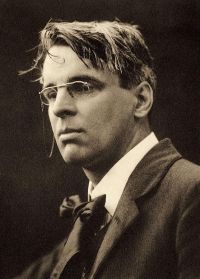 William Butler Yeats,
Ideas of Good and Evil
(1903)
William Butler Yeats,
Ideas of Good and Evil
(1903)
“ He wrote indeed of nothing but of the quest of the Grail, but it was the Heathen Grail that gave every man his chosen food, and not the Grail of Malory or Wagner; and he came at last to praise, as other men have praised the martyrs of religion or of passion, men with lucky eyes and men whom all women love. ”
Portal:The Folk-Lore Society, Folk-Lore (1907)
“ This much is certain: the Grail is perpetually treated as something strange, mysterious, awe-inspiring; its secrets are on no account to be rashly approached or lightly spoken of; he runs great danger who does so. Such terms could hardly be applied to the Adonis rites under ordinary conditions, and yet, as we have seen, the Grail story presents such a striking identity of incident with these rites that a connection between the two seems practically certain. ”
Alfred Nutt,
Studies on the legend of the Holy Grail
(1888)
“ Whilst some of the reasons which render the study of the Grail legends so fascinating, because so problematic, will probably always remain in force, others will vanish before the increase of knowledge. ”
Alfred Trübner Nutt,
Studies on the Legend of the Holy Grail
“ A large share of influence is assigned to Celtic traditions through the medium of Breton lais. The Early History of the Grail is a British legend, and embodies the national and schismatic aspirations of the British Church. The date given in the prologue to the Grand St. Graal, and repeated by Helinandus, is accepted as the genuine date of a redaction of the legend substantially the same as that found later in the Grand St. Graal. The word “Grail” is connected with the Latin gradale, modern gradual, and designated the book in which the tradition was first written down. ”
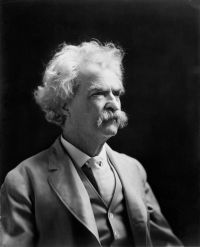 Mark Twain,
A Connecticut Yankee in King Arthur's Court
(1889)
Mark Twain,
A Connecticut Yankee in King Arthur's Court
(1889)
“ You see, he was going for the Holy Grail. The boys all took a flier at the Holy Grail now and then. It was a several years’ cruise. They always put in the long absence snooping around, in the most conscientious way, though none of them had any idea where the Holy Grail really was, and I don’t think any of them actually expected to find it, or would have known what to do with it if he had run across it. ”
Jessie L. Weston, From Ritual to Romance
“ If we wish to understand clearly the evolution of the Grail story we must realize that the simple Fertility Drama from which it sprung has undergone a gradual and mysterious change, which has invested it with elements at once 'rich and strange,' and that though Folk-lore may be the key to unlock the outer portal of the Grail castle it will not suffice to give us the entrance to its deeper secrets. ”
Alfred Nutt,
Studies on the legend of the Holy Grail
(1888)
“ Grail legend, romance or cycle, origin of according to Birch-Hirschfeld 120, 159, Christian element in 217, genesis and growth of 225-27, popularity of 228, 230, development of ethical ideas in 235 et seq., 248, future of 259, 265. ”
Jessie L. Weston, From Ritual to Romance
“ The gradual process of our investigation has led us to the conclusion that the elements forming the existing Grail legend—the setting of the story, the nature of the task which awaits the hero, the symbols and their significance—one and all, while finding their counterpart in prehistoric record, present remarkable parallels to the extant practice and belief of countries so widely separate as the British Isles, Russia, and Central Africa. ”
Jessie Laidlay Weston, 1911 Encyclopædia Britannica (1911)
“ Why does a sacred relic provide purely material food? What connexion can there be between a precious stone, a baetylus, as Dr Hagen has convincingly shown, and Good Friday? These, and such questions as these, suggest themselves at every turn. Numerous attempts have been made to solve these problems, and to construct a theory of the origin of the Grail story, but so far the difficulty has been to find an hypothesis which would admit of the practically simultaneous existence of apparently contradictory features. ”
Alfred Nutt,
Studies on the legend of the Holy Grail
(1888)
“ Walter Map probably wrote a Latin poem, from which Robert de Borron, the Grand St. Graal, and, perhaps, the other works of the cycle were derived. "Grail" is a bowl or dish. Chrestien may have borrowed his Conte du Graal from Map; the "Quest" is probably an after-thought of the romance writers. ”
Alfred Nutt,
Studies on the legend of the Holy Grail
(1888)
“ The hero is fain forthwith to ask about Grail and bleeding lance, but must sit him down by the rich King and tell of his adventures, about the chapel in which lay the dead Knight, and the black hand, the child in the tree and the tree full of candles. The King makes him eat before answering his questions. Whilst at meat a damsel, fairer than flowers in April, enters with the Holy Grail, another with the lance, a squire with the broken sword. The hero asks about these talismans. ”
Jessie L. Weston, From Ritual to Romance
“ This survival is of extraordinary interest; it presents us with a curiously close parallel to the situation which, on the evidence of the texts, we have postulated as forming the basic idea of the Grail tradition—the position of a people whose prosperity, and the fertility of their land, are closely bound up with the life and virility of their King, who is not a mere man, but a Divine re-incarnation. ”
Jessie L. Weston, From Ritual to Romance
“ The main difficulty of our research lies in the fact that the Grail legend consists of a congeries of widely differing elements—elements which at first sight appear hopelessly incongruous, if not completely contradictory, yet at the same time are present to an extent, and in a form, which no honest critic can afford to ignore. ”
Alfred Nutt,
Studies on the legend of the Holy Grail
(1888)
“ The Didot-Perceval is probably the latest in date of all the members of the cycle. Before proceeding to examine our second point, which is whether the Grail itself really belongs to the original form of the Quest, or has been introduced into the Quest versions from the Early History, it will be advisable to summarise the opinions and researches of previous investigators. Light will thus be thrown upon many points of interest which have not received special examination in these pages. ”
Jessie L. Weston, From Ritual to Romance
“ Another African survival. CHAPTER VI The SymbolsSummary of results of previous enquiry. The Medieval Stage. Grail romances probably contain record of secret ritual of a Fertility cult. The Symbols of the cult—Cup, Lance, Sword, Stone, or Dish. Plea for treating Symbols as a related group not as isolated units. Failure to do so probably cause of unsatisfactory result of long research. Essential to recognize Grail story as an original whole and to treat it in its ensemble aspect. We must differentiate between origin and accretion. Instances. The Legend of Longinus. ”
Jessie L. Weston, From Ritual to Romance
“ If, as the result of the evidence set forth in these pages, the ultimate origin of the Grail story be finally accepted as deriving from a prehistoric ritual possessing elements of extraordinary persistence and vitality, then the mise-en-scène of that story is older than the Byzantine ritual. ”
Alfred Nutt,
Studies on the legend of the Holy Grail
(1888)
“ That which answers in the Mabinogi to the Grail Quest forms a clear and straightforward whole, the main features of which may be recovered from the Conte du Graal, but in varying proportions from the various sections of that work. ”
Alfred Nutt,
Studies on the legend of the Holy Grail
(1888)
“ In any case whether B and C do or do not afford proof of a nearer relationship than that of grandson and grandfather between the Grail-keeper and the achiever of the Quest, the chronology which bridges over 400 years in two generations is equally fantastic. ”
Alfred Nutt,
Studies on the legend of the Holy Grail
(1888)
“ This Christian legend was woven into the Breton sagas by the author of the oldest Grail romance; the theories of Provençal Spanish, or Celtic origin are equally untenable, nor is there any need to countenance the fable of a Latin original. ”
Jessie L. Weston, From Ritual to Romance
“ A prototype, containing the main features of the Grail story—the Waste Land, the Fisher King, the Hidden Castle with its solemn Feast, and mysterious Feeding Vessel, the Bleeding Lance and Cup—does not, so far as we know, exist. ”
Alfred Nutt,
Studies on the legend of the Holy Grail
(1888)
“ Grail (Quest of) , two forms 65-67, Perceval form 67, relation to Celtic origin hypothesis 68, 69, 80, 83, 86, object of according to different versions 88-90, original form of 91, 92, Perceval form older 93-94, 95-96, 105-06, 109-26, 131, 138, Mabinogi form of 139-44, 151, inconsistency of accounts respecting 180-81, two formulas fused in 181, constituent elements in 215-16, mode of transformation 220, 237-39, 243, 245, 248, 251, 252. ”
Alfred Nutt,
Studies on the legend of the Holy Grail
(1888)
“ But a story, to live, must appeal to moral as well as to æsthetic emotions. In the folk-mind this story sets forth, dimly though it may be, that search for the highest human felicity which is likewise a theme of the Grail romances. What better picture of this quest could be found than the old mythic symbol of the awakening of life and increase beneath the kiss of the sun-god. The hero of the folk-tale makes his way through the briars and tangle of the forest that he may restore to the deserted castle life and plenty ”
Alfred Nutt,
Studies on the legend of the Holy Grail
(1888)
“ Celtic tradition, origin of or elements in Grail legend, 7, how affected by placing of versions 68-69, opinions of previous investigators 97-107, Birch-Hirschfeld 111-113-14-15-17-20, Martin 121-24, Hertz 125, Grail apparently foreign to 151, 164-65, Carlin in 167-69, 170-71, 181, 183-84, Vessel in 184-88, Sword in 188-90, 191, 195, 197, 199, 208, origin of legend 215-18, 223-27, relation to mediæval romance 230, individualism in 231, woman in 231-33, the super-natural in 234, 235, chastity ideal 247, 248, 251, transformation of 255, 265. ”
Alfred Nutt,
Studies on the legend of the Holy Grail
(1888)
“ He only finds his sister and a niece. The former tells him concerning her brother, who went to Arthur's court; whereupon their mother died of grief. Perceval reveals himself, and is amazed at what she relates concerning the Grail and its guardian, and asks if he may come to behold it. She answers, Yes; whereupon he vows not to rest till he have found it. She attempts to dissuade him, but he remains firm. She then urges him to go to their uncle, who is a hermit, to whom he may confess the sin of his mother's death, and who will advise him concerning the Quest. ”
Alfred Nutt,
Studies on the legend of the Holy Grail
(1888)
“ MORDRAINS GG, Mordains Q, once Noodrans Ma, once Mordrach Ge——Baptism GG14, 15, Q6, 26, Ma3 Ge15——GG16, 17, vision of descendants 18, Q26——GG19, 20, stay on island 21, cf. Q19——GG27, Q36——GG29 Crudel, and blinding by Grail 37, 38, Q15, Ge15——retires to hermitage GG39, Q44——his shield GG50, Q6. ”
Alfred Trübner Nutt,
Studies on the Legend of the Holy Grail
“ D II. Welsh Quest, from Williams’ edition.E.—The so-called Grand Saint Graal, prose romance found in the MSS., both preceding the Merlin and the Queste, and preceding the Queste and the Mort Artur. Printed by Furnivall from Cambridge and Brit. Mus. MSS., together with a metrical English adaptation by Henry Lonelich, of about the time of Henry the VIth, in the already-mentioned Seynt Graal; and by Hucher, vols. ii. and iii., from a Le Mans MS.; will be quoted as Grand St. Graal, from Furnivall’s edition. ”
Reuben Post Halleck, History of American Literature
“ All things with which we deal, preach to us. What is a farm but a mute gospel? The chaff and the wheat, weeds and plants, blight, rain, insects, sun,—it is a sacred emblem from the first furrow of spring to the last stack which the snow of winter overtakes in the fields. ”
James W. Buel, Glimpses of America
“ Grass and grain have woven Nature’s beautiful covering over all the scars of battle, and once more the fields and orchards are laden with flowers, while the lowing of the cattle and the song of the contented husbandman are heard in place of the discordant drum and the ruthless clash of arms. ”
 Joseph Jacobs,
Indian Fairy Tales
(1892)
Joseph Jacobs,
Indian Fairy Tales
(1892)
“ I have long been lame in my feet, and I have got just one grain, and am carrying it to my children. The King's sons are sitting in the cellar eating their food; you go and fetch a grain from there; why should you take mine from me? ”
 Elizabeth Barrett Browning,
Aurora Leigh
Elizabeth Barrett Browning,
Aurora Leigh
“ For everywhere We’re too materialistic,—eating clay, (Like men of the west) instead of Adam’s corn And Noah’s wine; clay by handfuls, clay by lumps, Until we’re filled up to the throat with clay, And grow the grimy colour of the ground On which we are feeding. Ay, materialist The age’s name is. ”
