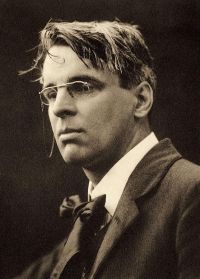
William Butler Yeats

William Butler Yeats

Summary

Portrait of William Butler Yeats William Butler Yeats Ideas of Good and Evil (1903)

Matthew Arnold asks how much of the Celt must one imagine in the ideal man of genius. I prefer to say, how much of the ancient hunters and fishers and of the ecstatic dancers among hills and woods must one imagine in the ideal man of genius. Certainly a thirst for unbounded emotion and a wild melancholy are troublesome things in the world, and do not make its life more easy or orderly, but it may be the arts are founded on the life beyond the world, and that they must cry in the ears of our penury until the world has been consumed and become a vision.
Source: Wikisource

Portrait of William Butler Yeats William Butler Yeats Ideas of Good and Evil (1903)

Some old magical writer, I forget who, says if you wish to be melancholy hold in your left hand an image of the Moon made out of silver, and if you wish to be happy hold in your right hand an image of the Sun made out of gold. The Sun is the symbol of sensitive life, and of belief and joy and pride and energy, of indeed the whole life of the will, and of that beauty which neither lures from far off, nor becomes beautiful in giving itself, but makes all glad because it is beauty.
Source: Wikisource

Portrait of William Butler Yeats William Butler Yeats Ideas of Good and Evil (1903)

And an Elizabethan Irish poet cries: 'Three things are waiting for my death. The devil, who is waiting for my soul and cares nothing for my body or my wealth; the worms, who are waiting for my body but care nothing for my soul or my wealth; my children, who are waiting for my wealth and care nothing for my body or my soul. O Christ, hang all three in the one noose.' Such love and hatred seek no mortal thing but their own infinity, and such love and hatred soon become love and hatred of the idea.
Source: Wikisource

Get perspective with Kwize: daily news enlightened by great literature