Tares

Definition and stakes

Sir Valentine Chirol,  India, Old and New

“ The Mutiny distorted it, and it remained obscured when the great experiment was found to result, like all human experiments, in the production of some evil as well as of much good. If the tares may have been sometimes more conspicuous than the wheat, we should ask ourselves whether our own lack of vigilance and forethought did not contribute to the luxuriant growth of tares in a soil naturally congenial to them. ”
Source: Gutenberg

Roger Williams,  The Bloudy Tenent of Persecution for Cause of Conscience Discussed and Mr…

“ That tares are not briars and thorns, but partly hypocrites, like unto the godly, but indeed carnal, as the tares are like to wheat, but are not wheat; or partly such corrupt doctrines or practices as are indeed unsound, but yet such as come very near the truth (as tares do to the wheat) , and so near, that good men may be taken with them; and so the persons in whom they grow cannot be rooted out but good wheat will be rooted out with them. ”
Source: Gutenberg

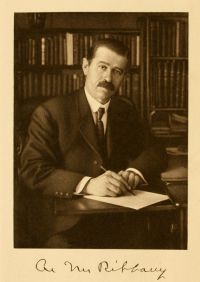
Portrait of Abraham Mitrie Rihbany Abraham Mitrie Rihbany,  The Syrian Christ

“ In the thirteenth chapter of Matthew, we have the parable of the wheat and the tares: "The kingdom of heaven is likened unto a man which sowed good seed in his field: but while men slept, his enemy came and sowed tares among the wheat, and went his way. But when the blade was sprung up, and brought forth fruit, then appeared the tares also."
The tare (zewan) is a grain which when ground with the wheat and eaten causes dizziness {147} and nausea, a state much like seasickness. For this reason this plant is hated by the Syrians, although they use tares very extensively as chicken feed.
”
Source: Gutenberg

Get perspective with Kwize: daily news enlightened by great literature