Gander

Definition and stakes

John S. Farmer,  Slang and its analogues past and present…

“ Gone Gander.—See Gone Coon.
To see how the gander hops, verb. phr. (American.) —To watch events. A variant of To see how the cat jumps.
1847. Porter, Big Bear, p. 96. Seein’ how the gander hopped I jumped up and hollered, Git out, Tromp, you old raskel!
What’s sauce for the goose is sauce for the gander, phr. (common) .—A plea for consistency.
Gander-month, subs. (common) .—The month after confinement; when a certain license (or so it was held) is excusable in the male. Also Gander-moon, the husband at such a period being called a Gander-mooner. Cf., Buck-hutch and Goose-month.
”

Source: Gutenberg

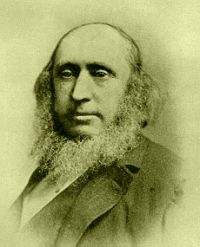
Portrait of R. W. Coppinger R. W. Coppinger,  Cruise of the 'Alert'

“ The sombre colour of the female is probably intended as a protection during the hatching time, when she remains almost continuously on the eggs, while the gander does sentry in some conspicuous position adjacent. Whenever at this time of the year a solitary gander is seen standing on a projecting point or headland, it may safely be inferred that his faithful consort is on her nest somewhere within sixty yards. ”
Source: Gutenberg

John Skelton,  The Poetical Works of John Skelton…

“ Palsgrave gives “Gant byrde,” without a corresponding French term. Lesclar. de la Lang. Fr., 1530. fol. xxxv. (Table of Subst.) . Our author in his Elynour Rummyng has—
“In came another dant,
Wyth a gose and a gant.”
v. 515. vol. i. 111; where gant is plainly used for gander. In the present passage, however, gaunte must have a different signification (“The gose and [131] the gander” being mentioned v. 435) , and means, I apprehend,—wild-goose: Du Cange has “Gantæ, Anseres silvestres,” &c.; and see Roquefort in v. Gans. But Nares, MS. note on Skelton, explains gaunte—gannet.
”
Source: Gutenberg

Get perspective with Kwize: daily news enlightened by great literature