“ Turk and Tatar The Tatars had arrived, swiftly and noiselessly, and a dozen of the warriors, still mounted, were surrounding him. His helpless condition aroused their curiosity, and while some of them hastily cut away his bonds and raised him to his feet, other plied him with questions in their own language. Rob shook his head to indicate that he could not understand; so they led him to the chief—an immense, bearded representative of the tribe of Kara-Khitai, the terrible and relentless Black Tatars of Thibet. ”
Tatars
Definition and stakes
The Tatars constitute an umbrella term that includes various Turkic-speaking ethnic groups found across Eastern Europe and Asia, historically connected to the Mongol Empire and later emerging as a distinct cultural and linguistic group. Once widely used to describe people from Central Asia, the term now mainly refers to groups such as the Volga Tatars, Crimean Tatars, and Siberian Tatars, who share linguistic and historical connections but evolved separately. Authors like L.
Frank Baum portrayed them as fierce warriors, while Isabel Florence Hapgood emphasized their business skills in Russian cities. Harold Lamb pointed out their honor-driven behavior, contrasting it with that of European monarchs. These differing depictions highlight the Tatars’ complex legacy as both conquerors and subjects, their identity shaped by interactions with Mongols, Russians, and other neighboring peoples, illustrating a dynamic exchange of cultures and enduring resilience.
Quotes about “Tatars”
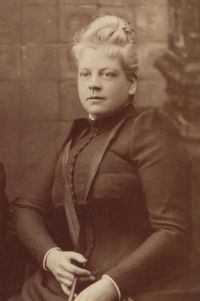 Isabel Florence Hapgood,
Russian Rambles
Isabel Florence Hapgood,
Russian Rambles
“ The Tatar quarter alone seemed to possess the requisite mystery and "local color." Here whole streets of tiny shops, ablaze with rainbow-hued leather goods, were presided over by taciturn, olive-skinned brothers of the Turks, who appeared almost handsome when seen thus in masses, with opportunities for comparison. Hitherto we had thought of the Tatars only as the old-clothes dealers, peddlers, horse-butchers, and waiters of St. Petersburg and Moscow. Here the dignity of the prosperous merchants, gravely recommending their really well-dressed, well-sewed leather wares, bespoke our admiration. ”
Various, The historians' history of the world in twenty-five volumes… (1905)
“ The Tatars urge them on night and day, killing those who become exhausted. Having reached the town, they are compelled to dig trenches or fill up fosses. In a siege the Tatars reck not of the loss of tens of thousands: hence they are invariably successful. When they capture a city they kill all without sparing either young or old, the beautiful or the ugly, rich or poor, those who submit or those who resist. No person, however distinguished, escapes this unrevokable penalty of death. ”
Related terms
Authors who wrote about “Tatars”
Peter Kropotkin and Charles Eliot Adèle Hommaire de HellVáclav Vratislav z MitrovicRobert N. Bain, David Hannay and William R. MorfillVarious
 Harold LambIsabel Florence Hapgood
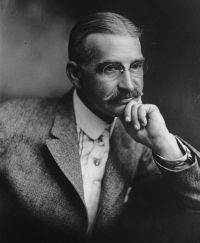 L. Frank Baum
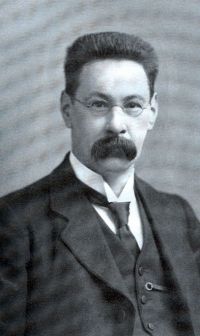 Sir Thomas Walker Arnold
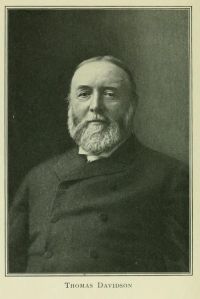 Thomas DavidsonMarco PoloMiss Pardoe
 F. Max MüllerAnton Pavlovich Chekhov
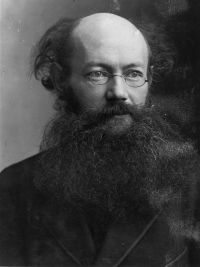 Peter Alexeivitch KropotkinChautauqua InstitutionP. Austin Nuttall
 Edward Burnett TylorJ. N. Larnedpublished by the National Geographic Society
Adèle Hommaire de HellVáclav Vratislav z MitrovicRobert N. Bain, David Hannay and William R. MorfillVariousHarold LambIsabel Florence HapgoodL. Frank BaumSir Thomas Walker ArnoldThomas DavidsonMarco PoloMiss PardoeF. Max MüllerAnton Pavlovich ChekhovPeter Alexeivitch KropotkinChautauqua InstitutionP. Austin NuttallEdward Burnett TylorJ. N. Larnedpublished by the National Geographic Society