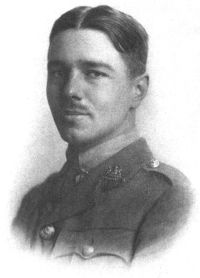
“ Was blood, his own. 'Well, blood is dirt,' I said. 'Blood's dirt,' he laughed, looking away, Far off to where his wound had bled And almost merged for ever into clay. 'The world is washing out its stains,' he said. 'It doesn't like our cheeks so red: Young blood's its great objection. ”
Blood
Definition and stakes
Blood, a vital fluid in the circulatory system, carries nutrients, oxygen, and waste products, sustaining life through its complex composition of plasma, red and white blood cells, and platelets. Authors have long examined its symbolic and literal roles: Wilfred Owen contrasted its visceral reality with existential decay, while H.
Clay Trumbull portrayed it as a sacred covenant between life and divinity. John Green Curtis praised its life-sustaining power, comparing it to celestial forces, and Sarah Josepha Buell Hale emphasized its irreplaceable role in vitality. From biological function to metaphysical resonance, blood represents both the fragility and resilience of existence.
Quotes about “blood”
Sarah Josepha Buell Hale, Mrs. Hale's Receipts for the Million
“ The Blood is the Life—never be Bled!—"He who loses a pint of blood, loses a pint of his life. Of what is the body composed? Is it not of blood, and blood only? What fills up the excavation of an ulcer or an abscess? What re-produces the bone of the leg or thigh, after it has been thrown off dead, in nearly all its length? what but the living BLOOD, under the vito-electrical influence of the brain and nerves! How does the slaughtered animal die? ”
H. Clay Trumbull, The Blood Covenant: A Primitive Rite and its Bearings on Scripture
“ And surely your blood, the blood of your lives, will I require; at the hand of every beast will I require it: and at the hand of man, even at the hand of every man’s brother, will I require the life of man. Whoso sheddeth man’s blood, by man shall his blood be shed: for in the image of God made he man. ”
John Green Curtis, Harvey's Views on the Use of the Circulation of the Blood
“ Indeed, the blood nourishes, fosters, and keeps alive all the parts which it constructs and adjoins to itself, even as the heavenly bodies above, especially the sun and moon, impart life to what is below, while they continue in perpetual circulation. Since, therefore, the blood acts beyond the powers of the elements and is potent with those virtues aforesaid, and also is the instrument of the supreme workman, no one ever will give praise enough to its wonderful and divine faculties. ”
H. Clay Trumbull, The Blood Covenant: A Primitive Rite and its Bearings on Scripture
“ Blood—even the blood of beasts—thus made sacred, as a holy symbol, must never be counted as a common thing; but it must be held, ever reverently, as a token of that life which is the sinner’s need; and which is God’s grandest gift and God’s highest prerogative. ”
Various, Lippincott's Magazine of Popular Literature and Science…
“ But that which makes the blood wonderful above all other fluids is its vitality. Our common expression, "life's blood," is no idle phrase. The blood is indeed the very throne of life. If its springs are pure and bountiful, if its currents flow strong and free, muscle, bone and brain grow in symmetry and power, and there is cunning to devise and the strong right arm to execute. ”
H. Clay Trumbull, The Blood Covenant: A Primitive Rite and its Bearings on Scripture
“ INSPIRATION THROUGH BLOOD. Because blood, as life, belongs to, and, in a peculiar sense, represents, the Author of life, blood has been counted a means of inspiration. The blood of the gods, in myth and legend, and again the blood of divinely accepted sacrifices, human and animal, in ancient and modern religious rituals, has been relied on as the agency whereby the Author of life speaks in and through the possessor of that blood. ”
Vesta J. Farnsworth, The House We Live In; or, The Making of the Body
“ Blood is made from the food you eat and the water you drink. If you eat good food it makes good blood. Bad food and drink make bad blood. It might be called the caretaker, or the housekeeper of the body. Without it your body-house would go to ruin; for the Bible says, “The life of all flesh is the blood.” After passing through the kitchen, serving room, and dining room, the blood enters a dark tunnel and comes to your heart. ”
“ Blood to the modern mind speaks of death, and usually of a violent and painful death. To the ancient mind, heathen or Israelite, blood stood for and symbolised life. “The Blood makes atonement by the Life that is in it.” ”
Thomas W. Hanshew, Cleek: the Man of the Forty Faces
“ The result of air coming into contact with the circulating blood of a human being is the formation of a blood-clot, and death is instantaneous the instant the clot reaches either the brain or the heart! ”
R. Austin Freeman, The Red Thumb Mark
“ The properties of blood are of great importance from a medico-legal point of view." "Can you tell us what happens when a drop of blood—say from a cut finger—falls upon a surface such as the bottom of an iron safe?" "A drop of blood from a living body falling upon any non-absorbent surface will, in the course of a few minutes, solidify into a jelly which will, at first, have the same bulk and colour as the liquid blood." ”
H. Clay Trumbull, The Blood Covenant: A Primitive Rite and its Bearings on Scripture
“ In these ceremonies, it is evident that the Zuñis, like the Orientals, [307] recognize the blood as the life, the heart as the epitome of life, the liver as a congealed mass of blood, and the transference of blood as the transference of life. Moreover, there is here a trace of that idea of the revivifying, by blood-bathing, of a being that had turned into stone ”
John Green Curtis, Harvey's Views on the Use of the Circulation of the Blood
“ Indeed, there is nothing to be met with in the animal body prior to the blood, or more excellent; nor are the spirits which they distinguish from the blood to be found anywhere separate from it; for the very blood itself, if without spirits or heat, does not deserve the name of blood, but of cruor.... ”
 Stephen Paget,
Experiments on Animals
Stephen Paget,
Experiments on Animals
“ But when the blood is driven with violence from the veins into the arteries, forthwith there is disease; and the blood is poured the wrong way into the arteries, and there withstands and dashes itself against the breath of life coming from the heart, and turns the course of it—and this forsooth is fever. ”
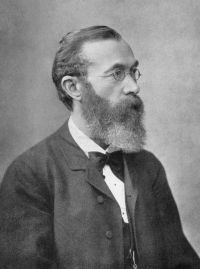 Wilhelm Max Wundt,
Elements of Folk Psychology
Wilhelm Max Wundt,
Elements of Folk Psychology
“ For, when we speak of a 'blood relationship' uniting those persons who stand close to one another through ancestry, the word 'blood' doubtless represents a sort of reminiscence of the old idea of a blood soul. To the dispassionate eye of the physiologist, the blood is one of the most unstable elements of the body, so that, so far as the blood is concerned, the father and mother certainly transmit nothing of a permanent nature to their descendants. ”
Julia Seton, The Short Cut to Regeneration Through Fasting… (1929)
“ The blood is the carrier of life to the physical body and it is breath, not food, that keeps the blood flowing in our veins. It is breath not food, that purifies the blood streams and keeps new, fresh, red, oxygenated blood going the rounds of the human tide. ”
John Green Curtis, Harvey's Views on the Use of the Circulation of the Blood
“ Therefore, as is the soul, so also is the blood to be reckoned the cause and author of youth and old age, of sleep and of waking, and even of respiration also—especially in view of this, that in the things of nature the first instrument contains within itself an internal moving cause. ”
William Harvey, The Works of William Harvey (1847)
“ Some, whilst they attempt to lessen the difficulty here, affirming that the blood is spirituous and arterious, virtually concede that the office of the arteries is to carry blood from the heart into the whole of the body, and that they are therefore filled with blood; for spirituous blood is not the less blood on that account. ”
H. Clay Trumbull, The Blood Covenant: A Primitive Rite and its Bearings on Scripture
“ That the blood of the living has a peculiar vivifying force, in its transference from one organism to another, is one of the clearly proven re-disclosures of modern medical science; and this transference of blood has been made to advantage by way of the veins, of the stomach, of the intestines, of the tissue, and even of the lungs—through dry-spraying. ”
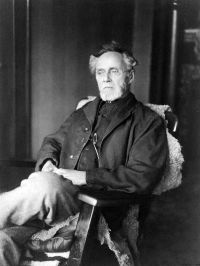 A. T. Still,
Philosophy of Osteopathy
A. T. Still,
Philosophy of Osteopathy
“ Blood is an unknown red or black fluid, found inside of the human body, in tubes, channels or tunnels. What it is, how it is made, and what it does after it leaves the heart in the arteries, before it returns to the heart through the veins, is one of the mysteries of animal life. ”
H. Clay Trumbull, The Blood Covenant: A Primitive Rite and its Bearings on Scripture
“ All my thought is, to ascertain what new meaning, if any, is found in the Bible teachings concerning the uses and the symbolism of blood, through our better understanding of the prevailing idea, among the peoples of the ancient world, that blood represents life; that the giving of blood represents the giving of life; that the receiving of blood represents the receiving of life; that the inter-commingling of blood represents the inter-commingling of natures ”
 Philip Schaff,
Nicene and Post-Nicene Fathers…
(1885)
Philip Schaff,
Nicene and Post-Nicene Fathers…
(1885)
“ Ye have beheld their ribs laid bare, and their loins lacerated; the blood flowing forth all around; ten thousand forms of torture! Ye have seen human nature exhibiting that which is above nature, and crowns woven with blood! ”
H. Clay Trumbull, The Blood Covenant: A Primitive Rite and its Bearings on Scripture
“ Even then, the blood, as the life, must be employed under the immediate direction and oversight of its Author. The heart of any living organism, as the blood-source and the blood-fountain, has been recognized as the representative of its owner’s highest personality ”
 Julian of Norwich,
Revelations of Divine Love
(1907)
Julian of Norwich,
Revelations of Divine Love
(1907)
“ AND after this I saw, beholding, the body plenteously bleeding in seeming of [1] the Scourging, as thus:—The fair skin was broken full deep into the tender flesh with sharp smiting all about the sweet body. So plenteously the hot blood ran out that there was neither seen skin nor wound, but as it were all blood. And when it came where it should have fallen down, then it vanished. Notwithstanding, the bleeding continued awhile: till it might be seen and considered. ”
Frank Overton, Applied Physiology, Including the Effects of Alcohol and Narcotics
“ Blood.—After food becomes blood, it goes to every part of the body to feed the cells. Even a pin prick anywhere in the body draws blood. The blood makes the skin pink. There are five or six quarts of blood in a man's body. ”
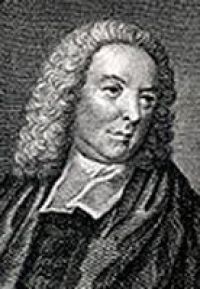 Edward Young,
The Revenge: A Tragedy
Edward Young,
The Revenge: A Tragedy
“ The blood will follow where the knife is driven, The flesh will quiver where the pincers tear, And sighs and cries by nature grow on pain. ”
H. Clay Trumbull, The Blood Covenant: A Primitive Rite and its Bearings on Scripture
“ Here, as elsewhere, the blood is preeminently the life; and even when poured out on the earth, the blood does not lose its vitality. It still has its intelligent relations to its Author and Guardian; [429] as the world has been accustomed to count a possibility, down to modern times. ”
William Harvey, The Works of William Harvey (1847)
“ And then no one denies that the blood as such, even the portion of it which flows in the veins, is imbued with spirits. But if that portion which is contained in the arteries be richer in spirits, it is still to be believed that these spirits are inseparable from the blood, like those in the veins; that the blood and spirits constitute one body (like whey and butter in milk, or heat [and water] in hot water) , with which the arteries are charged, and for the distribution of which from the heart they are provided, and that this body is nothing else than blood. ”
William Harvey, An Anatomical Disquisition on the Motion of the Heart & Blood in Animals (1906)
“ To those, therefore, whom I hear denying that the blood, aye the whole mass of the blood may pass through the substance of the lungs, even as the nutritive juices percolate the liver, asserting such a proposition to be impossible, and by no means to be entertained as credible, I reply, with the poet, that they are of that race of men who, when they will, assent full readily, and when they will not, by no manner of means; who, when their assent is wanted, fear, and when it is not, fear not to give it. ”
John Green Curtis, Harvey's Views on the Use of the Circulation of the Blood
“ In order, therefore, to relinquish its seat of origin, and enter constricted and colder places, and move in opposition to its bent, [261] the blood has need not only of violence but of an impeller, such as is the heart alone, and after the fashion described already. ”
Philosophical Transactions, Volume 1…
“ Whether the Blood affords both the Matter for the structure of the Body, and such parts also, as are fit for the nourishment of the same? Whether the Pulse of the Heart ceasing, there remains yet a certain Motion in the blood, arguing, that Pulse and Life do ultimately rest in the Blood? ”
 Arthur B. Reeve,
The Film Mystery
Arthur B. Reeve,
The Film Mystery
“ No less certain is the fact that human blood differs from the blood of animals, that in faint variations the blood of no two people is alike, that the blood of any living thing, man or beast, is affected by various things—an infinite number almost—most of which are positively known to modern medical investigators. ”
John Green Curtis, Harvey's Views on the Use of the Circulation of the Blood
“ But the words of the second passage foreshadow a closely related doctrine, advanced and held by him on the evidence of observation, viz.: that the blood, being the first part to live, is also the last part of the body to die. ”
Duchess of Margaret Cavendish Newcastle, Grounds of Natural Philosophy: Divided into Thirteen Parts
“ To put Blood of one Animal, into another Animal; as for example, Some Ounces of Blood taken, by some Art, out of a Dogg's Veins, and, by some Art, put into a Man's Veins, may very easily be done by Injection; and certainly, may as readily convert it self to the Nature of Human Blood, as Roots, Herbs, Fruit, and the like Food; and probably, will more aptly be transformed into Human Flesh, than Hogg's Blood, mixt with many Ingredients, and then put into Gutts, and boyled, (an ordinary Food amongst Country People;) ”
Samuel H. Kellogg, The Expositor's Bible: The Book of Leviticus
“ We are compelled to say that as regards the physical life of man—which alone is signified by the original term here—it is certainly true of the blood, as of no other part of the organism, that "the life of all flesh is the blood thereof." ”
 Aristotle,
On Sleep and Sleeplessness
(350 BCE)
Aristotle,
On Sleep and Sleeplessness
(350 BCE)
“ The finest and purest blood is that contained in the head, while the thickest and most turbid is that in the lower parts. The source of all the blood is, as has been stated both here and elsewhere, the heart. ”
John Green Curtis, Harvey's Views on the Use of the Circulation of the Blood
“ The blood penetrates in all directions and is present everywhere; if it be [106] taken away, the soul itself is made away with also and at once; so that the blood would seem to be wholly indistinguishable from the soul or, at least, should be reckoned the substance of which the soul is the activity. ”
pseud. Aristotle, Aristotle's works
“ When those veins are full of the melancholy blood, then the conduits of nature are opened, and the blood issues out once a month, like women’s terms. Those men who have this course of blood, are kept from many infirmities, such as the dropsy, plague, &c. ”
H. Clay Trumbull, The Blood Covenant: A Primitive Rite and its Bearings on Scripture
“ LIFE FROM ANY BLOOD, AND BY A TOUCH. Because blood is life, all blood, and any blood, has been looked upon as a vehicle of transferred life. And because blood is life, and the heart is a fountain of blood, and so is a fountain of life,—a touch of blood, or, again, the minutest portion of a vital and vivifying heart, has been counted capable of transferring life, with all that life includes and carries; just as the merest cutting of a vine, or the tiniest seed of the mightiest tree, will suffice as the germ of that vine or that tree, in a new planting. ”
w:Sushruta, Sushruta Samhita, Volume 1 (1907)
“ In such a case bleeding should not be again resorted to, but the deranged residue should be subdued by means of pacifying or absorbing remedies. Blood is the origin of the body. It is blood that maintains vitality. Blood is life. ”
 Grafton Elliot Smith,
The Evolution of the Dragon
Grafton Elliot Smith,
The Evolution of the Dragon
“ Once it was recognized that the state of unconsciousness or death was due to the loss of blood it was a not illogical or irrational procedure to imagine that offerings of blood might restore consciousness and life to the dead. [255] If the blood was seriously believed to be the vehicle of feeling and knowledge, the exchange of blood or the offering of blood to the community was a reasonable method for initiating anyone into the wider knowledge of and sympathy with his fellow-men. ”
Pye Henry Chavasse, Advice to a Mother on the Management of Her Children
“ If blood can be too pure and too good she might! When we take into account that the food we eat is converted into blood; that if the food be good the blood is good; and that if the food be improper or impure, the blood is impure likewise; and, moreover, when we know that every part of the body is built up by the blood, we cannot be considered to be too particular in making our selection of food. ”
 Thomas Henry Huxley,
Man's Place in Nature, and Other Essays
Thomas Henry Huxley,
Man's Place in Nature, and Other Essays
“ The blood is contained in a vast system of pipes, spreading through the whole body, connected with a force-pump,—the heart,—which, by its position and by the contractions of its valves, keeps the blood constantly circulating in one direction, never allowing it to rest; and then, by means of this circulation of the blood, laden as it is with the products of digestion, the skin, the flesh, the hair, and every other part of the body, draws from it that which it wants, and every one of these organs derives those materials which are necessary to enable it to do its work. ”
Related terms
Authors who wrote about “blood”


Related articles
Scalp Health, A History of Intervention and Restraint
From ancient beliefs in natural circulation to the dawn of electric dryers and chemical dyes, humanity has wrestled with a core dilemma—should we trust the body's innate systems for scalp health, or demand artificial intervention to control and enhance nature?
Joel Dorman Steele, Anna M. Galbraith, Arnold James Cooley
The enduring physiological controversy: Alcohol as cardiac poison or social elixir?
Before modern studies suggested health benefits, leading physiological researchers defined alcohol not as an invigorating stimulant but as a narcotic that paralyzes the nervous system, leading to the rapid, dangerous deterioration and fatty degeneration of the heart muscle.
Joel Dorman Steele, Fritz Wilhelm Woll, Martha Meir Allen
The quest for specificity: A history of the antidote from emetics to molecular intervention
The history of medicine’s fight against poisons reveals a profound migration of focus: from crude mechanical expulsion via the stomach to sophisticated chemical targeting of individual protein molecules in the bloodstream.
John Ayrton Paris, Claude Bernard, Frederick William Headland
The restless dead: Anxiety, contagion, and the social function of the vampire myth
The undead figure is a diagnostic tool for societal breakdown. Fear of contagion and moral decay fuels the myth, defining the vampire as a post-mortem outcast—a physical manifestation of communal judgment against those who transgress the accepted bounds of piety and order.
Dudley Wright, Francis Aidan Gasquet, G. W. F. Hegel
The sacred cut and the profane wound: When theatrical realism collapses
The knife on stage is meant to signify danger, not deliver it. An analysis of how the search for 'authenticity' breaches the sacred frame of performance, exposing the brutal, anti-theatrical reality of the body in crisis.
William Shakespeare, Stephen Crane, Mark Twain
