AI-generated from sources
The sacred cut and the profane wound: When theatrical realism collapses
In Brief
- Classical drama, particularly Julius Caesar, attempts to consecrate violence, transforming assassination into a civic or religious ritual of political 'carving' rather than base butchery.
- The symbolic meaning of the theatrical wound is always fragile and is immediately shattered when physical reality intrudes, replacing dramatic catharsis with the isolating, anti-narrative distress of genuine injury.
- Attempts at extreme theatrical realism (like using real weapons) risk collapsing the essential contract between actor and audience, reverting the sacred symbolic instrument back into a profane tool of bodily harm.
- The enduring power of the blade in art rests in its metaphorical capacity to explore pain and mortality in the imagination, safely removed from the irreversible consequences of physical violence.
Main authors
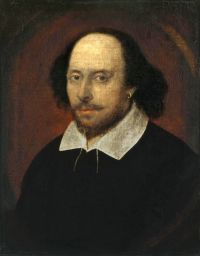
In the landscape of dramatic performance, the knife occupies a profoundly ambivalent space. It is at once a prop, an instrument of narrative, and a symbol, yet it never fully sheds its real-world capacity for visceral harm. This tension is powerfully articulated in classical drama, where the act of stabbing is elevated to the level of political and religious ritual, a calculated performance intended to transform violence into meaning [1, 2]. The conspirators in Shakespeare's Julius Caesar, for instance, frame their assassination not as a crude murder but as a necessary sacrifice, a symbolic carving of the body politic for the health of the state . The bloodletting is a deliberate spectacle, designed to be read by the public as an act of liberation .
This symbolic containment of violence, however, is perpetually fragile. The moment the theatrical illusion falters, or when misguided attempts at authenticity breach the boundary between representation and reality, the sacred instrument reverts to a profane weapon. The symbolic wound gives way to an immediate, physical injury that shatters the aesthetic distance and confronts the audience with the raw, non-negotiable reality of pain [3, 4]. The knife, in this context, ceases to be a signifier of noble sacrifice or tragic necessity and becomes a mere tool of bodily violation [5]. This descent from a sacred symbol within a controlled performance to a profane object causing unintended injury reveals the precarious boundary between artifice and actuality, and the immense challenge of representing violence without succumbing to its chaotic reality.
The Consecrated Blade: Assassination as Civic Ritual
The assassination of Julius Caesar, as depicted by Shakespeare, serves as the archetypal example of the knife's consecration within a dramatic framework. The act is meticulously framed by its perpetrators as a civic duty, a quasi-religious rite essential for the preservation of the Roman Republic . Brutus, the intellectual and moral center of the conspiracy, explicitly rejects the idea of butchery, instead advocating for a form of political surgery. His intention is to attack the 'spirit' of Caesar's tyranny, a goal that necessitates treating Caesar's body not as flesh to be hacked, but as a symbolic offering to be prepared with solemn dignity . This transformation of murder into ritual is a deliberate rhetorical and performative strategy.
This act of 'carving' is designed for public interpretation. Immediately following the assassination, the conspirators engage in a shocking but highly symbolic performance: they bathe their hands and swords in Caesar's blood . This is not an act of frenzied violence but a calculated piece of political theater. By smearing themselves with what they deem the 'most Noble blood of all this World' [6], they physically mark themselves as the agents of a monumental event, transforming their weapons from simple blades into instruments of historical change. They then plan to walk to the marketplace, their red weapons held aloft, to publicly proclaim 'Peace, Freedome, and Liberty' . The knife-thrusts and the resulting blood are thus absorbed into a larger symbolic narrative where violence is legitimized as a necessary foundation for a renewed political order.
The success of this performance relies on controlling the narrative. After the deed, Mark Antony masterfully subverts this ritualistic framing by re-presenting the physical evidence to the Roman populace. He shows the crowd Caesar's wounds, calling them 'poor dumb mouths' and bidding them to speak for themselves [7]. By focusing on the brutal reality of the punctured body and the personal betrayal of 'the most vnkindest cut of all' from Brutus [8], Antony strips the act of its sacrificial glamour. He reframes the conspirators not as sacrificers but as traitors, and their consecrated knives as instruments of base ingratitude . This rhetorical battle highlights how the meaning of the wound is not inherent but is fiercely contested through performance and interpretation [9].
The Body in Pain: Deconstructing the Theatrical Wound
While dramatic convention attempts to sublimate the act of wounding into symbol and narrative, the physical reality of injury exerts a powerful counter-force that resists such containment. A genuine wound introduces a state of being that is immediate, chaotic, and profoundly personal, defying the tidy frameworks of political allegory or tragic fate . A wound confers its own form of 'terrible majesty,' a dignity born not of symbolic meaning but of pure, unadulterated suffering that isolates the victim and silences those around them . This is the profane reality that theatrical representation often seeks to aestheticize but can never fully capture without breaking its own illusion.
The descriptions of physical trauma found outside the theater stand in stark contrast to the noble bloodshed of the stage. Medical and anecdotal accounts detail the body's catastrophic response to injury: darting pains, paralysis, the covering of gums and teeth with dark fur, and the onset of delirium or coma . In a desperate struggle, the wounded individual clings to their weapon with a 'tenacity of a death-grip,' their own blood mingling with that of their attacker in a primal fight for survival [10]. This visceral reality—the cracking of bones in an animal's jaws , the thousands of arrows piercing a fortification [11], the methodical treatment of a pierced palm with tourniquets and salves [12]—has no grand, abstract message. It is simply the body in crisis, a state of being that is inherently anti-theatrical because its reality is too overwhelming to be processed as mere story.
The concept of sympathetic magic further underscores the enduring physical connection between the weapon and the wound, a bond that complicates any purely symbolic reading [13]. The belief that the blood on the weapon remains connected to the blood in the body suggests that the instrument of harm is never truly separate from the injury it inflicts . A knife can become a conduit for magic, snaring a victim's soul through a few drops of their blood [14]. This mystical tie between blade, blood, and body serves as a powerful metaphor for the way in which the physical consequences of violence haunt its symbolic representation, a profane link that theatrical ritual can obscure but never entirely sever.
When Illusion Fails: The Peril of Realism
Theatrical performance is a delicate contract between the actor and the audience, one that relies on a shared commitment to an illusion [15, 16]. This contract is jeopardized when the actor's physical reality intrudes upon their role, or when a prop meant to signify danger becomes genuinely dangerous. The experience of the aging actor Deburau provides a powerful allegory for this breakdown [17]. Once celebrated for his grace, his decrepit body can no longer sustain the performance. His attempts at comedy elicit tears, and his tragic moments provoke laughter, culminating in his being hissed off the stage . His physical decline is a profane intrusion that the audience cannot ignore, shattering the character he seeks to portray. The actor's body, like a real wound, becomes an undeniable reality that collapses the fictional world.
The knife on stage functions under a similar tension. It must appear credible as a weapon without ever becoming one. For amateur actors who see themselves as the 'kings of the place,' the line between performative bravado and reality can be thin [18]. A prop knife, much like a carpenter's flourished but ultimately unused blade, is a hero-making tool only so long as its artifice is maintained [19]. The moment it draws real blood, it ceases to be part of a 'charming spectacle' [20] and becomes the source of a profane, physical wound. The 'surgical stitch' that might be celebrated as art when imagined becomes a grim necessity in the face of actual injury . The illusion is not just broken; it is violently inverted, replacing dramatic catharsis with base physical distress and potential legal consequences.
This rupture between the symbolic and the real transforms the audience's role from spectator to witness. The shared pleasure of dramatic artifice [21] is replaced by the 'mental pain and distress' that comes from an invasion of privacy—in this case, the unwanted intrusion of another's bodily suffering [22]. A staged wound is a story; a real wound is a crisis. The former invites interpretation, while the latter demands intervention. The descent of the knife from a sacred instrument of performed sacrifice to a profane cause of accidental injury thus marks the catastrophic failure of the theatrical frame, where the managed world of the stage is overrun by the uncontrolled, painful reality of the flesh [23].
The Enduring Power of the Imagined Blade
Despite the inherent risks of representing physical violence, the symbolic power of the knife remains a potent tool in art and imagination precisely because it operates on the precipice between life and death, creation and destruction [24]. The imagined blade—the knife in a dream, the sword in a vision, or the wound in a painting—can explore the full spectrum of human experience without the irreversible consequences of physical harm [25, 26]. In this realm, a face can be appreciated not for its physical qualities but as a 'skein of subtle and lovely silken threads,' a work of art to be intellectually and emotionally unwound [27]. This is the aesthetic transformation that performance strives for, turning the potential violence of the gaze into an act of appreciation.
The knife, when held in the realm of metaphor, becomes an instrument of profound psychological and spiritual insight. It can represent unrequited love, internal torment, or the sharp edge of fate [28, 29, 30]. A heart can be metaphorically stabbed by ingratitude, a pain more potent than any physical blow . The face of a murderer plunging a knife and the face of the executed criminal can coexist in a single, timeless vision, representing the cyclical nature of violence and consequence . This symbolic function allows the knife to articulate complex truths about desire, pain, and mortality that a purely physical representation of violence cannot [31]. The 'keen knife' in a dream can question the very nature of reality itself, becoming a tool for philosophical inquiry rather than bodily harm .
Ultimately, the power of the blade in drama lies in this very tension—its ability to evoke the specter of real violence while remaining safely within the symbolic order. The performance of Caesar's death is compelling not because we see real blood, but because the actions on stage successfully channel the immense political, personal, and philosophical stakes of the event through a contained, ritualized act . The knife becomes a focal point for the audience's fears and desires, a 'dart' that can either wound with grief or shine with radiant pleasure in the mind [32]. It is a reminder that the most enduring wounds and the most powerful weapons are often those that exist in the space between the physical and the metaphysical, in the shared illusion of the theater [33].
The journey of the knife from a sacred instrument of theatrical ritual to a profane agent of physical injury maps the fragile boundary between representation and reality. In the controlled environment of classical tragedy, the blade is consecrated, its violence imbued with symbolic purpose and political meaning . The 'carving' of Caesar is a performance designed to elevate a bloody act into a noble sacrifice, transforming wounds into rhetorical devices and assassins into liberators . This fragile alchemy depends entirely on the integrity of the theatrical frame, which holds the terrifying reality of physical harm at an aesthetic distance.
When that frame is breached, the knife immediately reverts to its essential nature as a tool that cuts flesh. The symbolic wound is replaced by the profane immediacy of pain, a reality that resists narrative and shatters illusion . The failure is not merely technical but conceptual; it exposes the limits of art to contain and give meaning to suffering. The descent of the knife is therefore a cautionary tale about the perils of realism and the profound difference between depicting violence and enacting it. The blade's symbolic power is sustained only by the collective agreement to believe in the performance, an agreement that real blood irrevocably dissolves.