“ And some believe in angels; I believe In nothing but thy soul. Others have youth, And woman's love, and pride, and grace, and health; Others are beautiful; thou art my beauty, Thou art my home, my country and my kin, My wife, my mother, sister, friend—my child! My bliss, my wealth, my worship, and my law, My Universe! Oh, by all other things My soul is tortured. If I should ever lose thee— Horrible thought! I cannot utter it. Smile, for thy smile is like thy mother's smiling. She, too, was fair; you have a trick like her, Of passing oft your hand athwart your brow As though to clear it. ”
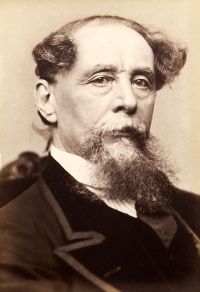
Victor Hugo
Biographical details

Victor-Marie Hugo (1802–1885), a towering figure of French Romanticism, was a novelist, poet, dramatist, and passionate champion of human rights. His works, such as The Hunchback of Notre-Dame (1831) and Les Misérables (1862), examine themes of social injustice, ethical conflict, and republican values, merging lyrical verse with incisive critique.
A highly productive writer and politician, Hugo’s body of work—encompassing plays like Cromwell, poetry volumes like Les Contemplations, and novels tackling poverty and revolution—demonstrates his dedication to free thought and societal change. His legacy persists as a fusion of literary brilliance and steadfast moral involvement.
Quotes by Victor Hugo
 Victor Hugo,
The Dramas of Victor Hugo: Mary Tudor…
Victor Hugo,
The Dramas of Victor Hugo: Mary Tudor…
“ JANE.What a noble heart you have, Gilbert.GILBERT.Listen to me, Jane—laugh at me if you will; I am mad, I am jealous! I will tell you why. Do not get angry! It seems to me, for some time I have seen several young lords prowling around here. Do you know, Jane, I am thirty-two years old. For a poor, clumsy, badly-dressed workman like myself, who am no longer young, who am not handsome, what a misery it is to love a charming, beautiful girl of seventeen, who attracts all the handsome, gold-bedizened young nobles around her, as a light attracts the butterflies. Oh, I suffer; indeed, I do! ”
Victor Hugo,
William Shakespeare
“ Lucretius is the sphere; Shakespeare is the globe. There is more and less in the globe than in the sphere. In the sphere there is the whole; on the globe there is man. Here the outer, there the inner, mystery. Lucretius is the being; Shakespeare is the existence. Thence so much shadow in Lucretius; thence so much movement in Shakespeare. Space,—the blue, as the Germans ay,—is certainly not forbidden to Shakespeare. The earth sees and surveys heaven; the earth knows heaven under its two aspects,—darkness and azure, doubt and hope. Life goes and comes in death. ”