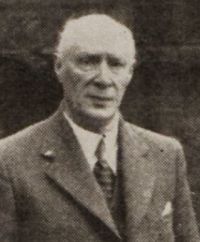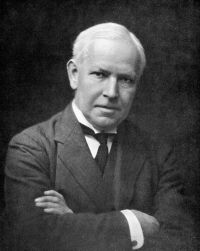
Grafton Elliot Smith

Biographical details

Portrait of Grafton Elliot Smith Grafton Elliot Smith The Evolution of the Dragon

The myth is to religion what alchemy is to chemistry or astrology is to astronomy. Like these sciences, religion retains much of the material of the cruder phase of thought that is displayed in myth, alchemy, and astrology, but it has been refined and elaborated. The dross has been to a large extent eliminated, and the pure metal has been moulded into a more beautiful and attractive form. In searching for the elixir of life, the makers of religion have discovered the philosopher's stone, and with its aid have transmuted the base materials of myth into the gold of religion.
Source: Gutenberg

Portrait of Grafton Elliot Smith Grafton Elliot Smith Tutankhamen and the Discovery of His Tomb by the Late Earl of Carnarvon and Mr…

Readers of the daily papers and the illustrated weeklies will already be aware of the vast quantity of furniture and of the fact that even those who were already familiar with the superb design and workmanship displayed in the objects from such tombs as those of Thothmes IV, Yuaa and Tuaa, and Akhenaton were amazed at the new revelation of Egyptian craftsmanship revealed in scores of the things found in Tutankhamen’s tomb, the throne, a superb work of art, the no less wonderful chariots, chairs, couches, statues, sandals, textiles and jewellery, and above all the impressive canopy or shrine.
Source: Gutenberg

Portrait of Grafton Elliot Smith Grafton Elliot Smith The Evolution of the Dragon

The waters of life which are in the earth come. The sky burns for thee, the earth trembles for thee, before the birth of the god. The two hills are divided, the god comes into being, the god takes possession of his body. The two hills are divided, this Neferkere comes into being, this Neferkere takes possession of his body. Behold this Neferkere—his feet are kissed by the pure waters which are from Atum, which the phallus of Shu made, which the vulva of Tefnut brought into being. They have come, they have brought for thee the pure waters from their father.
Source: Gutenberg

Get perspective with Kwize: daily news enlightened by great literature