“ I have moved the household to my suburb, and this is a lament de profundis.The legendary mandrake is a gurgling infant to the way my books cried upon removing. They not only screamed; they sobbed and quivered like broken souls to be dislodged from their place that has known and loved them so well and so long. Every object in the flat was a whole plantation of mandrakes. ”
Mandrake
Definition and stakes
The mandrake, a toxic plant with human-shaped roots from the genus Mandragora, has long fascinated cultures due to its powerful alkaloids and folkloric connections. Historically associated with medical applications and mystical practices, it was admired for its hallucinogenic effects and dreaded for its deadly potency. Authors such as Andrew Lang described its haunting cries during harvesting, while William Harrison Ainsworth portrayed it as a cursed herb that summoned death.
Richard Folkard connected it to gallows and supernatural tales, and Grafton Elliot Smith emphasized its symbolic significance in fertility rites. These diverse viewpoints highlight the mandrake’s dual legacy—as both a botanical enigma and a liminal figure in mythology, linking scientific reality with cultural imagination.
Quotes about “mandrake”
 Andrew Lang,
Custom and Myth
(1874)
Andrew Lang,
Custom and Myth
(1874)
“ The mandrake, like the moly, the magical herb of the Odyssey, is 'hard for men to dig.' He who desires to possess a mandrake must stop his ears with wax, so that he may not hear the deathly yells which the plant utters as it is being dragged out of the earth. ”
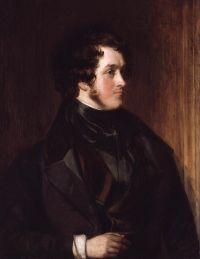 William Harrison Ainsworth,
Rookwood
William Harrison Ainsworth,
Rookwood
“ Dread is the curse of mandragora! Euthanasy! Whoso gathereth the mandrake shall surely die; Blood for blood is his destiny. Some who have plucked it have died with groans, Like to the mandrake's expiring moans; Some have died raving, and some beside— With penitent prayers—but all have died. Jesu! save us by night and day! ”
Various, Encyclopaedia Britannica, 11th Edition…
“ The notion that the plant shrieked when touched is alluded to in Romeo and Juliet: “And shrieks like mandrakes torn out of the earth, that living mortals, hearing them, run mad.” The mandrake, often growing like the lower limbs of a man, was supposed to have other virtues, and was much used for love philtres, while the fruit was supposed, and in the East is still supposed, to facilitate pregnancy (Aug., C. Faust. xxii. 56; cf. Gen. xxx. 14, where the Hebrew דדראמ is undoubtedly the mandrake) . ”
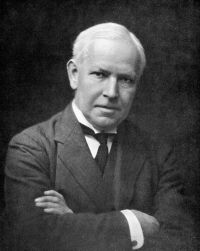 Grafton Elliot Smith,
The Evolution of the Dragon
Grafton Elliot Smith,
The Evolution of the Dragon
“ The mandrake also is the giver of life, of fertility to women, of safety in childbirth; and like the cowry and the pearl it exerts these magical influences only if it be worn in contact with the wearer's skin. [290] But the most definite indication of the mandrake's homology with the pearl is provided by the legend that "it shines by night". Some scholars, [291] both ancient and modern, have attempted to rationalize this tradition by interpreting it as a reference to the glow-worms that settle on the plant! ”
“ Again, the root has a human shape. ‘If a hereditary thief who has preserved his chastity gets hung,’ the broad-leafed, yellow-flowered mandrake grows up, in his likeness, beneath the gallows from which he is suspended. ”
Richard Folkard, Plant Lore, Legends, and Lyrics
“ From times long past has come down the legend that the Mandrake is a dweller in the dark places of the earth, and that it thrives under the shadow of the gallows, being nourished by the exhalations or flesh of the criminals executed on the gibbet. Amongst other mysterious attributes, we are told by old writers that the Mandrake has the power of emitting sounds, and that when it is pulled out of the ground, it utters dreadful shrieks and groans, as if possessed of sensibility. ”
A. C. Wootton, Chronicles of Pharmacy, Vol. 1…
“ It is not, however, certain that the Hebrew word “dudaim” should be translated mandrake. Various Biblical scholars have questioned this which was the Septuagint rendering. Lilies, violets, truffles, citrons, and other fruits have been suggested. In Cant., vii, 14, the same plant is described as fragrant, and the odour of the mandrake is said to be disagreeable. Mandragora is described in Chinese books of medicine, and from Hippocrates down to almost modern times every writer on the art of healing treats it with reverence. ”
 Royal Dixon,
Personality of plants
(1923)
Royal Dixon,
Personality of plants
(1923)
“ In the Middle Ages, the Mandrake was a magical plant which was reputed to shine like a candle at night and thrive particularly well near the gallows. When pulled from the earth, it uttered uncanny shrieks, and according to Shakespeare “living mortals hearing them ran mad.” ”
Benjamin Taylor, Storyology: Essays in Folk-Lore…
“ But of the mandrake, or mandragoras, Gerarde says: 'There hath been many ridiculous tales brought up of this plant, whether of old wives, or some runagate surgeons, or physickemongers, I know not; but sure some one or more that sought to make themselves famous or skillful above others were the first brochers of the errour'—that the root resembles a man. ”
Benjamin Taylor, Storyology: Essays in Folk-Lore…
“ We have seen, further, that belief in the peculiar power of the mandrake in certain directions was a settled belief at a very early period of the Jewish history, and we thus arrive at the very probable suggestion that the original Soma was neither more nor less than the mandrake of Reuben, the 'Baaras root' of Josephus, the mandragoras of the Greeks, the moly of Homer, the mandragora of Shakespeare, the mandragen of Germany, and the mandrake, again, of England. ”
Anthony Florian Madinger Willich, Domestic Encyclopædia (1802)
“ MANDRAKE, or Atropa mandragora, L. an exotic plant, growing in Spain, Portugal, Italy, and the Levant: it is propagated by seeds, and treated in a similar manner with the more tender exotic plants.—According to Bechstein, the carrot-like root of the Mandrake, in its native climate, penetrates from three to four feet deep into the soil, where it remains sound for fifty years.—The plant is divided into male and female, the vegetation and growth of which are alike in both; though the leaves, roots, and seeds of the latter are longer, narrower, and of a darker colour than those of the male. ”
Eleanour Sinclair Rohde, The Old English Herbals
“ Both mandrake and periwinkle were supposed to be endowed with mysterious powers against demoniacal possession. At the end of the description of the mandrake in the Herbarium of Apuleius there is this prescription:—“For witlessness, that is devil sickness or demoniacal possession, take from the body of this same wort mandrake by the weight of three pennies, administer to drink in warm water as he may find most convenient—soon he will be healed.”—Herb. ”
Benjamin Taylor, Storyology: Essays in Folk-Lore…
“ The belief that the root of the mandrake resembles the human figure is characterized by the writer last quoted, as a 'conceit not to be made out by ordinary inspection, or any other eyes than such as regarding the clouds behold them in shapes conformable to pre-apprehensions.' It is traceable to the bifurcation of the root ”
John Davenport, Aphrodisiacs and Anti-aphrodisiacs…
“ The word Dudaim is rendered in our authorized version by the word mandrake—a translation sanctioned by the Septuagint, which, in this place, translates Dudaim by μῆλα μανδραγορῶν, mandrake—apples, and in Solomon's Song by οἱ μανδραγὸραι (mandrakes) . With this, Onkelos77 and the Syrian version agree; and this concurrence of authorities, with the fact that the mandrake (atropa mandragora) combines in itself all the circumstances and traditions required for the Dudaim, has given to the current interpretation, its present prevalence. ”
Popular Science Monthly (1880)
“ Among these last was the mandragora, which was supposed to reveal to its possessor hidden things and future events, and to secure the friendship of all men. The root of the mandragora, or mandrake, often divides into two parts, and thus presents a rude resemblance to a human figure. ”
Grafton Elliot Smith,
The Evolution of the Dragon
“ The mandrake story may have arisen out of a mingling of these two streams of legend—the shark (dog-fish) protecting the treasures at the bottom of the sea, and the ancient Egyptian beliefs concerning the dog-headed god who presides at the embalmer's operations and superintends the process of rebirth.The dog of the story is a representative of the dragon guarding the goddess in the form of the mandrake, just as the lions over the gate at Mycenæ heraldically support her pillar-form, or the serpents in Southern Arabia protect her as an incense tree. ”
Benjamin Taylor, Storyology: Essays in Folk-Lore…
“ The belief that the mandrake had some peculiar association with the devil has made it a favourite plant with sorcerers and workers of enchantment in all ages. Lord Bacon refers to it as a favourite in his time, 'whereof witches and impostors make an ugly image, giving it the form of a face at the top of the root,' and leaving the natural threads of the root 'to make a broad beard down to the foot.' Mr. Moncure Conway, however, says that the superstition rightly belonging to the mandrake was often transferred to other roots—probably in ignorance as to the identity of the real plant. ”
G. F. Scott Elliot, The Romance of Plant Life
“ Therefore, if you wish to pull up a mandrake, the correct course to pursue is as follows: Tie a dog to the plant by its tail, and then whip the dog. It will pull up the mandrake, and then die in frightful agony! ”
Adam Hull Shirk, Weird Tales (1923)
“ Fallon took up the thing and examined it with deep interest. It was a vegetable of some sort, of a sickly flesh color so far as the root was concerned; black mold still clung to it, and when viewed from a certain angle, the root portion bore a most uncanny resemblance to a human body. "This," said the psychologist, slowly, "is a mandrake. One of the first I've ever seen!" "Mandrake?" Burton repeated in a puzzled tone. "Exactly. The one plant concerning which superstition is almost universal. Many books have been written about it. ”
Donald A. Mackenzie, Myths of China and Japan (1923)
“ One seems to detect traces of the beliefs connected with the mandrake in the reference to the human-shaped roots of the 1000-year-old cypress tree. The mandrake was the plant of Aphrodite, and its root, which resembles the human form, was used medicinally; it has narcotic properties, and was believed also to be a medicine which promoted fertility, assisted birth, and caused youths and girls to fall in love with one another. ”
Grafton Elliot Smith,
The Evolution of the Dragon
“ Now I have already explained how a pot came to symbolize a woman or a goddess, not merely in Egypt, but also in Southern India, and in Mycenæan Greece, and, in fact, the Mediterranean generally. [384] Hence the use of the term dūd for the mandrake implies either (a) an identification of the plant with the goddess who is the giver of life, or (b) an analogy between the form of the mandrake-fruit and a pot, which in turn led to it being called a pot, and from that being identified with the goddess. ”
Charles Hardwick, Traditions, Superstitions and Folk-lore
“ A crescent formed of two boar's tusks is frequently appended to the necks of mules, to protect the animals from witchcraft. The boar's tusk I have previously shown to be an Aryan lightning emblem.Kelly is of opinion that the mandrake, on account of its form and supposed lightning origin, possessed, in common with the wish-rod, the power of conferring good fortune on its possessor. The root of the mandrake is believed to bear some resemblance to a human being, and appears to have been used in England by sorcerers as an image of the victim operated upon, as well as figures made of clay or wax. ”
“ It is more to the purpose of magic that Columella mentions ‘the half-human mandragora.’ Here we touch the origin of the mandrake superstitions. The roots have a kind of fantastic resemblance to the human shape ”
Various, Chambers's Journal of Popular Literature…
“ The root of the mandrake, a plant with a tap-root, frequently forked, as we see that of the radish, and covered with fibrous rootlets, was easily convertible into a grotesque likeness of the human form. ”
Various, The Atlantic Monthly, Volume 01…
“ Either, however, makes sense. Although Sir Thomas Browne does not allude to the deadly property of the mandrake's shriek, yet Mr. Halliwell, who has edited Shakspeare, might have remembered the "Would curses kill, as doth the mandrake's groan," (2d Part Henry VI., Act III. Scene 2.) and the notes thereon in the variorum edition. In Jacob Grimm's "Deutsche Mythologie," (Vol. II. p. 1154,) under the word Alraun, may be found a full account of the superstitions concerning the mandrake. "When it is dug up, it groans and shrieks so dreadfully that the digger will surely die. ”
Chambers's Twentieth Century Dictionary…
“ Mandrake, man′drāk, n. a plant of the genus Mandragora, with narcotic properties, once regarded as an aphrodisiac, shrieking when pulled out of the ground.—Mandrag′ora (Shak.) . [L.,—Gr. mandragoras.] Mandrel, man′drel, n. a bar of iron fitted to a turning-lathe on which articles to be turned are fixed: the axle of a circular saw.—Also Man′dril. [Fr. mandrin; prob. through Low L. from Gr. mandra.] ”
A. C. Wootton, Chronicles of Pharmacy, Vol. 1…
“ Hippocrates asserts that a small dose in wine, less than would occasion delirium, will relieve the deepest depression and anxiety. The roots of the mandrake are often of a forked shape and were supposed to represent the human form, some being regarded as male and others as female. This fancy originated with Pythagoras, who conferred on the mandrake the name of anthropomorphon. It was said that when the roots were drawn from the earth they gave a human shriek. ”
T. F. Thiselton-Dyer, Folk-lore of Shakespeare
“ According to a curious superstition, this plant was thought to possess the properties of making childless wives become mothers, and hence, some suppose, Rachel became so desirous of possessing the mandrakes which Reuben had found. Among the many other items of folk-lore associated with the mandrake, there is one which informs us that “it is perpetually watched over by Satan, and if it be pulled up at certain holy times, and with certain invocations, the evil spirit will appear to do the bidding of the practitioner.” ”
A. C. Wootton, Chronicles of Pharmacy, Vol. 1…
“ Pliny refers to the narcotic powers of the mandrake, and among later writers its effects are often described. Josephus mentions a plant which he calls Baaras, which cured demoniacs, but could only be procured at great risk, or by employing a dog to uproot it, the dog being killed in the process. This Baaras is supposed to have been mandrake. Dr. Lee in his Hebrew Lexicon quotes from a Persian authority an allusion to a similar root which, taken inwardly, “renders one insensible to the pain of even cutting off a limb.” ”
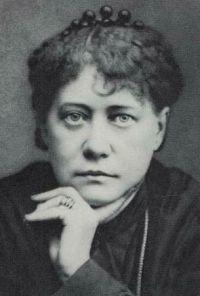 H. P. Blavatsky,
Isis unveiled, Volume 1 (of 2)…
(1878)
H. P. Blavatsky,
Isis unveiled, Volume 1 (of 2)…
(1878)
“ The mandrake is a plant having the rudimentary shape of a human creature; with a head, two arms, and two legs forming roots. The superstition that when pulled out of the ground it cries with a human voice, is not utterly baseless. It does produce a kind of squeaking sound, on [Pg 466] account of the resinous substance of its root, which it is rather difficult to extract ”
 Agnes M. Clerke,
Familiar Studies in Homer
Agnes M. Clerke,
Familiar Studies in Homer
“ Wanderings of Plants, p. 158. All the magic faculties of garlic, it may be remarked, are directed to beneficent purposes; whereas those of the mandrake (regarded as an herb, not as an idol) are purely maleficent. Later folk-lore, however, has not brought them into direct competition. Each is thought of as supreme in its own line. Only in the Odyssey (on the supposition here adopted) they were permitted to meet, with the result of signal defeat for the powers of evil. ”
“ The Mandrake, a plant belonging to the same natural order as the deadly nightshade, henbane, and thorn-apple, had in the Middle Ages many mystic properties assigned to it. The roots are often forked, and when either by nature or art they could be supposed to roughly resemble a man it was looked upon as a talisman securing good fortune to its possessor. ”
Grafton Elliot Smith,
The Evolution of the Dragon
“ Aphrodite was associated not only with the cowry, the pearl, and the mandrake, but also with the octopus, the argonaut, and other cephalopods. Tümpel seems to imagine that the identification of the goddess with the argonaut and the octopus necessarily excludes her association with molluscs; and Dr. Rendel Harris attributes an equally exclusive importance to the mandrake. But in such methods of argument due recognition is not given to the outstanding fact in the history of primitive beliefs. The early philosophers built up their great generalizations in the same way as their modern successors. ”
Charles Hardwick, Traditions, Superstitions and Folk-lore
“ Kelly adds—"This is not all. In every instance the divining or wish-rod has a forked end. This is an essential point, as all authorities agree in declaring. Now a forked rod (or a 'forked raddish') is the simplest possible image of the human figure."The English mandrake, used by witches and treasure hunters, is, as Coles observes, the briony, the veritable atropa mandragora not being found in the northern portion of the continent of Europe. It flourishes luxuriantly in the Grecian islands. Mr. John Ingram, in his "Flora Symbolica," says the mandragora is "the emblem of rarity." ”
Related terms
Authors who wrote about “mandrake”
Benjamin TaylorGrafton Elliot SmithAdam Hull ShirkJohn DavenportAndrew LangVariousT. F. Thiselton-DyerCharles HardwickRichard FolkardA. C. WoottonF. Edward HulmeWilliam Harrison AinsworthDonald A. MackenzieEleanour Sinclair RohdeRoyal DixonAnthony Florian Madinger WillichG. F. Scott ElliotH. P. BlavatskyAgnes M. Clerke Edmund Gosse
Grafton Elliot SmithAdam Hull ShirkJohn DavenportAndrew LangVariousT. F. Thiselton-DyerCharles HardwickRichard FolkardA. C. WoottonF. Edward HulmeWilliam Harrison AinsworthDonald A. MackenzieEleanour Sinclair RohdeRoyal DixonAnthony Florian Madinger WillichG. F. Scott ElliotH. P. BlavatskyAgnes M. ClerkeEdmund Gosse