Septuagint

Definition and stakes

Adam Clarke,  Commentary and critical notes on the Bible… (1800s)

“ The translation of the Septuagint has happily preserved what seems to be the true reading of the text, as it stood in the copies of their time; though the words are now transposed, either in the text or in their Version; οἱ Αμαρῥαιοι και οἱ Ευαιοι, "the Amorites and the Hivites." It is remarkable that many commentators, who never thought of admitting the reading of the Septuagint, understand the passage as referring to that very event which their Version expresses; so that it is plain that nothing can be more suitable to the context. ”

Source: Wikisource

Bishop of Hippo Saint Augustine,  The City of God, Volume II

“ The Septuagint used the expression, "and the heart of a man to his next of kin," because fathers and children are eminently neighbours to one another. Another and a preferable sense can be found in the words of the Septuagint translators, who have translated Scripture with an eye to prophecy, the sense, viz., that Elias shall turn the heart of God the Father to the Son, not certainly as if he should bring about this love [Pg 406] of the Father for the Son, but meaning that he should make it known, and that the Jews also, who had previously hated, should then love the Son who is our Christ. ”
Source: Gutenberg

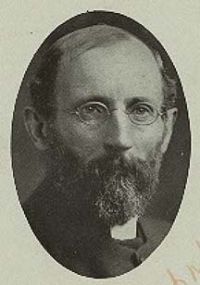
Portrait of James E. Talmage James E. Talmage,  The Articles of Faith

“ The Septuagint.—Passing over the Peshito or early Syriac version of the Old Testament as of minor significance, we recognize as the first important translation of the Hebrew canon that known as the Septuagint. [748] This was a Greek version of the Old Testament, translated from the Hebrew at the instance of an Egyptian monarch, probably Ptolemy Philadelphus, about 286 B. C. The name Septuagint suggests the number seventy, and is said to have been given because the translation was made by a body of seventy-two elders (in round numbers seventy) ”
Source: Gutenberg

Get perspective with Kwize: daily news enlightened by great literature