The Masoretic Text (MT) is the authoritative Hebrew and Aramaic version of the 24 books of the Hebrew Bible (Tanakh) in Rabbinic Judaism, characterized by its precise consonantal framework, pronunciation guides, and marginal notes known as the masora. Created by the Masoretes between the 7th and 10th centuries, it became the standard text for Jewish scripture, with the Leningrad Codex (1009 CE) serving as its primary source. Although variations with earlier texts such as the Dead Sea Scrolls and the Septuagint illustrate its development, the MT continues to be central to Protestant and some Catholic biblical translations.
Scholars like Pierre Louis Moreau de Maupertuis and John Campbell Shairp, though not directly addressing the MT, explored themes of textual authority, metaphysical structure, and the relationship between human perception and divine creation—reflecting the MT’s role as a foundational element of religious and academic tradition. The MT’s enduring influence stems from its dual role as both a linguistic relic and a theological pillar, shaping interpretations of the biblical canon across centuries.
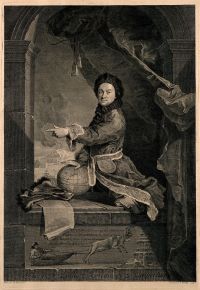 Pierre Louis Moreau de Maupertuis,
Derivation of the laws of motion and equilibrium from a metaphysical principle
Pierre Louis Moreau de Maupertuis,
Derivation of the laws of motion and equilibrium from a metaphysical principle