Summary

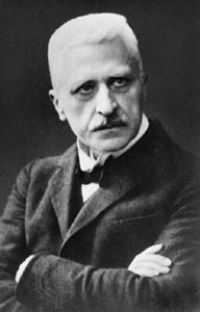
Portrait of Rudolf Otto Rudolf Otto Naturalism and Religion

It is indeed a fact that what alone we can fitly speak of and love as religion—the sense of mystery and the gentle shuddering of piety before the depth of phenomena and their everlasting divine abysses,—has its true place and kingdom in the world of mind and history, with its experiences, riddles, and depths. But mystery is to be found in the world of nature as well. It is only to a very superficial study that it could appear as though nature were, or ever could become, plain and obvious, as if the veil of Isis which shrouds its depths from all investigation could ever be torn away.
Source: Gutenberg

Portrait of Rudolf Otto Rudolf Otto Naturalism and Religion

Did not Schleiermacher, frail and ailing as he was by nature, prove the truth of what he wrote in his youth, that there is no ageing of the mind?
The whole problem, in its highest aspects, is a question of will and faith. If I know mind and the nature of mind, and believe in it, I believe with Schleiermacher in eternal youth. If I do not believe in it, then I have given away the best of all means for warding off old age. For the mind can only hold itself erect while trusting in itself.
Source: Gutenberg

Portrait of Rudolf Otto Rudolf Otto Naturalism and Religion

There is no logical, comprehensible, or any other necessity why there should be a world at all, or why it should be such that life and evolution must become part of it. Where then lies the reason why it is, rather than is not, and why it is as it is?
To this must be added what Weismann himself readily admits and expressly emphasises. The whole theory treats, and must treat plant, animal, and man as only ingenious machines, mere systems of physical processes. This is the ideal aimed at—to interpret all the phenomena of life, growth, and reproduction thus.
Source: Gutenberg

Get perspective with Kwize: daily news enlightened by great literature