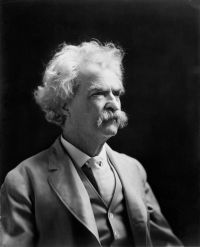
The concept of a "domain" refers to a non-empty, connected, open subset of a vector space, central to mathematical analysis as a foundational element for functions and boundaries. Although its formal definition arose in the 19th century, its application extends across disciplines: John Stuart Mill differentiates between scientific and artistic domains, Mark Twain metaphorically portrays the ocean as a vast domain, and Bertrand Russell utilizes it within logical relationships.
Philosophers such as P. Coffey distinguish between realms of theoretical and practical knowledge, while Jonathan Lawhead emphasizes domains as structures for scientific individuation. These diverse applications demonstrate a term that is precise in mathematics yet rich in broader intellectual contexts.