Summary

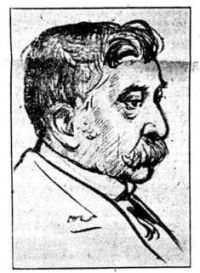
Portrait of Alexander Philip Alexander Philip Essays Towards a Theory of Knowledge

When we find Science, which has done so much and promised so much for the happiness of mankind, devoting so large a proportion of its resources to the destruction of human life, we are prone to ask despairingly—Is this the end? If not; how are we to discover and assure for stricken Humanity the vision and the possession of a Better Land?
Not certainly by the ostentatious building of peace-palaces nor even by the actual accomplishment of successful war. Only by the discovery of true first principles of Thought and Action can Humanity be redeemed.
Source: Gutenberg

Portrait of Alexander Philip Alexander Philip Essays Towards a Theory of Knowledge

But when you realise that physical phenomena, even the most permanent and rigid, are by scientific demonstration but transmutations of the real thing, you may then understand that Space, Body, and Extension are but the laws and conditions of the process. As appearances, and within the realm of phenomena, they seem still what they have always seemed. So much we still concede without diminution or obscurity; and at the same time we can harmonise them as they could never be harmonised before with postulated Reality.
Source: Gutenberg

Portrait of Alexander Philip Alexander Philip Essays Towards a Theory of Knowledge

These, whilst, on the one hand they seem to create the environment which sustains Life, on the other hand seem to impose upon it the limitations under which it inevitably fails and dies. We cannot even in imagination conceive, either as reality or as fancy, the illimitable puissance of a Life perfectly free and unrestrained. Yet the assurance that Perfect Love could overcome the bonds of Materiality and Death encourages in mankind the Hope of an existence beyond the impenetrable veil of physical limitation.
Source: Gutenberg

Get perspective with Kwize: daily news enlightened by great literature