Various, The Atlantic Monthly (1858)
“ We have named Ideality a love of life. Nay, what is it but life itself,—and that loving but true living? What word can have any value for us, unless it is a record of inevitable expansions in character. ”
Ideality, the pursuit of ideal forms or values, has long been a cornerstone of philosophical and literary thought, embodying humanity’s quest for perfection in thought, art, and existence. From Hegel’s assertion that ideality unites gods and men through universal powers to Rose’s vision of justice and truth as sources of refined feeling, the theme reveals diverse dimensions.
Stedman frames poetry as an “evasive ideality,” while Woodberry links literature to the “ideal world” shaped by life’s perfected imitation. Naidu underscores ideals as agents of character development, and Parker highlights their transformative power in shaping individual identity. These perspectives collectively illuminate ideality as both a reflective ideal and a dynamic force driving human aspiration and creativity.
Various, The Atlantic Monthly (1858)
“ We have named Ideality a love of life. Nay, what is it but life itself,—and that loving but true living? What word can have any value for us, unless it is a record of inevitable expansions in character. ”
 Georg Wilhelm Friedrich Hegel,
The Philosophy of Fine Art, volume 1…
Georg Wilhelm Friedrich Hegel,
The Philosophy of Fine Art, volume 1…
“ The truly poetic relation of ideality consists, then, in the identity of gods and men; and this must assert itself even though the universal powers are presented as independent and free from the particularity of human beings and passions. ”
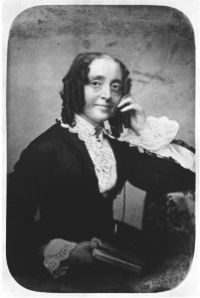 Ernestine Louise Rose,
A Defence of Atheism
(1881)
Ernestine Louise Rose,
A Defence of Atheism
(1881)
“ Instead of reverencing an imaginary existence, man would learn to revere justice and truth. Ideality and sublimity would refine his feelings, and enable him to admire and enjoy the ever-changing beauties of Nature; the various and almost unlimited powers and capacities of the human mind ”
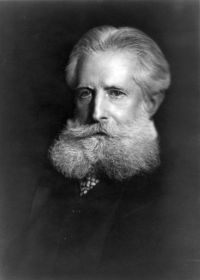 Edmund Clarence Stedman,
The Nature and Elements of Poetry
(1892)
Edmund Clarence Stedman,
The Nature and Elements of Poetry
(1892)
“ Now comes poetry,—rhythmical, creative language, compact of beauty, imagination, passion, truth,—in no wise related, like the plastic arts, to material substance; less able than its associate, music, to move the soul with those dying falls of sound that increase and lessen thought and the power to harbor it; almost a voiceless spirit of invention, working without hands, yet the more subtile, potent, inclusive, for this evasive ideality, and for creations that are impalpable except through the arbitrary and non-essential symbols by which it now addresses itself to the educated eye. ”
 George Edward Woodberry,
Heart of Man
George Edward Woodberry,
Heart of Man
“ Whether in our acts or our emotions shall we give idealism this range, and deny it to literature which discloses the habits of our daily practice in more perfection and with greater beauty? There we find the purest types to raise and sustain us; to direct our choice, and reenforce us with that emotion, that passion, which most supports the will in its effort. There history itself is taken up, transformed, and made immortal, the whole past of human emotion and action contained and shown forth with convincing power. ”
George Edward Woodberry,
Heart of Man
“ The ideal world, then, to present in full summary these views, is thus built up, through personality in all its richness, by a perfected imitation of life itself, and is set forth in universal unities of relation, causal or formal, to the intellect in its inward, to the sense of beauty in its outward, aspects; and thereby delighting the desire of the mind for lucid and lovely order, it generates joy, and thence is born the will to conform one's self to this order. ”
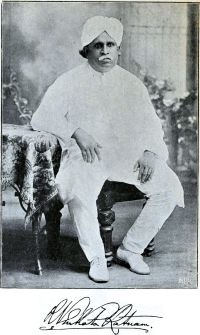 Raghupathi Venkataratnam Naidu,
The Message and Ministrations of Dewan Bahadur R. Venkata Ratnam
(1923)
Raghupathi Venkataratnam Naidu,
The Message and Ministrations of Dewan Bahadur R. Venkata Ratnam
(1923)
“ Thus it is that ideals are a living, vital agency in unfolding the latent virtues of man and so shaping his character. Hence we may perceive that in these three addresses we have, if I may use the ambitious expression, a full chart of our life — its right methods, its favourable circumstances and its ultimate realisation. Cultivate your self, sparing no pains. Seek and imbibe lofty ideals, drawing no invidious distinction between one and another. And realise that character in which alone lies the justification of human life and the gurantee of human continuity. ”
 Ralph Waldo Emerson,
Miscellanies
(1855)
Ralph Waldo Emerson,
Miscellanies
(1855)
“ And we, on this sea of human thought, in like manner inquire, Where are the old idealists? where are they who represented to the last generation that extravagant hope, which a few happy aspirants suggest to ours? In looking at the class of counsel, and power, and wealth, and at the matronage of the land, amidst all the prudence and all the triviality, one asks, Where are they who represented genius, virtue, the invisible and heavenly world, to these? ”
 Josiah Royce,
The World and the Individual, First Series
(1899)
Josiah Royce,
The World and the Individual, First Series
(1899)
“ Where the realist falsely sunders the what and the that, the outer world and the individual soul, the theoretical and the practical interests, the mystic sees the unity of life’s business, identifies the needful and the true, unites the moral Ought with the theoretical Ideal, teaches that the absolutely Real, by virtue of its very function as the Real, must also be the absolutely Good, gives life a genuine coherence of meaning, and defines the whole duty of man as simple fidelity to that meaning. ”
 Theodore Parker,
Speeches, Addresses, and Occasional Sermons…
Theodore Parker,
Speeches, Addresses, and Occasional Sermons…
“ For this special desire becomes the master-motive in the man; and, if strong, establishes a unity in his consciousness, and calls out certain passions, appetites, powers of mind and conscience, heart and soul; and, in a long life, the man creates himself anew in the image of his ideal desire. This desire, good or bad, which sways the man, is writ on his character, and thence copied into the countenance; and lust or love, frivolity or science, interest or principle, mammon or God, is writ on the man. ”
M. Valentine, Theoretical Ethics
“ To believe in an ever-living and perfect Mind, supreme over the universe, is to invest moral distinctions with immensity and eternity, and lift them from the provincial stage of human society to the imperishable theatre of all being. When planted thus in the very substance of things, they justify and support the ideal estimates of the conscience ”
Various, The Forum, October 1914
“ The devotion to the ideal in us presupposes therefore the most strenuous and persistent effort to learn these modes of control, to understand the deep and intricate ways of life, and to bend every power—of mind and body, of science and art—to bring life into harmony with their fundamental demands. ”
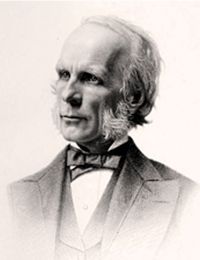 William G. T. Shedd,
Sermons to the Natural Man
William G. T. Shedd,
Sermons to the Natural Man
“ If the beauty of virtue, and the grandeur of truth, and the sublimity of invisible things, have been able to make such an impression upon your intellects, and your tastes,—upon that part of your constitution which is fixed and stationary, which responds organically to such objects, and which is not the seat of moral character,—then why is there not a corresponding influence and impression made by them upon your heart? ”
William James, Talks To Teachers On Psychology…
“ The uses of his intellect for practical affairs are therefore subordinate matters. 'The theoretic life' is his soul's genuine concern." Nothing can be more different in its results for our personal attitude than to take sides with one or the other of these views, and emphasize the practical or the theoretical ideal. In the latter case, abstraction from the emotions and passions and withdrawal from the strife of human affairs would be not only pardonable, but praiseworthy; and all that makes for quiet and contemplation should be regarded as conducive to the highest human perfection. ”
 George William Russell,
AE in the Irish Theosophist
George William Russell,
AE in the Irish Theosophist
“ But I raise the standard of idealism, to try everything by it, every custom, every thought before we make it our own, and every sentiment before it finds a place in our hearts. Are these conditions, social and mental, which some would have us strive for really so admirable as we are assured they are? Are they worth having at all? What of the heroic best of man ”
 Jean-Jacques Rousseau,
Profession of Faith of a Savoyard Vicar
(1889)
Jean-Jacques Rousseau,
Profession of Faith of a Savoyard Vicar
(1889)
“ In meditating on the nature of man, I conceived that I discovered two distinct principles; the one raising him to the study of eternal truths, the love of justice and moral beauty—bearing him aloft to the regions of the intellectual world, the contemplation of which yields the truest delight to the philosopher; the other debasing him even below himself, subjecting him to the slavery of sense, the tyranny of the passions, and exciting these to counteract every noble and generous sentiment inspired by the former. ”
George Spring Merriam, The Chief End of Man
“ The man rightly practiced in all noble exercises of life—in moral fidelity, in reverence and sympathy, in observation and conformity to the actual conditions of the world about him—will find pouring in upon him a beauty, a love, a divinity, which fill the soul with a heavenly vision. ”
Josiah Royce,
The World and the Individual, First Series
(1899)
“ We shall, perhaps to our surprise, reach the seemingly paradoxical and essentially idealistic thesis that no being in heaven or in earth, or in the waters under the earth, has power to give to an idea any purpose unless, the idea itself, as idea, as a fragment of life, as a conscious thrill, so to speak, of inner meaning, first somehow truly learns so to develope its internal meaning as to assign to itself just that specific purpose. ”
Jean-Jacques Rousseau,
Emile, or On Education
(1762)
“ True principles of justice, true types of beauty, all moral relations between man and man, all ideas of order, these are engraved on his understanding; he sees the right place for everything and the causes which drive it from that place; he sees what may do good, and what hinders it. Without having felt the passions of mankind, he knows the illusions they produce and their mode of action. ”
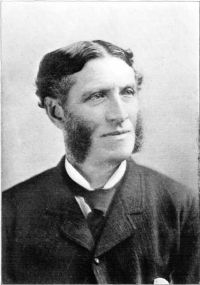 Matthew Arnold,
Selections from the Prose Works of Matthew Arnold
Matthew Arnold,
Selections from the Prose Works of Matthew Arnold
“ How is the ideal of a life so unlovely, so unattractive, so incomplete, so narrow, so far removed from a true and satisfying ideal of human perfection, as is the life of your religious organization as you yourself reflect it, to conquer and transform all this vice and hideousness? ”
 Boyd Winchester,
The Swiss Republic
(1891)
Boyd Winchester,
The Swiss Republic
(1891)
“ Ideals, the symbols of the truth which we conceive, of the beauty which we imagine, and of the good which we long for, have as great an influence in the world as ideas, if not even greater. High ideals and loyalty to them are virtues which are requisite to the existence and safety of a progressive society. ”
Josiah Royce,
The Religious Aspect of Philosophy
(1885)
“ Everywhere there stands over against this ideal some critic who says: “The choice of this aim for life is an accident. I reject this boastful ideal. For where in reality is found the firm basis of fact on which the ideal is founded?” Then possibly the idealist, relaxing the rigor of his idealism, points out in the external world some real or mythical support for his ideal. ”
Oliver Wendell Holmes, Ralph Waldo Emerson
“ I expand and live in the warm day like corn and melons."—But, "seen in the light of thought, the world always is phenomenal; and virtue subordinates it to the mind. Idealism sees the world in God,"—as one vast picture, which God paints on the instant eternity, for the contemplation of the soul. ”
Josiah Royce,
The World and the Individual, First Series
(1899)
“ You may observe already, even in this wholly preliminary sketch of the particular form of Idealism to be developed in these lectures, two principal features. First, Our account of the nature of Being, and of the relation between Idea and Being, is to be founded explicitly upon a theory of the way in which ideas possess their own meaning. Secondly, Our theory of the nature of Meaning is to be founded upon a definition in terms of Will and Purpose. We do not indeed say, Our will causes our ideas. But we do say, Our ideas now imperfectly embody our will. ”
Josef Donat, The Freedom of Science
“ Without Knowledge of the Human Nature. “Varied, according to character, are the demands made by heart and mind,” assures us a representative of modern philosophy, “corresponding to them is the image of the world to which the individual turns by inner necessity. ”
 Ernest Naville,
The Heavenly Father: Lectures on Modern Atheism
Ernest Naville,
The Heavenly Father: Lectures on Modern Atheism
“ This philosophy considers the true, the beautiful, the good, as ideas which exist by themselves, without a supreme Spirit of which they are the manifestation. It has received, in consequence, the name of idealism. ”
Various, The Journal of Speculative Philosophy…
“ Thus the ideal, in this superior degree, is the manifestation of moral powers and of the ideas of spirit, of the grand movements of the soul, and of the characters which appear and are revealed in the development of the representation. ”
 Johann Gottlieb Fichte,
On the Nature of the Scholar — Lecture III.…
Johann Gottlieb Fichte,
On the Nature of the Scholar — Lecture III.…
“ This self-forming and self-supporting life of the Idea in man manifests itself as Love;—strictly speaking, as Love of the Idea for itself; but, in the language of common appearance, as Love of man for the Idea. ”
contessa di Teresa Guiccioli, My Recollections of Lord Byron
“ In the severe judgments which he has pronounced upon himself in the first place, on mankind in general, and on some particular individuals, the ideal model of all the intellectual, moral, and physical beauty which he found in the depth of his own mind, shone with divine lustre before his imagination, by the union of faculties imbued with extraordinary energy. ”
graf Leo Tolstoy, A Russian Proprietor, and Other Stories
“ It was an ideal which might have been loved in the midst of this night, in the midst of this nature, without infringing its supernal beauty; an ideal not in the least circumscribed by the necessity of reducing it to coarse reality. ”
Arthur Warren, London Days: A Book of Reminiscences
“ For this is to know what manhood means, and a manly life, not by grave precept, or wise proverb, or ideal picture; but to see the ideal in complete equipment and compact in reality before you, as undeniably and as efficiently as the sun that sheds light from the sky, or the mountain that sheds waters into the glen. ”
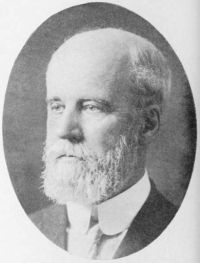 James Champlin Fernald,
English Synonyms and Antonyms
James Champlin Fernald,
English Synonyms and Antonyms
“ The ideal is imaginary, and ordinarily unattainable; the standard is concrete, and ordinarily attainable, being a measure to which all else of its kind must conform; as, the standard of weights and measures, of corn, or of cotton. The idea of virtue is the mental concept or image of virtue in general; the ideal of virtue is the mental concept or image of virtue in its highest conceivable perfection. ”
Josiah Royce,
The Sources of Religious Insight
“ And so, whatever you regard as a genuine test of the workings of your ideas is some living whole of experience above the level of any one of our individual human lives. To this whole you indeed actively appeal. The appeal is an act of will. And in turn you regard that to which you appeal as an experience which is just as live and concrete as your own, and which carries out its own will in that it snubs or welcomes your efforts with a will as hearty as is your own. For what estimates your deeds, {151} and gives them their meaning, is a life as genuine as yours and an activity as real as yours. ”
“ Mind, I have been talking, not of ordinary conformity to what the world requires, but of that fine perfection of mental and moral constitution which in its own natural necessary acting leaves nothing to be desired, in every occasion or circumstance of life. ”
F. F. Montrésor, Into the Highways and Hedges
“ A touch of idealism, of nobility of thought and purpose, mingled with an air of reality and well-chosen expression, are the most notable features of a book that has not the ordinary defects of such qualities. ”
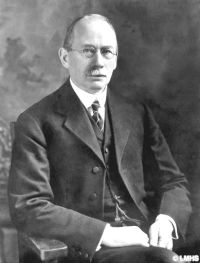 Rufus M. Jones,
Spiritual Reformers in the 16th & 17th Centuries
Rufus M. Jones,
Spiritual Reformers in the 16th & 17th Centuries
“ The seventh, and final, "quality" is body or figure, by which he means the fundamental tendency or energy toward expression in actuality and concrete form. The final goal of intelligent purpose is the realization of wisdom, of idea, in actual Nature-forms and life-forms—the incarnation of the spirit. ”
Earl of Dudley Ryder Harrowby, Modern Skepticism
“ If we refuse to believe in One Ruling, Organizing, Creative Mind, One Living, Universal Mind and Will and Providence, which works through all, we must endow each separate being, or at least each form of life, with creative energy, illimitable and all-answering sensibility and sympathy, unerring44 wisdom, and veritable will. ”
Josiah Royce,
The Conception of God
(1897)
“ Now indeed you know yourself as one Self, as a person. For, first, you know your empirical self as the Seeker, meaning, intending, aiming at, that life-ideal; and here you have a contrast of real and ideal self. And, secondly, since your ideal is this ideal, the expression of the meaning of your unique experience, you can rightly contrast yourself with all the rest of the world’s life. ”
Josiah Royce,
The Religious Aspect of Philosophy
(1885)
“ You had said that an ideal must have only an ideal foundation. And now you say that the ideally right thing depends on God’s nature, on the existence of the universal Reason, or on the assertions of Conscience. ”
Sir Claude Phillips, The Earlier Work of Titian
“ Idealisation, in the narrower sense of the word, could add nothing to the loveliness of such a land, to the stateliness, the splendid sensuousness devoid of the grosser elements of offence, to the genuine naturalness of such a mode of life. ”
Josiah Royce,
The World and the Individual, First Series
(1899)
“ But what the interested learners ask of idealistic teachers to-day is, as you are all aware, a more explicit statement as to just how Thought and Purpose, Idea and Will, and above all finite thought and will, and absolute thought and will, are, by any idealist, to be conceived as related to each other. ”
 Hamilton Wright Mabie,
Books and Culture
Hamilton Wright Mabie,
Books and Culture
“ Idealism in this sense, not as the product of an easy and ignorant optimism turning away from the facts of life, but as the product of a large and spiritual dealing with those facts, is the very soul, not only of noble living, but of those noble expressions of life which the greater writers have given us. ”

