Pulsation

Definition and stakes

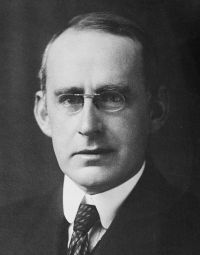
Matthew Fontaine Maury, Lieutenant, U.S.N.,  Physical Geography Of The Sea… (1855)

“ This sort of pulsation is heard also in the howlings of the storm and the whistling of the wind; the needle trembles unceasingly to it, and tells us of magnetic storms of great violence, which at times extend over large portions of the earth’s surface; and when we come to consult the records of those exquisitely sensitive anemometers, which the science and ingenuity of the age have placed at the service of philosophers, we find there that the pulse of the atmosphere is never still: in what appears to us the most perfect calm, the recording pens are moving to the pulses of the air. ”

Source: Wikisource

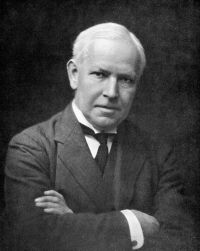
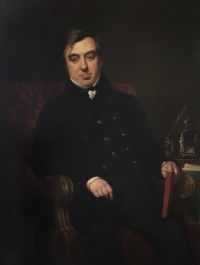
Portrait of William A. Hammond William A. Hammond,  Sleep and Its Derangements

“ Even those actions which are most continuous, such as respiration and the pulsation of the heart, have distinct periods of suspension. Thus, after the contraction and dilatation of the auricles and ventricles of the heart, there is an interval during which the organ is at rest. This amounts to one-fourth of the time requisite to make one pulsation and begin another. During six hours of the twenty-four the heart is, therefore, in a state of complete repose. ”
Source: Gutenberg

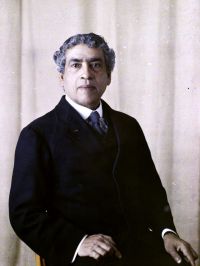
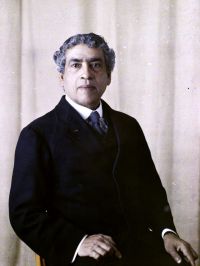
Portrait of Jagadish Chandra Bose Jagadish Chandra Bose,  Collected Physical Papers (1927)

“ In both, lowering of temperature slows down the pulsation culminating in an arrest. Rise of temperature up to an optimum, on the other hand, enhances the frequency. Diminution of internal pressure causes an arrest in both. The rhythmic tissue in animal and plant, has a long refractory period. In both, application of external stimulus has no effect during systolic phase of contraction, whereas an extra-pulsation is produced by stimulus during the diastolic phase of expansion. ”
Source: Wikisource

Get perspective with Kwize: daily news enlightened by great literature