Summary

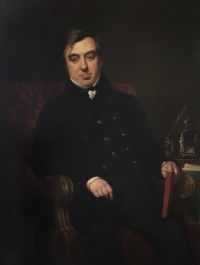
Portrait of John Ayrton Paris John Ayrton Paris Philosophy in Sport Made Science in Earnest

Roll the ball hither, Tom; roll the ball hither, I say! you stand as if you thought it would advance to us of its own accord.”
“I know a little better than that, too,” cried Tom; “no body can move without the application of some force.”
“Nor stop, either,” added Mr. Seymour, “when it is once in motion; for matter is equally indifferent to both rest and motion.”
“And yet, papa,” cried Louisa, “unfortunately for your assertion, the ball stopped just now, and I am sure that no force was used to make it do so.”
Source: Gutenberg

Portrait of John Ayrton Paris John Ayrton Paris Philosophy in Sport Made Science in Earnest

Seymour, taking the ball out of Rosa’s hand, “why this ball falls to the ground, as soon as I withdraw from it the support of my hand?”
“Because every heavy body that is not supported, must of course fall.”
“And every light one also, my dear; but that is no answer to my question; you merely assert the fact, without explaining the reason.”
“Oh! now I understand you; it is owing to the force of gravity; the earth attracts the ball, and the consequence is, that they both come in contact;--is not that right?”
Source: Gutenberg

Portrait of John Ayrton Paris John Ayrton Paris Philosophy in Sport Made Science in Earnest

Seymour; “and let me here remark,” continued he, “as we have already considered the philosophy of the flight of a bird, that its pinions are so set upon the body as to bring down the wings in an oblique direction towards the tail; so that in their action upon the air, we have the same resolution of forces as in that of the wind upon the surface of the kite, by which the body of the bird is not only supported, or raised perpendicularly, but carried forward.”
Source: Gutenberg

Get perspective with Kwize: daily news enlightened by great literature