Compression

Definition and stakes

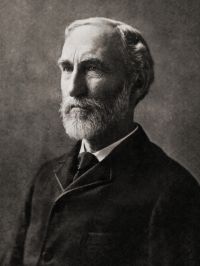
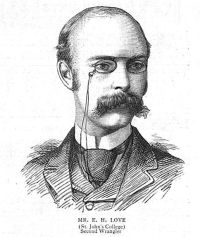
Portrait of Augustus Edward Hough Love Augustus Edward Hough Love,  1911 Encyclopædia Britannica (1911)

“ There will be compression, the same at all points, and proportional to the pressure; and the amount of the compression can be expressed as The quantity is the modulus of compression. In this case the linear contraction in any direction is ; but in general the linear extension (or contraction) is not one-third of the cubical dilatation (or compression) .
24. To define the rigidity, we suppose that a solid body is subjected to forces in such a way that there is shearing stress within it.
”

Source: Wikisource

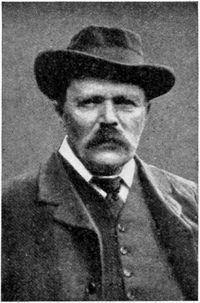
Portrait of Thomas P. Jones Thomas P. Jones,  Conversations on Natural Philosophy…

“ The air is an elastic fluid; and the peculiar property of elastic bodies is to resume, after compression, their original dimensions; and you must consider the air of which the atmosphere is composed as existing in a state of compression, for its particles being drawn towards the earth by gravity, are brought closer together than they would otherwise be, but the spring or elasticity of the air by which it endeavours to resist compression, gives it a constant tendency to expand itself, so as to resume the dimensions it would naturally have, if not under the influence of gravity. ”
Source: Gutenberg

Portrait of Isaac Newton Isaac Newton,  The Mathematical Principles of Natural Philosophy…

“ If a fluid be composed of particles mutually flying each other, and the density be as the compression, the centrifugal forces of the particles will be reciprocally proportional to the distances of their centres. And vice versa, particles flying each other with forces that are reciprocally proportional to the distances of their centres, compose an elastic fluid, whose density is as the compression. ”
Source: Wikisource

Get perspective with Kwize: daily news enlightened by great literature