Summary

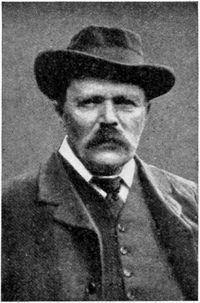
Portrait of John Milne John Milne Earthquakes and other earth movements

The fact that whenever a wave is produced, a certain quantity of water must be drawn from the level which surrounds it, in order that it should be formed, explains the phenomena that the sea is often observed first to draw back. Out in the open ocean it is drawn from the hollow between two waves. As has been pointed out by Darwin, it is like the drawing of the water from the shore of a river by a passing steamer.
Source: Gutenberg

Portrait of John Milne John Milne Earthquakes and other earth movements

What is required from those who undertake to forewarn us of an earthquake is an indication not only of the time at which the disturbance will happen, but also an indication of the area in which it is to occur. Those who dwell in an area where there are certain well-defined periods during which seismic activity is at a maximum—if ten or fourteen days should have passed without a shock—might, in many instances, find that a prophecy that there would be an earthquake within the next few days would prove itself correct.
Source: Gutenberg

Portrait of John Milne John Milne Earthquakes and other earth movements

Just as at the Geysers we hear the thud and feel the trembling produced by the sudden evolution and condensation of steam, so may steam by its sudden evolution and condensation in the ground beneath us give rise to a series of shocks of varying intensity, accompanied by intermediate vibratory motions—that is to say, a motion which, as judged of by our feelings, is not unlike many earthquakes. Often it may happen that the result of the explosion may be the production of a fault, or at least a fissure
Source: Gutenberg

Get perspective with Kwize: daily news enlightened by great literature