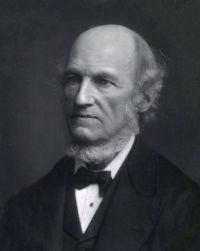
Pressure, defined as the force applied per unit area, is a fundamental concept in physics, expressed through units like pascals and atmospheres, and mathematically connected to force, area, and volume. While primarily a scientific construct, writers have long examined its metaphorical and philosophical aspects. William Whewell described it as a quantifiable mechanical effect, while James Mill associated it with sensory experience, distinguishing pressure as a bodily sensation similar to color perception.
H.G. Wells used it in a narrative sense to depict scientific phenomena, and Sydney Greenbie invoked its primal, natural strength in poetic imagery. Elizabeth Palmer Peabody, meanwhile, reimagined it as a metaphor for human interaction and spiritual insight. These diverse perspectives highlight pressure as both a physical phenomenon and a flexible symbol for human experience, linking science and literature through its dual function as a measurable quantity and an abstract idea.
 William Whewell,
History of scientific ideas
(1858)
William Whewell,
History of scientific ideas
(1858)