
“ When trouble toucheth a man, he crieth to us, on his side, or sitting, or standing; and when we withdraw his trouble, from him, he passeth on as though he had not called on us against the trouble which touched him! ”
Trouble
Definition and stakes
Trouble, defined as a situation causing distress, danger, or difficulty, has long been a central theme in literature, reflecting humanity’s struggle with adversity. From Muhammad’s reflection on divine response to suffering in The Koran to Edmund Vance Cooke’s poem framing hardship as a matter of perspective, authors have explored its psychological and existential weight.
Daniel Defoe’s Robinson Crusoe underscores hardship’s intensifying effect, while Shakespeare’s Hamlet contemplates its existential burden. Sarah French and Robert Burton highlight hardship’s dual nature—as both external trial and inner turmoil—revealing its universal resonance across cultures and eras.
Quotes about “trouble”
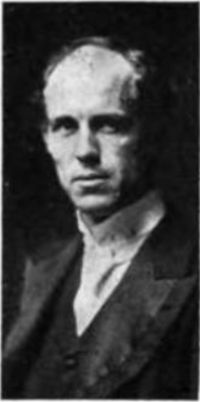 Edmund Vance Cooke,
Impertinent Poems
Edmund Vance Cooke,
Impertinent Poems
“ HOW DID YOU DIE? Did you tackle that trouble that came your way With a resolute heart and cheerful? Or hide your face from the light of day With a craven soul and fearful? Oh, a trouble's a ton, or a trouble's an ounce, Or a trouble is what you make it, And it isn't the fact that you're hurt that counts, But only how did you take it? ”
Sarah French, A Book for the Young
“ There is a general, and alas! too true an outcry, that trouble is the lot of all, and that "man is born to trouble as the sparks fly upward;" but let me ask, Is there not a vast amount made by ourselves? ”
 Daniel Defoe,
The Life and Adventures of Robinson Crusoe…
Daniel Defoe,
The Life and Adventures of Robinson Crusoe…
“ In trouble to be troubled, Is to have your trouble doubled. ”
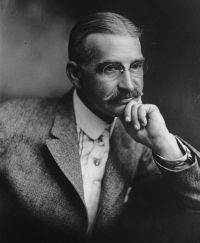 L. Frank Baum,
Dorothy and the Wizard in Oz
L. Frank Baum,
Dorothy and the Wizard in Oz
“ we can't help ourselves just now, you know, and I've always been told it's foolish to borrow trouble." ”
Daniel Defoe,
The Further Adventures of Robinson Crusoe
“ "In trouble to be troubled, Is to have your trouble doubled." ”
Islington) George (Vicar of St. Thomas's Allen, "The Numbering of the People"
“ Ten years! How many troubles have they witnessed! Troubles,—ah, but how many mercies too! Think of THESE. Troubles and mercies,—which were most in number in the ten years passed? You can count your troubles, can you count your blessings? ”
 William Shakespeare,
Hamlet
(1623)
William Shakespeare,
Hamlet
(1623)
“ To be, or not to be, that is the question: Whether ’tis nobler in the mind to suffer The slings and arrows of outrageous fortune, Or to take arms against a sea of troubles, And by opposing end them? ”
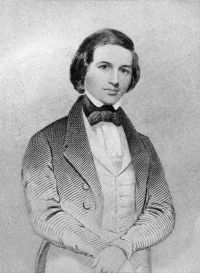 T. S. Arthur,
After a shadow, and other stories
T. S. Arthur,
After a shadow, and other stories
“ So there was conflict in his mind; but only a disturbing conflict. Reason acted too feebly on the side of these new-coming convictions. A desire to be at once, and to escape daily work and daily troubles, was stronger than any cold judgement of the case. ”
 Robert Burton,
The Anatomy of Melancholy
Robert Burton,
The Anatomy of Melancholy
“ but what physic, what chirurgery, what wealth, favour, authority can relieve, bear out, assuage, or expel a troubled conscience? A quiet mind cureth all them, but all they cannot comfort a distressed soul: who can put to silence the voice of desperation? ”
James Galloway Cowan, Plain Sermons, preached at Archbishop Tenison's Chapel…
“ You hear those who are vexed or thwarted, or oppressed, or wearied, exclaim in some moment of impatience or despondency, “I am weary of my life.” You find some so worn out, like Job, by long and accumulated troubles, that they continually sigh, and from the heart, “Oh! ”
Various, The Atlantic Monthly, Volume 06…
“ To England they soon turned, and contemplated the round, many-colored globe of Shakspeare's works. As playful swallows sometimes dart round and round a lithe and wondering wingless animal, so they, admiringly and timidly, attracted, yet hesitating, delighting in his alertness, but not quite understanding it, flitted like a troubled and beautiful flock around the great magician of modern civilization. ”
Bulchevy's Book of English Verse
“ Than my wearied sprite now longs to fly out of my troubled breast: O come quickly, sweetest Lord, and take my soul to rest!Ever blooming are the joys of heaven's high Paradise, Cold age deafs not there our ears nor vapour dims our eyes: Glory there the sun outshines; whose beams the Blessed only see: O come quickly, glorious Lord, and raise my sprite to Thee! ”
 Edward Payson Roe,
A Knight of the Nineteenth Century
Edward Payson Roe,
A Knight of the Nineteenth Century
“ By the consequences I do not mean what the world will think of you, but, rather, the personal results of your action—what you must suffer while you are in the world, and what you must suffer when far beyond the world. ”
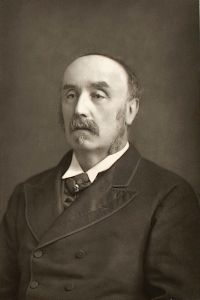
“ The petty crafts which make the pleader's art, The dolts who sit in judgment, when the one Who knows all must be silent; but you know not The intolerable burden of suspense, The hard and hateful gaze of hungry eyes Which gloat upon your suffering. When doom came It was well to know the worst, and hear no more The half-forgotten horrors. But I think The sense of common peril, common wrong, Knits us in indissoluble unity, Closer than years of converse. ”
 Percy Bysshe Shelley,
A Defence of Poetry and Other Essays
Percy Bysshe Shelley,
A Defence of Poetry and Other Essays
“ However ridiculous and pernicious we must admit the vulgar accessories of this creed to be, there is a certain analogy, not wholly absurd, between the consequences resulting to an individual during life from the virtuous or vicious, prudent or imprudent, conduct of his external actions, to those consequences which are conjectured to ensue from the discipline and order of his internal thoughts, as affecting his condition in a future state. ”
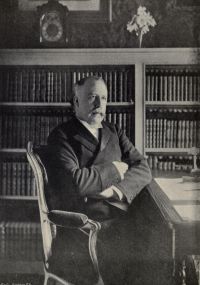 George William Erskine Russell,
Fifteen Chapters of Autobiography
George William Erskine Russell,
Fifteen Chapters of Autobiography
“ Passionately convinced (at twenty) that we had sworn ourselves for life to each cause which we espoused, we have pleaded and planned and denounced and persuaded; have struck the shrewdest blows which our strength could compass, and devised the most dangerous pitfalls for our opponents' feet which wit could suggest. ”
Thomas Holmes, Pictures and Problems from London Police Courts
“ So in the remaining chapters of this book I want to tell of humanity, of its good and evil, of its struggles and its failures, of its glory and of its shame—yea, and also of its sufferings and its wrongs. Down, low down, for years I have been groping among it, sometimes blindly, and sometimes with a ray of light, making here and there some rough places plain, and untying now and again some tangled knot; but more often baffled and defeated, yet always learning and ever seeing some new point for good or evil among them. ”
Sir Roger L'Estrange, Selections from the Observator…
“ If these Impressions were Inbred, and the Errors purely their Own, it would be a Point, not only of Good Nature, but of Common Justice, and Humanity, to have a Tenderness for People under an Invincible Mistake: But you have Started the Strongest Argument in the World, against your self here, by Enforcing the Necessity of Clearing the Stage of the Seditious Oracles, that Inspire These Desperate Resolutions. ”
Mary Hays, Memoirs of Emma Courtney
“ Whether the incidents, or the characters, are copied from life, is of little importance—The only question is, if the circumstances, and situations, are altogether improbable? If not—whether the consequences might not have followed from the circumstances?—This is a grand question, applicable to all the purposes of education, morals, and legislation—and on this I rest my moral—'Do men gather figs of thorns, or grapes of thistles?' asked a moralist and a reformer. ”
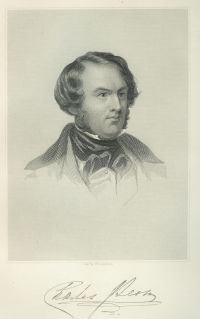 Charles James Lever,
Jack Hinton: The Guardsman
Charles James Lever,
Jack Hinton: The Guardsman
“ It would need a clearer head than mine to trace all the varying and discordant elements of character I had witnessed to their true source; to sift the evil from the good; to know what to cherish, what to repress, whereon to build hope or what to fear. ”
 Jean-Jacques Rousseau,
Emile, or On Education
(1762)
Jean-Jacques Rousseau,
Emile, or On Education
(1762)
“ What a difficulty do I see before me! A difficulty all the greater because it depends less on actual facts than on the cowardice of those who dare not look the difficulty in the face. Let us at least venture to state our problem. ”
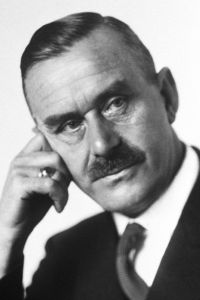 Thomas Mann,
Buddenbrooks, volume 2 of 2
(1924)
Thomas Mann,
Buddenbrooks, volume 2 of 2
(1924)
“ Ah, only a little while, and that struggle will be upon us—and they will do their best to bend us to their will and cut us to their pattern, to exercise us, to lengthen us, to shorten us, to corrupt us.... ”
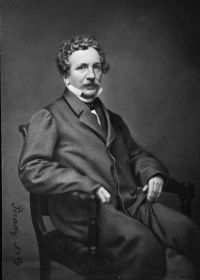 G. P. R. James,
Corse de Leon; or, The Brigand…
G. P. R. James,
Corse de Leon; or, The Brigand…
“ There are some—and perhaps you think me one of them—who are driven by circumstances, led by their passions, or their follies, or their vices, to a state of opposition with the rest of mankind, and who then, when cast out from society, find a thousand specious reasons for warring against it. ”
Jean-Jacques Rousseau,
Confessions
(1782)
“ Fate, which for thirty years forced my inclinations, for thirty others has seemed to oppose them; and this continued opposition, between my situation and inclinations, will appear to have been the source of enormous faults, unheard of misfortunes, and every virtue except that fortitude which alone can do honor to adversity. ”
G. P. R. James,
Lord Montagu's Page: An Historical Romance
“ How frightful a thing it is to consider what—under an overruling hand and will omnipotent—may be the consequences of the smallest deed we do. The consequences immediate, proximate, future! How many lives, what an amount of misery, how much damnation, may depend upon a light word, an idle jest, a sportive trick! ”
 Anna J. Cooper,
A Voice from the South
Anna J. Cooper,
A Voice from the South
“ We share it ourselves and often carry it to a more unjustifiable extent. For as a rule the narrower the mind and the more circumscribed the experience, the greater will be the exaggeration of accidents over substance, and of circumstance over soul. ”
 Zona Gale,
Neighborhood Stories
Zona Gale,
Neighborhood Stories
“ And we saw how, beyond judgment and even beyond what’s what, is a spirit that has got to come and clutch hold of life before such wrongs, and more wrongs, and all the wrongs that ail us, can stop being. ”
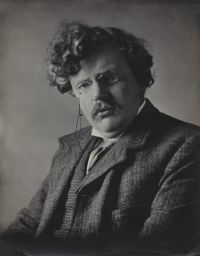 Gilbert Keith Chesterton,
The Apostle and the Wild Ducks…
(1975)
Gilbert Keith Chesterton,
The Apostle and the Wild Ducks…
(1975)
“ Many elements, good and bad, have destroyed it, humility as well as fear, camaraderie as well as scepticism, have bred in us a desire to give our advice lightly and persuasively, to mask our morality, to whisper a word and glide away. ”
 Havelock Ellis,
Little Essays of Love and Virtue
(1922)
Havelock Ellis,
Little Essays of Love and Virtue
(1922)
“ Throughout the history of civilisation, wherever we can trace the feelings and ideas which have prevailed on this matter and the resultant conduct, the problem has existed, often to produce discord, conflict, and misery. ”
Mary Wollstonecraft Shelley, Falkner: A Novel
“ When we turn to the page of history, and read of men visited by adversity—what do we say to those of their fellow-creatures who fall off from them on account of their misfortunes? Do we not call them little-minded, and visit them with our contempt? ”
John Stewart, The Apocalypse of Nature (1790)
“ What a hallowed and important crisis is that, when a glimpse of the intellectual or moral world breaks in upon the mind—what complicated reflections of regret and astonishment arise, while it strives to arrange and disclose its conceptions and ideas! ”
 Robert Southey,
The doctor, &c., vol. 1 (of 7)
(1834)
Robert Southey,
The doctor, &c., vol. 1 (of 7)
(1834)
“ In the country wherein thou livest, bad; in the town whereof thou art an inhabitant, worse; in thine own street, worser; in thine own house, worst of all. Think of it in thy family, in thy fortune, in thine intestines. In thy affairs, distressing; in thy members, painful; in thy conduct, ruinous. Order is the sanity of the mind, the health of the body, the peace of the city, the security of the state. As the beams to a house, as the bones to the microcosm of man, so is order to all things. ”
 Susan Warner,
The Old Helmet, Volume II
Susan Warner,
The Old Helmet, Volume II
“ But the evils that surround us—that come to our knowledge and under our very eyes—are real and tangible and dreadful. So much the more reason for our being here;—but so much the less likely that you, gently reared and delicately cared for, will be allowed to risk your delicate nurture in this land of savages. ”
 Desiderius Erasmus,
In Praise of Folly
Desiderius Erasmus,
In Praise of Folly
“ Farther, in every course of life how many wracks there may be of torturing diseases, how many unhappy accidents may casually occur, how many unexpected disasters may arise, and what strange alterations may one moment produce? Not to mention such miseries as men are mutually the cause of, as poverty, imprisonment, slander, reproach, revenge, treachery, malice, cousenage, deceit, and so many more, as to reckon them all would be as puzzling arithmetic as the numbering of the sands. ”
Charles Greville, The Greville Memoirs, Part 1 (of 3…
“ What energies a difficult crisis called forth! How her spirit and self-possession bore up in the midst of danger and insult, and how she contrived to preserve her dignity even while compelled to make the most humiliating concessions! ”
 Friedrich Wilhelm Nietzsche,
The Dawn of Day
Friedrich Wilhelm Nietzsche,
The Dawn of Day
“ Closing our Ears to the Complaints of others.—When we let our sky be clouded by the complaints and suffering of other mortals, who must bear the consequences of such gloom? No doubt those other mortals, in addition to all their other burdens! ”
T. T. Martin, God's Plan with Men
“ The child who, from love, bears trials and burdens placed upon him by the father, the slave who, from fear of the lash, bears trials and burdens placed upon him by the master, the hireling who, from desire for the wages, bears trials and burdens, and the stoic who, from sheer force of will, or from a cold sense of duty, bears trials and burdens, because he must,—are developing altogether different characters. ”
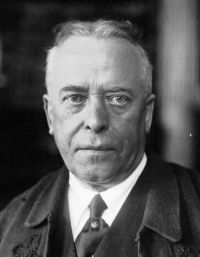 Eugène Brieux,
Three Plays by Brieux
Eugène Brieux,
Three Plays by Brieux
“ I will ask you, therefore, to raise your mind above your personal sorrow and to conceive in the mass the thousands of beings who suffer from similar causes. Thousands, mark you, from every rank of society. ”
Jean-Jacques Rousseau,
Émile; Or, Concerning Education…
“ Must not such a cruel constraint have an influence upon their temper as well as upon their constitution? Their first feeling is a feeling of constraint and of suffering. To all their necessary movements they find only obstacles. More unfortunate than chained criminals, they make fruitless efforts, they fret themselves, they cry. ”
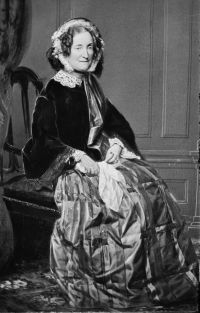 Lydia Sigourney,
Moral Pieces in Prose and Verse
(1815)
Lydia Sigourney,
Moral Pieces in Prose and Verse
(1815)
“ Are we opposed in a favourite argument? Let us not sacrifice that composure which might enable us to retrieve lost ground, or defend what remains, nor cast away the advantages of dispassionate investigation. Are we provoked or injured? Let us not add a more formidable injury of our own, the waste of spirits, the disturbance of present enjoyment, the destruction of the calm temperament of the soul. ”
Sarah E. Wall, Orange Grove (1866)
“ Surely, a fearful responsibility rested somewhere,—a stern necessity was laid on some one to cry put against the wickedness. If the strong ones were silent it might be because their experience had not been like her own. ”
George Marshall, The Marshall Plan Speech (1947)
“ But, to my mind, it is of vast importance that our people reach some general understanding of what the complications really are, rather than react from a passion or a prejudice or an emotion of the moment. ”
 George Moore,
Confessions of a Young Man
George Moore,
Confessions of a Young Man
“ It will readily be understood how a mind like mine, so keenly alive to all impulses, and so unsupported by any moral convictions, would suffer in so keen a contest waged under such unequal and cruel conditions. ”
“ In circles highly civilised the great things, the real things, the hard, the cruel and even the tender things, the true elements of any tension and true facts of any crisis, have ever, for the outsider’s, for the critic’s use, to be translated into terms—terms in the distinguished name of which, terms for the right employment of which, more than one situation of the type I glance at had struck me as all irresistibly appealing. ”
 Frances Milton Trollope,
Paris and the Parisians in 1835…
Frances Milton Trollope,
Paris and the Parisians in 1835…
“ The quiet and peaceably-disposed are wearied, worried, tormented, and almost stunned, by the ceaseless jarring produced by the confusion into which bad men have contrived to throw all the elements of social life. ”
Pierre de Bourdeille, Lives of Fair and Gallant Ladies (1922)
“ Then consider the anxieties and caprices they have to put up with, the risks they run of danger and death, of maiming and wounds, of affronts, insults, quarrels, terrors, pains and penalties of every kind. ”
Michael Muller, Purgatorian Consoler (1868)
“ In action? By being idle ? — slow or impatient about my work ? Have I not been in evil or dangerous company ? Done any immodest action ? Been too free in my manners ? Been rude, cross, or disobedient towards my parents or superiors ? Been unkind, insolent, malicious, cruel or unjust towards my neighbor ? ”
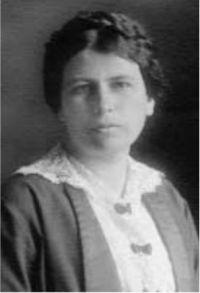 Frances Theresa Russell,
Satire in the Victorian novel
(1920)
Frances Theresa Russell,
Satire in the Victorian novel
(1920)
“ Equipped with this outfit of criteria he looks upon life and finds it complete or wanting, tests his fellow men and approves or condemns, examines all created things and calls them good or bad. But he is so constituted that his acquiescence is likely to be somewhat passive, and his protests active, his commendation grudging and qualified, his condemmation sweeping and thorough. ”
Mary Ann Hedge, Samboe; or, The African Boy
“ The enjoyments of the present life, the bright hopes of a future state, are now communicated to thousands of our fellow-creatures, formerly in a state of mental and moral darkness, and obnoxious to the most frightful miseries, victims of the basest passions, subjects of the most alarming fears. ”
