Misfortune, often synonymous with ill fate, encompasses calamity, adversity, and bad luck, serving as a recurring motif in literature. Authors such as Alexandre Corréard portray it as a shared human trial, while Arthur Schopenhauer views it as a catalyst for reevaluating personal claims. T.S.
Arthur contrasts misfortune’s initial pain with its potential for growth, and Eugène Sue distinguishes between suffering resulting from virtue or folly. These varied perspectives reveal misfortune as both a universal trial and a lens for examining resilience, empathy, and the human condition, ultimately underscoring its role as a narrative device that tests character and illuminates moral or existential truths.
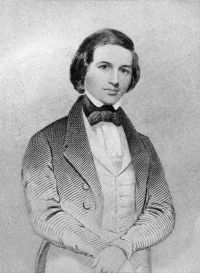 T. S. Arthur,
All's for the Best — Chapter VI. Cast Down…
T. S. Arthur,
All's for the Best — Chapter VI. Cast Down…