“ She threw her arms around his neck, and put her head on his breast."Thou art not trifling with me, Yosef? No, no! Then I shall be happy yet? Oh, I love thee so!"Helena's bosom rose and fell, her face was radiant, and her lips approached his."Oh, I have been very sad, very lonely," continued she, "but I believed in thee. The heart trusts when it loves. Thou art mine! I only live through thee—what is life? If one laughs and is joyful, if one is sad and weeps, if one thinks and loves—that is life. But I rejoice and I weep only through thee, I think of thee, I love thee. ”
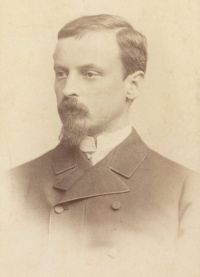
Henryk Sienkiewicz
Biographical details
_(cropped).jpg)
Henryk Sienkiewicz (1846–1916), a Polish novelist, journalist, and Nobel laureate (1905), is renowned for his historical epics and humanistic storytelling. His Trilogy—With Fire and Sword, The Deluge, and Sir Michael—vividly reconstructs 17th-century Poland’s conflicts, while Quo Vadis (1896) dramatizes early Christian persecution under Nero.
A champion of Positivism, Sienkiewicz interwove national identity with universal themes, ensuring his works remain essential chronicles of Poland’s resilience and the enduring human spirit.
Quotes by Henryk Sienkiewicz
 Henryk Sienkiewicz,
Whirlpools: A Novel of Modern Poland
Henryk Sienkiewicz,
Whirlpools: A Novel of Modern Poland
“ At this Gronski shaded his eyes with his hand, gazed at Ladislaus intently and asked:"My dear sir, did you ever propound to yourself one question?""What one?""What pains you the more,--the loss of Miss Anney or your wounded self-love?""I thank you, sir," answered Ladislaus, with irony. "In reality, only self-love. Through it, I do not sleep, do not eat; through it, in the course of a few days, I have grown lean like a shaving and were it not for this living wound, life for me would be one perpetual round of pleasure." ”
Henryk Sienkiewicz,
The Deluge: An Historical Novel of Poland…
“ True, that was he,—Pan Andrei Kmita, the banneret of Orsha; and he was lying on his back in the wagon. His head was bound in a cloth, but by the ruddy light of the moon his pale and calm face was perfectly visible. His eyes were deeply sunk and closed; life did not discover itself by the least movement. “With God!” said Billevich, removing his cap. “Stop!” cried Olenka. And she asked with a low but quick voice, as in a fever: “Is he alive or dead?” “He is alive, but death is over him.” Here the sword-bearer, looking at Kmita’s face, said: “You will not take him to Lyubich?” ”