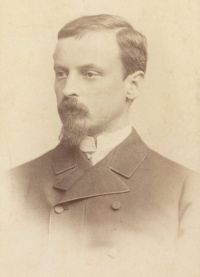
Henryk Sienkiewicz

Henryk Sienkiewicz

Summary

Portrait of Henryk Sienkiewicz Henryk Sienkiewicz,  Let Us Follow Him (1897)

“ Men might have thought that some being from above was sifting down to the earth lurid darkness. The air now grew sultry.
All at once even those remnants of lurid gleams became black. Clouds, dark as night, rolled and pushed forward, like a gigantic wave, toward the height and the city. A tempest was coming! The world was filled with fear.
"Let us return!" said Cinna again.
"Once more, once more, I wish to see him," answered Antea.
Darkness had concealed the hanging bodies. Cinna gave command to carry the litter nearer the place of torment.
”
Source: Wikisource

Portrait of Henryk Sienkiewicz Henryk Sienkiewicz,  Let Us Follow Him

“ This teaching not only struck Antea, but seemed to her the only source of consolation. She knew that she must die, and immense regret seized her. For what did death mean for her? It meant to lose Cinna, to lose her father, to lose the world, to lose love, for a cold, empty gloom, which was half nothing. Hence the more desirable it was for her in life, the greater must be her sorrow. If death could be good for anything, or if it were possible to take with her even the remembrance of love, or the memory of happiness, she would be able to gain resignation the more quickly. ”
Source: Gutenberg

Portrait of Henryk Sienkiewicz Henryk Sienkiewicz,  Let Us Follow Him (1897)

“ The head of the Nazarene had fallen low on his breast; it was as pale as wax; his eyes were closed, his lips blue.
"He is dead," whispered Antea.
"He is dead," repeated Cinna.
At this moment a centurion thrust his spear into the side of the dead. A wonderful thing: the return of light and the sight of that death seemed to appease that crowd. They pushed nearer and nearer, especially since the soldiers did not bar approach. Among the throng were heard voices,—
"Come down from the cross! Come down from the cross!"
”
Source: Wikisource

Get perspective with Kwize: daily news enlightened by great literature