The Rig Veda (1896)
“ Sages well-skilled in work, intelligent, drain out the stalk that roars, the Sage, the Everlasting One. The milk, the hymns unite them with him in the place of sacrifice, his seat who is produced anew. ”
The sage, in classical philosophy, is an individual who has achieved wisdom, going beyond mere intellectual inquiry to embody virtue and moral clarity. From Plato’s distinction between the sage—possessing wisdom—and the philosopher who seeks it, to Epicurus’ tranquil sage reflecting on the cosmos, and Stoicism’s vision of a morally steadfast individual, the concept spans a variety of traditions.
Laozi depicts the sage as detached from worldly chaos, while Adi Shankara underscores inner joy independent of external rituals. James Allen and Coleridge emphasize the sage’s control over emotions and accumulated learning. Across these texts, the sage emerges as a universal ideal, connecting human aspiration with divine or natural law.
The Rig Veda (1896)
“ Sages well-skilled in work, intelligent, drain out the stalk that roars, the Sage, the Everlasting One. The milk, the hymns unite them with him in the place of sacrifice, his seat who is produced anew. ”
The Rig Veda (1896)
“ Acting the Sage, he flows enrobed in waters and song as 'twere a stall that kine may prosper. 2. The worlds expand to him who from aforetime found light to spread the law of life eternal. The swelling songs, like kine within the stable, in deep devotion call aloud on Indu. 3. When the sage bears his holy wisdom round him, like a car visiting all worlds, the Hero, Becoming fame, mid Gods, unto the mortal, wealth to the skilled, worth praise mid the Ever-present, 4. For glory born be hath come forth to glory: he giveth life and glory to the singers. They, clothed in glory, have become immortal. ”
 James Allen,
From Passion to Peace
(1910)
James Allen,
From Passion to Peace
(1910)
“ The sage has conquered passion, and has come to lasting peace. As the mighty mountain remains unmoved by the turbulent ocean that beats round its base, so the mind of the sage, towering in lofty virtue, remains unshaken by the tempests of passion which beat unceasingly upon the shores of life. Good and wise, he is evermore happy and serene; transcendently virtuous, he lives in beatific bliss. ”
 Samuel Taylor Coleridge,
Anima Poetæ
Samuel Taylor Coleridge,
Anima Poetæ
“ A "myriad-minded" sage, who has seen men and cities, who has read widely and shaped his thoughts in a peculiar mould, is pouring out his stores of knowledge, the garnered fruit of a life of study and meditation, for the benefit of an apt learner, a discreet and appreciative disciple. ”
St. George William Joseph Stock, A Guide to Stoicism
“ The sage alone could act rightly, but other people might perform "the proprieties." Any one might honor his parents, but the sage alone did it as the outcome of wisdom, because he alone possessed the art of life, the peculiar work of which was to do everything that was done as the result of the best disposition. ”
Thomas Brown, Lectures on the Philosophy of the Human Mind…
“ The sage, who in the silence of midnight, continues still those labours which the morning began, watching, with sleepless eye, the fate of some experiment, that almost promises to place within his hand the invisible thread, which leads into the labyrinths of nature, or exploring those secrets of the mind itself, by the aid of which he is afterwards to lay down rules of more accurate philosophizing, and to become the legislator of all who think, is not cheered, in his toils, merely by occasional anticipations of the truths that await his search. ”
 Laozi,
The Tao Teh King, or the Tao and its Characteristics
Laozi,
The Tao Teh King, or the Tao and its Characteristics
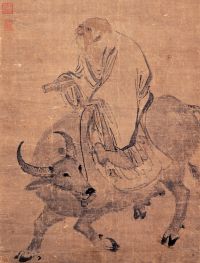
“ The sage has in the world an appearance of indecision, and keeps his mind in a state of indifference to all. The people all keep their eyes and ears directed to him, and he deals with them all as his children. ”
 Adi Shankara,
The Crest Jewel of Wisdom — The Perfect Sage
(1946)
Adi Shankara,
The Crest Jewel of Wisdom — The Perfect Sage
(1946)
“ Whether walking or standing, sitting or lying down, or wherever he may be, let the sage dwell according to his will, the wise man finding joy ever within himself.No distinctions of place or time, position or space are to be regarded as bringing release from bondage, for the mighty-souled, who has perfectly attained to reality. Of what avail are the rites of religion for one who has attained to wisdom? ”
Paul Ambroise Bigandet, The Life or Legend of Gaudama, the Buddha of the Burmese…
“ To the sage that has already begun the laborious task of investigating truth, such practices are of no use, and are nowhere insisted on as necessary, or even useful. In the book of discipline, no mention is made of them. ”
 Thomas Davidson,
Aristotle and Ancient Educational Ideals
Thomas Davidson,
Aristotle and Ancient Educational Ideals
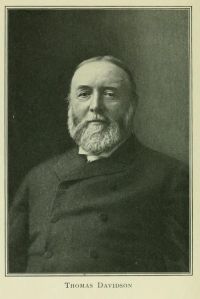
“ How does a man [135] become a sage? (2) How can the sage organize human life, and secure a succession of sages to continue his work after him? To the first of these questions, dialectics gives the answer; to the second, practics; while theoretics exhibits to us at once the origin and the end, that is, the meaning, of all existence, the human included. ”
 Mathilde Blind,
Madame Roland
(1886)
Mathilde Blind,
Madame Roland
(1886)
“ If in these thoughts of the young student there is something of the lofty calm of the sage, there is likewise a tone of practical sagacity and daring, indicative of a nature eminently fitted for mixing in and controlling affairs. ”
Helen A. Clarke, Browning and His Century
“ There is nothing here more reassuring than a statement made by the sage, based upon no argument, nor revelation, nor intuition—nothing but the utilitarian doctrine that it will be wiser to cling to Faith beyond Faith! ”
Laozi,
The Tao Teh King, or the Tao and its Characteristics
“ All difficult things in the world are sure to arise from a previous state in which they were easy, and all great things from one in which they were small. Therefore the sage, while he never does what is great, is able on that account to accomplish the greatest things. 3. He who lightly promises is sure to keep but little faith; he who is continually thinking things easy is sure to find them difficult. Therefore the sage sees difficulty even in what seems easy, and so never has any difficulties. ”
Sharaf al-Din Ahmad ibn Yahya Maniri, Letters from a Sûfî Teacher
“ True Knowledge is that which leads to the Divine Sanctuary, not that which leads to wealth, rank and passional gratifications." The company of a Sage for a day is more conducive to progress than purification and asceticism.—Letter 55. ”
 Zhuang Zi,
Chuang Tzŭ
(1889)
Zhuang Zi,
Chuang Tzŭ
(1889)
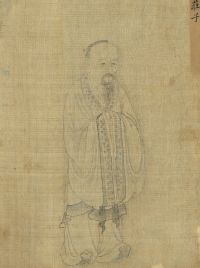
“ The Sage too has a source from which the nourishment of his soul is supplied. "The relation between water and earth is determinate. The relation between a man and his shadow is determinate. The relation between thing and thing is determinate. ”
William James, The Varieties of Religious Experience (1902)
“ Their test of its purity, like our test of religion's value, is empirical: its fruits must be good for life. When a man comes out of Samâdhi, they assure us that he remains "enlightened, a sage, a prophet, a saint, his whole character changed, his life changed, illumined." ”
 J. A. Giles,
Six Old English Chronicles
(1848)
J. A. Giles,
Six Old English Chronicles
(1848)
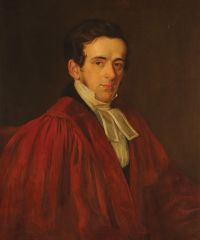
“ For wisdom shall decay and fall away from her wise men, and the understanding of her sages shall be concealed. Woe be unto you that are profound in heart, to conceal counsel from our Lord, whose works are in darkness, and they say, who seeth us? And who hath known us? ”
Eric P. Kelly, The Trumpeter of Krakow (1928)
“ I would learn the secrets of the earth, the messages of the sky, and I would know as well the secret of the soul, and how one might seek to help and save the souls of men whose bodies are from birth misshapen. ”
 Zane Grey,
Riders of the Purple Sage
(1912)
Zane Grey,
Riders of the Purple Sage
(1912)
“ Dark-clothed, dark-faced men they all were, burned by the sun, bow-legged as were most riders of the sage, but neither lean nor gaunt. Then Venters's gaze passed to the tables, and swiftly it swept over the hard-featured gamesters, to alight upon the huge, shaggy, black head of the rustler-chief. "Oldring!" he cried, and to him his voice seemed to split a bell in his ears. ”
 Swami Vivekananda,
The Complete Works of Swami Vivekananda…
Swami Vivekananda,
The Complete Works of Swami Vivekananda…
“ One only man, one only God, one ever perfect soul,One only sage who ever scorned the dark and dubious ways,One only man who dared think and dared show the goal --That death is curse, and so is life, and best when stops to be. ”
Zane Grey,
Riders of the Purple Sage
(1912)
“ He must not leave her much alone. As he strode down the sloping terrace, rabbits scampered before him, and the beautiful valley quail, as purple in color as the sage on the uplands, ran fleetly along the ground into the forest. It was pleasant under the trees, in the gold-flecked shade, with the whistle of quail and twittering of birds everywhere. ”
The Rig Veda — Mandala 3, Hymn 38 (1896)
“ HASTING like some strong courser good at drawing, a thought have I imagined like a workman. Pondering what is dearest and most noble, I long to see the sages full of wisdom. 2. Ask of the sages' mighty generations firm-minded and devout they framed the heaven. ”
Zane Grey,
Riders of the Purple Sage
“ The bray of a lazy burro broke the afternoon quiet, and it was comfortingly suggestive of the drowsy farmyard, and the open corrals, and the green alfalfa fields. Her clear sight intensified the purple sage-slope as it rolled before her. Low swells of prairie-like ground sloped up to the west. Dark, lonely cedar-trees, few and far between, stood out strikingly, and at long distances ruins of red rocks. Farther on, up the gradual slope, rose a broken wall, a huge monument, looming dark purple and stretching its solitary, mystic way, a wavering line that faded in the north. ”
 Philip Schaff,
Nicene and Post-Nicene Fathers…
(1885)
Philip Schaff,
Nicene and Post-Nicene Fathers…
(1885)
“ But having examined a great number of passages from the Holy Scriptures, I find it written in the Book of Job, that holy man being the speaker, “Behold, piety, that is wisdom; but to depart from evil is knowledge.” [4] In thus distinguishing, it must be understood that wisdom belongs to contemplation, knowledge to action. ”
Zane Grey,
Riders of the Purple Sage
(1912)
“ The valley afforded better traveling than the cañon. It was lighter, freer of sage, and there were no rocks. Soon, out of the pale gloom shone a still paler thing, and that was the low swell of slope. Venters mounted it, and his dogs walked beside him. Once upon the stone he slowed to snail pace, straining his sight to avoid the pockets and holes. Foot by foot he went up. The weird cedars, like great demons and witches chained to the rock and writhing in silent anguish, loomed up with wide and twisting naked arms. ”
Zane Grey,
Riders of the Purple Sage
(1912)
“ Little Fay's golden hair floated on the breeze. The sun shone; the walls gleamed; the sage glistened. And then it seemed the sun vanished, the walls shaded, the sage paled. The horses walked—trotted—galloped—ran—to fall again to walk. Shadows gathered under shelving cliffs. The cañon turned, brightened, opened into long, wide, wall-enclosed valley. Again the sun, lowering in the west, reddened the sage. Far ahead round, scrawled stones appeared to block the Pass. "Bear up, Jane, bear up!" called Lassiter. "It's our game, if you don't weaken." "Lassiter! Go on—alone! Save little Fay!" ”
Zane Grey,
Riders of the Purple Sage
“ Every summer I get scared to death and hide somewhere in the dark. Storms up on the sage are bad, but nothing to what they are down here in the cañons. And in this little valley—why, echoes can rap back and forth so quick they’ll split our ears.” “We’re perfectly safe here, Bess.” ”
 Ralph Waldo Emerson,
Representative Men — Uses of Great Men
(1850)
Ralph Waldo Emerson,
Representative Men — Uses of Great Men
(1850)
“ "A sage is the instructor of a hundred ages. ”
 James Beattie,
The Poetical Works of James Beattie
James Beattie,
The Poetical Works of James Beattie
“ He thought as a sage, though he felt as a man. ”
Zane Grey,
Riders of the Purple Sage
(1912)
“ Out of the grove of cottonwoods, a green patch on the purple, gleamed the dull red of Jane Withersteen's old stone house. And from there extended the wide green of the village gardens and orchards marked by the graceful poplars; and farther down shone the deep, dark richness of the alfalfa fields. Numberless red and black and white dots speckled the sage, and these were cattle and horses. So, watching and waiting, Venters let the time wear away. At length he saw a horse rise above a ridge, and he knew it to be Lassiter's black. ”
Zane Grey,
Riders of the Purple Sage
“ They would go back to Lassiter’s trail and follow it, and follow in vain. So Venters rode on, with the wind growing sweeter to taste and smell, and the purple sage richer and the sky bluer in his sight; and the song in his ears ringing. By and by Bess halted to wait for him, and he knew she had come to the trail. When he reached her it was to smile at sight of her standing with arms round Black Star’s neck. “Oh, Bern! I love him!” she cried. “He’s beautiful; he knows; and how he can run! I’ve had fast horses. But Black Star!... Wrangle never beat him!” ”
Zane Grey,
Riders of the Purple Sage
“ He wheeled and ran down the slope, and out to the level of the sage-brush. Returning, he had no time to spare, only now and then, between dashes, a moment when he stopped to cast sharp eyes ahead. The abundant grass left no trace of his trail. Short work he made of the distance to the circle of cañons. He doubted that he would ever see it again; he knew he never wanted to; yet he looked at the red corners and towers with the eyes of a rider picturing landmarks never to be forgotten. Here he spent a panting moment in a slow-circling gaze of the sage-oval and the gaps between the bluffs. ”
Zane Grey,
Riders of the Purple Sage
“ There was nothing else for him to think. Rustlers could not fly, nor cattle jump down thousand-foot precipices. He was only proving what the sage-riders had long said of this labyrinthine system of deceitful cañons and valleys—trails led down into Deception Pass, but no rider had ever followed them. On a sudden he heard above the soft roar of the waterfall an unusual sound that he could not define. He dropped flat behind a stone and listened. From the direction he had come swelled something that resembled a strange muffled pounding and splashing and ringing. ”
Zane Grey,
Riders of the Purple Sage
(1912)
“ A wide, white trail wound away down the slope. One keen, sweeping glance told Venters that there was neither man nor horse nor steer within the limit of his vision, unless they were lying down in the sage. Ring loped in the lead and Whitie loped in the rear. Wrangle settled gradually into an easy swinging canter, and Venters's thoughts, now that the rush and flurry of the start were past, and the long miles stretched before him, reverted to a calm reckoning of late singular coincidences. ”
Zane Grey,
Riders of the Purple Sage
“ Black Star and Night, answering to spur, swept swiftly westward along the white, slow-rising, sage-bordered trail. Venters heard a mournful howl from Ring, but Whitie was silent. The blacks settled into their fleet, long-striding gallop. The wind sweetly fanned Venters’s hot face. From the summit of the first low-swelling ridge he looked back. Lassiter waved his hand; Jane waved her scarf. Venters replied by standing in his stirrups and holding high his sombrero. Then the dip of the ridge hid them. From the height of the next he turned once more. Lassiter, Jane, and the burros had disappeared. ”
Zane Grey,
Riders of the Purple Sage
(1912)
“ Twilight was fast falling. A group of horsemen crossed the dark line of low ground to become more distinct as they climbed the slope. The silence broke to a clear call from an incoming rider, and, almost like the peal of a hunting-horn, floated back the answer. The outgoing riders moved swiftly, came sharply into sight as they topped a ridge to show wild and black above the horizon, and then passed down, dimming into the purple of the sage. "I hope they don't meet Lassiter," said Jane. "So do I," replied Venters. "By this time the riders of the night shift know what happened to-day. ”
Zane Grey,
Riders of the Purple Sage
(1912)
“ For about this man there was mystery; he seldom rode through the village; and when he did ride through it was swiftly; riders seldom met him by day on the sage; but wherever he rode there always followed deeds as dark and mysterious as the mask he wore. Oldring's band did not confine themselves to the rustling of cattle. Venters lay low in the shade of the cottonwoods, pondering this chance meeting, and not for many moments did he consider it safe to move on. Then, with sudden impulse, he turned the other way and went back along the grove. ”
Zane Grey,
Riders of the Purple Sage
(1912)
“ Lassiter lengthened the stirrup straps on one of the burros and bade her mount and ride close to him. She was to keep the burro from cracking his little hard hoofs on stones. Then she was riding on between dark, gleaming walls. There were quiet and rest and coolness in this cañon. She noted indifferently that they passed close under shady, bulging shelves of cliff, through patches of grass and sage and thicket and groves of slender trees, and over white, pebbly washes, and around masses of broken rock. The burros trotted tirelessly; the dogs, once more free, pattered tirelessly ”
Zane Grey,
Riders of the Purple Sage
“ Straight at the waterfall the rustlers drove the burros, and straight through the middle, where the water spread into a fleecy, thin film like dissolving smoke. Following closely, the rustlers rode into this white mist, showing in bold black relief for an instant, and then they vanished. Venters drew a full breath that rushed out in brief and sudden utterance. “Good Heaven! Of all the holes for a rustler!... There’s a cavern under that waterfall, and a passageway leading out to a cañon beyond. Oldring hides in there. He needs only to guard a trail leading down from the sage-flat above. ”
Zane Grey,
Riders of the Purple Sage
(1912)
“ Keeping close to the edge of the cottonwoods, he went swiftly and silently westward. The grove was long, and he had not reached the end when he heard something that brought him to a halt. Low-padded thuds told him horses were coming his way. He sank down in the gloom, waiting, listening. Much before he had expected, judging from sound, to his amazement he descried horsemen near at hand. They were riding along the border of the sage, and instantly he knew the hoofs of the horses were muffled. Then the pale starlight afforded him indistinct sight of the riders. ”
