“ When at one with the Dao: When heaven is at one, it is clear, When earth is at one, it is fertile, When the spirit is at one, it is serene, When the refuge is at one, it is rewarding, When the myriad things are at one, there is life, When the leaders are at one, the people are respectable, And become at one! If the heaven is unclear, there is fear it will fracture; If the earth is infertile, there is dread for disaster; If the spirit is disturbed, there is anxiety in death; If the refuge is deprived, there is panic over recession ”
Laozi
Biographical details
.jpg)
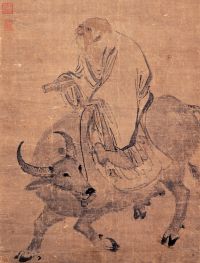
Laozi, a semi-legendary 6th-century BC Chinese philosopher, is revered as the founder of Taoism and the author of the Tao Te Ching, a foundational text emphasizing the Tao—the formless source of existence—and principles such as wu wei (non-action) and harmony with nature. His work critiques conventional wisdom, promoting simplicity and spontaneity over strict moral codes.
Although traditional accounts portray him as a historical figure, modern scholarship considers his authorship to be a compilation of multiple voices, with the Tao Te Ching developing over centuries. His ideas deeply influenced Chinese philosophy, religion, and culture, remaining a cornerstone of Eastern thought.
Quotes by Laozi
“ Cultivate the Dao amidst your family, The Virtue is in finding fortune; Cultivate the Dao amidst your community, The Virtue is in garnering respect; Cultivate the Dao amidst your nation, The Virtue is in harvesting prosperity. Cultivate the Dao amidst the universe, The Virtue is ubiquitously enjoyed. Therefore, behold one's self to see self, Behold one's family to see family, Behold one's community to see community, Behold one's nation to see nationality, Behold the universe to see the universe. How do I know the essence of the universe? ”
“ If the people were always in awe of death, and I could always seize those who do wrong, and put them to death, who would dare to do wrong?There is always One who presides over the infliction death. He who would inflict death in the room of him who so presides over it may be described as hewing wood instead of a great carpenter. Seldom is it that he who undertakes the hewing, instead of the great carpenter, does not cut his own hands!75 The people suffer from famine because of the multitude of taxes consumed by their superiors. It is through this that they suffer famine. ”