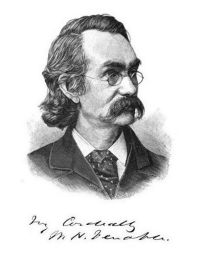
Maturity, defined as the acquired capacity to respond socially in an appropriate manner, encompasses psychological integration, purposeful direction, and increasing autonomy. Authors like Rousseau viewed it as a progressive journey from childhood to reasoned adulthood, while Van Dyke contrasted its "prim" shadow with youthful exuberance.
Bartlett regarded it as a balance between boldness and propriety, and Hall highlighted its transformative role in shaping future life. ʻAbdu'l-Bahá associated it with universal developmental phases across both natural and human domains. These viewpoints together reveal maturity as a complex interplay of cognitive, emotional, and biological growth, influenced by both personal development and societal norms.
 Paul Alexander Bartlett,
Voices from the Past
Paul Alexander Bartlett,
Voices from the Past