“ You're the girl for me, Isobel! It comes home to me—right home—every time I see you. Let's face it—it'll soon be over! A minute with you is worth an hour with her. I tell you I love you, Isobel." He stooped suddenly and kissed the upturned lips."You think that to-night. You won't to-morrow. The—the other side of it will come back.""Face the other side with me, and I can stand it. You love me—you know you do!"The trees swayed, murmured, and creaked under the wind; the water lapped on the edge of the lake. The footsteps of a man walking up the drive passed unheard by the engrossed lovers. ”
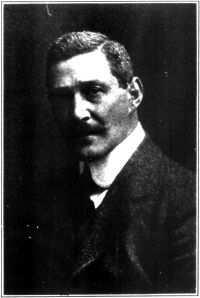
Anthony Hope
Biographical details

Sir Anthony Hope Hawkins (1863–1933), better known as Anthony Hope, was a British novelist and playwright renowned for his adventure fiction and sharp social commentary. Though prolific, his legacy rests primarily on The Prisoner of Zenda (1894) and its sequel Rupert of Hentzau (1898), set in the fictional Ruritania, which pioneered the Ruritanian romance genre.
These works, blending political intrigue and humor, remain celebrated as “minor classics.” Beyond these, his body of work includes The King’s Mirror and Simon Dale, reflecting his versatility in exploring themes of identity, loyalty, and societal change. Hope’s enduring influence lies in his creation of a timeless, escapist literary world rooted in imagined European realms.
Quotes by Anthony Hope
 Anthony Hope,
The Prisoner of Zenda
(1921)
Anthony Hope,
The Prisoner of Zenda
(1921)
“ Then Sapt spoke in a low, hoarse whisper: "It is not the king. Don't kiss him; he's not the king." She drew back for a moment; then, with an arm still round my neck, she asked in superb indignation: "Do I not know my love? Rudolf, my love!" "It is not the king," said old Sapt again; and a sudden sob broke from tender-hearted Fritz. It was the sob that told her no comedy was afoot. "He is the king!" she cried. "It is the king's face—the king's ring—my ring! It is my love!" "Your love, madame," said old Sapt, "but not the king. The king is there in the castle. ”
“ And why did it come to Barbara and not to me? And why did it not say "Simon, she loves you," rather than the words that I now read, Barbara permitting me: "Pretty fool, he loves you." Let me not ask; not even now would Barbara bear to think that it was written in pity for her."Yes, she pitied you and so she wrote; and she loves you," said Barbara.I let it pass. Shall a man never learn wisdom?"Tell me now," said I, "why I may not see Carford?"Her lips curved in a smile; she held her head high, and her eyes were triumphant."You may see Lord Carford as soon as you will, Simon," said she. ”