AI-generated from sources
The Mask of Age, The Face of the Self
In Brief
- Modern society imposes a cultural imperative to conceal the physical signs of aging, equating youth with value and pressuring individuals to adopt artifices to maintain a youthful facade.
- The true self is not contingent upon physical appearance but resides in an unalterable will and character, allowing for a profound internal development of wisdom and serene maturity.
- Aging necessitates a psychological adaptation, a conscious re-creation of the self that transcends earlier personalities and culminates in a broader, more impersonal perspective.
- Elders are a vital community resource, offering matured love, living historical memories, and wisdom that provides a crucial counterbalance to society's focus on the ephemeral.
Main authors


The experience of aging in modern society is fraught with a persistent and deeply felt tension. A powerful cultural current equates value with youth, framing the physical manifestations of age as a form of social failure or even a personal crime to be concealed at all costs [1]. This imperative drives individuals to engage in a constant battle against their own biology, employing artifices like hair dye and other cosmetic contrivances to present a façade of undiminished vitality [2, 3]. The anxiety is rooted in a world that clamors for the new, where white hair inspires little reverence and employers systematically favor younger workers . This struggle to appear youthful is often characterized as a wearying and unending necessity, a poignant effort to stave off the perceived indignities of physical decay and social obsolescence [11].
Counterbalancing this societal pressure is a more introspective recognition of aging as a transformative process that reshapes, rather than erodes, the core of one's identity. While the dread of decline is a palpable fear—a terror of the monotonous interregnum between a vibrant life and death [4]—many thinkers have argued that the true self is not contingent upon physical appearance [19]. This perspective distinguishes between the external, superficial markers of age and the internal development of character, wisdom, and a serene maturity that can only be achieved through accumulated experience [21]. The dialectic, therefore, is not merely about body versus mind, but between a culturally imposed mask of perpetual youth and the authentic evolution of an inner life that finds its own unique beauty and purpose in senescence [15, 18].
The Tyranny of Appearance and the Denial of Decline
A pervasive societal bias casts youth as the exclusive domain of beauty and vitality, rendering old age a state of unattractiveness and decay [12]. This cultural valuation creates a formidable pressure to resist the visible signs of aging, which are often interpreted as markers of being out of step with the times . In professional spheres, this bias has tangible economic consequences, as employers are seen to prefer a younger workforce, compelling older individuals to hide their age simply to remain employable . The cultural imagination reinforces this hierarchy, as evidenced by the differential treatment of visual aids; a man wearing glasses can remain a romantic hero, while a heroine doing the same risks alienating the reader, suggesting that signs of age are more permissible for one gender than the other [7].
In response to this pressure, individuals have long resorted to a wide array of artifices designed to mask the natural aging process. These methods range from the application of hair dyes to the use of wigs and other cosmetic aids that create an illusion of youth . This effort extends beyond mere appearance to encompass behavior and deportment, with a conscious attempt to project an image of energy and vigor in defiance of waning physical fires [10]. Such practices are not merely personal vanities but reflect a broader societal unease with the elderly, who are sometimes implicitly asked to keep their aging to themselves so as not to impose its reality upon a world that prizes dynamism and novelty [8].
The psychological toll of this constant performance is significant, creating what has been described as a "weary necessity" to seem younger than one is . This involves a complicated self-deception, where one must outwardly project an indifference to aging while internally grappling with its reality [5]. Some critiques, like those of Orison Swett Marden, suggest this focus on superficial remedies—doctoring the effects—is a futile attempt to address a problem whose causes lie deeper, often in a lifestyle devoid of purpose [6]. The underlying impulse is a profound fear, not just of looking old, but of fading into oblivion, of one's youthful renown being forgotten even while one still lives [9]. For many, old age is seen less as a natural life stage and more as a disease to be actively fought and resisted [13, 14].
Enduring Identity in the Face of Senescence
Contrary to the view that equates aging with erasure, a compelling philosophical tradition locates personal identity beyond the reach of physical decay. Arthur Schopenhauer contended that the self resides not in memory or intellect, which are vulnerable to time and illness, but in the unalterable will and character reflected in a person's gaze . This concept of a durable core self suggests that while the body deteriorates, the essence of the person remains intact [22]. From this perspective, the frantic effort to make age look like youth is fundamentally misguided, for it deprives aging of its own particular dignity and beauty, reducing it to a hollow imitation .
The physical markers of aging, so often a source of anxiety, can be reinterpreted as symbols of character and venerability. For instance, baldness can be seen not as a deficiency but as a feature that reveals a powerful and respectable mind, commanding reverence rather than superficial admiration [16]. This reframing challenges the conventional narrative that old age must mean weakness, forgetfulness, and infirmity. An alternative vision proposes a "right old age" defined by inner strength, mirth, courage, and clarity, entirely distinct from the physical ailments often associated with it [17].
The later stages of life demand a profound psychological adaptation, a conscious re-creation of the self. Writing in 1922, G. Stanley Hall likened this process to the identity formation of adolescence, arguing that the elderly must construct a new self that transcends the former personality of their prime [20]. This requires navigating between the pitfalls of pretending to be young and the opposite extreme of boasting about one's years . Successfully achieving this transition allows one to attain a broader, more impersonal perspective on existence—a unique spiritual prerogative that is the culmination of a life's wisdom and pain . It is this evolution that allows experience to mellow and strengthen the individual, replacing the fretfulness of earlier years with a serene and hopeful maturity .
From Acceptance to Active Contribution
A more enlightened understanding of aging shifts the focus from individual endurance to social contribution, repositioning elders as a vital community resource. According to G. Stanley Hall, maturity should naturally aspire to the sagehood of age, a stage where accumulated knowledge ripens into a unique form of wisdom [23]. This perspective suggests that society has long undervalued its debt to its older members, who possess a vantage point from which the passions and follies of the adult world appear in their true proportion . This advanced stage of life is not an ending but a culmination, holding its own distinct opportunities and rewards [27].
The specific gifts of the elderly are manifold and irreplaceable. They offer a form of love that has matured and deepened over time, personal memories that serve as a living link to the past, and a tranquility of character born from accepting life's full trajectory [24]. This wisdom is not merely theoretical but is embodied in their very presence, offering a counterbalance to a culture often fixated on the immediate and the ephemeral. As observed in a proclamation by George Herbert Walker Bush toward the end of the 20th century, millions of seniors actively enrich their communities through volunteerism, mentorship in the workplace, and by providing a foundation of love and wisdom within their families .
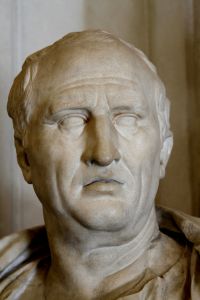
This active role is complemented by an aesthetic of age that finds beauty not in the imitation of youth but in the authentic expression of a life fully lived. The charm of old age is described as a "silver charm," evoking mellowed roses and a calm, irresistible assurance [25]. However, this dignity is not a passive state. The Roman orator Cicero argued that old age earns its honor by asserting its rights and maintaining its influence, actively defending its place in the world [26]. He celebrated the elder who retains a youthful mind and spirit, suggesting that the ideal is not to retreat from life but to remain engaged, blending the wisdom of years with an unyielding vitality of spirit .
The human journey through the later stages of life unfolds as a continuous negotiation between external pressures and internal realities. Society's profound valuation of youth often forces aging individuals into a defensive posture, compelling them to adopt a mask of vitality to hide the physical evidence of time's passage . This struggle against what is often perceived as a social failing or even a kind of disease can become an exhausting performance, driven by the fear of becoming irrelevant and forgotten . Yet, this external battle is only one part of the story, often overshadowing the profound internal transformations that redefine the self.
Beyond the surface-level anxieties over appearance lies the potential for a deeper form of self-realization, where identity is anchored in enduring character rather than a transient physical form . This evolving perspective reframes old age not as a period of inevitable decline but as a unique stage of life with its own purpose, beauty, and social value . A more progressive view sees elders as active contributors, whose accumulated wisdom and experience are indispensable resources for their communities . By moving past the denial of aging, it becomes possible to embrace it as a time of serene maturity and continued engagement, a season of harvest rather than a prelude to obsolescence .