AI-generated from sources
From Personal Haven to Collective Bargain, The Evolving Ideal of Retirement
In Brief
- Retirement was initially a philosophical concept of voluntary withdrawal for inner peace, independent of age or state support.
- Societal evolution introduced a tension between personal retreat and civic duty, framing retirement as a privilege earned after contributing to the common good.
- The 20th century transformed retirement into a collective entitlement through state-managed pensions and corporate policies, often with mandatory retirement ages.
- Modern retirement systems face sustainability crises due to financial shortfalls and the decline of private pensions, leading to calls for increased individual savings.
Main authors


The ideal of retirement has not always been the structured, state-supported life stage it is often considered today. Historically, it was conceived as a deeply personal and often philosophical quest, a voluntary withdrawal from the clamor of the world [4]. This act of stepping back was not necessarily a function of age or infirmity but rather an internal disposition, a 'retirement of the heart' that sought a repose of the passions, making one's physical location secondary to inner peace [2]. Thinkers like Seneca envisioned this final phase of life as a tranquil arrival in a harbor after a long and arduous journey on the high seas of public life—a dignified conclusion that should be neither flaunted nor concealed [3]. This ancient perspective framed retirement as a search for a more profound existence, one guided by nature and reason, that the broader society could not provide [1].
This intimate, philosophical ideal stands in stark contrast to the modern institutional reality. Contemporary retirement is largely defined by collective systems of social security and pensions, which have transformed it into a near-universal entitlement earned through a lifetime of labor [16, 18]. This transition from a private choice to a public promise has placed retirement at the center of fierce economic and political debates concerning its sustainability, its impact on intergenerational equity, and its role in the national economy [23, 28]. The journey from a personal haven to a contested collective right reveals a fundamental reshaping of the relationship between the individual and the state, prompting enduring questions about duty, dependency, and the ultimate purpose of life's final chapter [12, 30].
Retirement as a Personal and Philosophical Endeavor
The earliest conceptions of retirement were rooted in a voluntary withdrawal from society, not as an escape from life but as a path toward a different kind of ideal existence . This retreat was often seen as an impulse of nature rather than a cold, rational calculation, allowing an individual to live a retired life even while remaining physically immersed in the world . According to Charles de Saint-Évremond, this internal orientation was the key to a successful withdrawal. The fundamental goal was a personal search for a higher state of being, one that required a degree of self-denial and a deliberate separation from mainstream societal pursuits and values .
This pursuit was, at its core, an internal process. True retirement was understood not as a change of address but as a 'repose of the passions,' an achievement of inner tranquility that made one’s external circumstances largely irrelevant . Without this state of mind, any physical retreat to a remote hermitage would be pointless, as one's anxieties and ill-humors would simply follow . For the Roman philosopher Seneca, this withdrawal was a dignified and natural conclusion to an active life, akin to finding a safe harbor, an accomplishment that should be embraced with quiet confidence rather than public fanfare .
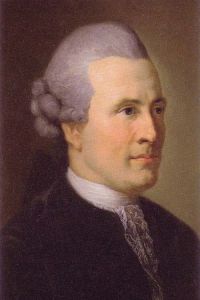
Beyond personal peace, this philosophical retreat could also be framed as a conscientious moral choice. The 18th-century writer Johann Georg Zimmermann argued that for a person of refined sensibility, disgusted by the vices and woes of a world they cannot fix, retirement becomes a just and necessary act of self-preservation [5]. In this view, stepping away from the endless spectacle of human suffering and depravity is not an act of cowardice but a fulfillment of the duty one owes to their own well-being . The emphasis remained squarely on the individual's spiritual and psychological state, aiming for a graceful resignation that was independent of age or social status .
Individual Choice and Societal Obligation
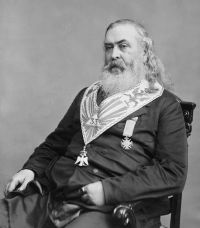
As societal structures grew more complex, the purely individualistic philosophy of retirement faced increasing scrutiny. A tension emerged between the desire for personal seclusion and a perceived duty to the community. Some thinkers began to frame retirement as a potential 'desertion of duty,' asserting that society retained a right to the productive labor of its members . This perspective was articulated forcefully by Albert Pike, who condemned retirement as a form of 'morbid selfishness' if it prevented individuals from contributing to the common good. For Pike, a wise person's retreat was only noble if it served as a source of instruction for humanity, not as an escape into personal inutility [6].
This sense of civic responsibility gave rise to the idea of an implicit social contract, where retirement was a privilege earned after a lifetime of contribution. It was increasingly seen as appropriate only after one had 'paid their due proportion to society' [13]. This balance is exemplified by public figures like George Washington, who professed a profound personal desire for retirement but acknowledged that a higher duty to the nation could compel him to re-enter public life [7]. Samuel Johnson, writing in the 18th century, observed this evolving consensus, noting the growing acceptance that a time comes when the public's claims are satisfied, and an individual may honorably retreat to review their life . A similar sentiment was expressed centuries earlier by Pliny the Younger, who suggested that while one's youth and middle age belong to the state, the final years belong to oneself—a principle he saw codified in laws enforcing retirement at a certain age [14].
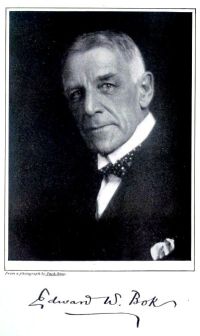
Alongside these ethical considerations, the practical and psychological challenges of transitioning to retirement became more apparent. Observers like Orison Swett Marden and Edward Bok noted that many businessmen who retired without preparing themselves mentally found the experience hollow and even devastating [8, 10]. To retire from a career without cultivating other interests or resources was, for many, to retire from meaningful life itself, leading to deep regret [9]. The social grace of the act was also crucial. As Maria Edgeworth pointed out, a voluntary retirement was seen as dignified, whereas a retreat forced by circumstance was humiliating [11]. This growing awareness highlighted that a successful retirement required not just financial security but also careful psychological and social preparation .
The Rise of Retirement as a Collective Right
The 20th century marked a revolutionary turning point, transforming retirement from a private aspiration into a formal, institutionalized life stage. The primary driver of this change was the establishment of state-managed old-age pension systems [17]. In the early 1900s, Winston Churchill recognized that such policies asserted an entirely new principle regarding poverty, creating a social commitment that would be difficult to reverse . This new approach, as analyzed by L. T. Hobhouse, fundamentally differed from older Poor Laws by moving beyond preventing utter destitution. Instead, it provided a guaranteed minimum income as a foundation upon which individuals could build with their own thrift [19]. While precedents for such systems existed in the medieval guilds, their implementation at the national level was a profound innovation [15].
The institutionalization of retirement also served clear economic purposes. In the United States, Franklin Roosevelt promoted the Social Security program not only as a safety net for the elderly but as a mechanism to encourage older workers to exit the labor force, thereby opening up jobs for younger generations during the Great Depression . This logic was mirrored in the private sector. By the 1920s, as G. Stanley Hall observed, corporations found it both uneconomical to retain less productive older workers and inhumane to simply cast them aside. The solution was the widespread adoption of compulsory retirement ages coupled with pension allowances based on an employee's wages and length of service [20].
This new framework solidified retirement as a collective entitlement but also introduced an element of compulsion. Mandatory retirement ages became a common policy tool, justified by governments as a rational way to achieve public objectives. For example, a 1976 United States Supreme Court ruling upheld a law requiring state police officers to retire at age fifty, arguing it was a legitimate means of ensuring the physical fitness of the force [21]. This systemic shift was not universally praised; some contemporary critics, reflected in the work of Sinclair Lewis, viewed pensions and other welfare measures as 'poppycock' that undermined the independence of the working man [26]. Nonetheless, the principle of state-guaranteed retirement as a social right had been firmly established, irrevocably changing the landscape of aging .
Modern Strains on a Collective Promise
In the 21st century, the societal promise of a secure and stable retirement is facing a crisis of sustainability. Political leaders across the ideological spectrum, including George W. Bush and John McCain, have issued stark warnings about the financial trajectory of foundational systems like Social Security, which face long-term shortfalls . The central problem lies in a growing gap between the benefits promised to retirees and the available funds, a dilemma that threatens future generations with the burden of 'crippling taxes' if left unaddressed . This economic insecurity has tangible consequences, as many older individuals find themselves financially unprepared, forced to postpone retirement or even re-enter the workforce to cover basic living expenses [22].
The strain on public systems is exacerbated by a concurrent retreat in the private sector. The employer-funded defined benefit pension plan, once a cornerstone of retirement security, is rapidly becoming a relic. As Bernard Sanders observed in 2010, this decline has left a growing number of workers with little to rely on beyond Social Security and their own personal savings [27]. This erosion of private support has intensified the debate over reform, with proposals often seeking to balance collective responsibility with greater individual initiative. Calls to create personal retirement accounts, for instance, represent an attempt to encourage private saving as a necessary supplement to the public safety net [29].
These financial pressures have reignited long-standing ethical debates about the nature of retirement and dependency. Over a century ago, critics like W. M. Flinders Petrie worried that state pensions would erode character by diminishing the need for self-restraint and foresight [24]. This concern finds a modern echo in critiques suggesting that retirement has become a hollow consumerist goal, for which individuals compromise their ethics by working for and investing in enterprises they dislike [25]. Some contemporary analyses suggest that the modern welfare state, by insuring individuals against all of life's vicissitudes, may relieve them of essential responsibilities, fostering a culture of dependency . Society is thus left to grapple with the challenge of upholding the promise of a dignified old age without undermining the very principles of prudence and self-reliance that have long been seen as vital to both individual character and social stability .
The journey of retirement as a concept is one of profound transformation. It began as an intimate and philosophical ideal, a voluntary retreat from the world to cultivate inner peace and achieve a 'repose of the passions' . This personal quest was gradually tempered by an emerging sense of social contract, which framed retirement not as an inherent right but as a privilege earned after fulfilling one's duties to the community . The 20th century decisively shifted this paradigm, institutionalizing retirement through vast state and corporate systems that redefined it as a collective entitlement, an economic tool, and a formal stage of life governed by policies like mandatory retirement ages .
Today, this institutional promise appears increasingly fragile, strained by economic realities, demographic shifts, and the decline of traditional employer support . The contemporary discourse is marked by a renewed struggle to balance the imperatives of collective security with the virtues of individual responsibility, leading to debates over systemic reform and the promotion of private savings . As modern societies navigate this precarious landscape, the very purpose of retirement is once again under examination. The evolution from a Stoic's quiet harbor to a contentious line item in a national budget reflects a deep and ongoing re-negotiation of what we owe ourselves, one another, and the generations yet to come.