AI-generated from sources
The Generous Republic, A Critical Portrait
In Brief
- Generosity is widely presented as a foundational virtue and an indivisible part of American identity, essential for civic cohesion and problem-solving.
- A persistent critical tradition argues that indiscriminate giving can foster dependence, undermine self-respect, and create the very problems it aims to solve.
- Critiques extend to the motives behind giving, suggesting that vanity, self-interest, and inherent power imbalances often complicate the act of benevolence.
- The true moral worth of generosity is not inherent but contingent upon wisdom, humility, and foresight, requiring an approach that addresses root causes over symptoms.
Main authors

Generosity is frequently presented as an indivisible part of the American identity, a foundational virtue that binds the nation together through shared compassion and mutual support. This conception, championed across the political spectrum, posits that a willingness to help others is not merely a private good but a public necessity, central to the country's character and strength [1, 4]. The act of giving is seen as a civic responsibility that strengthens democracy by fostering a sense of community and bridging divides [5]. This idealized narrative portrays a nation where individuals voluntarily take on the problems of others, guided by a belief that they are their 'brother's keeper' and that such benevolence is essential to the national soul .
However, this celebratory view of American charity has always coexisted with a deep-seated and persistent stream of criticism. While the impulse to give is widely praised, a parallel discourse has long questioned its effects, motives, and ultimate value. This counter-narrative scrutinizes whether generosity, in practice, actually achieves its noble aims or inadvertently creates new problems [9, 10, 11]. It raises uncomfortable questions about the power dynamics between giver and receiver, the potential for vanity to masquerade as virtue, and whether charitable acts serve as a superficial solution that distracts from deeper systemic injustices [16, 21, 26]. This critical tradition suggests that generosity, far from being a simple virtue, is a complex social transaction fraught with moral ambiguity and unintended consequences.
An American Article of Faith
The belief in generosity as a cornerstone of American life has been articulated with remarkable consistency by leaders from different eras and political persuasions. Both Barack Obama and Ronald Reagan, for instance, have characterized large-scale giving and volunteering as fundamental to the national character [2]. This idea frames compassion not just as an individual trait but as a collective civic enterprise, essential for solving societal problems where government action alone is insufficient . This sentiment finds historical roots in periods of national crisis, such as the American Civil War, when widespread voluntary charity was seen as a force capable of welding a fractured nation together through shared sacrifice and mutual respect [3].
Beyond its role in national cohesion, this tradition emphasizes the intrinsic rewards of giving. Ronald Reagan argued that charitable endeavors benefit the giver as much as the recipient, embedding personal responsibility into the fabric of social well-being . This perspective, echoed by earlier commentators like Douglas Fairbanks, suggests that the true recompense for altruism lies in the act itself, not in public recognition [7]. True charity, in this view, is often a quiet, unheralded affair, a principle exemplified by the profound yet unrecorded generosity exchanged among the poor themselves, far from the gaze of wider society [8].
The embrace of charitable giving extends across the public and private sectors, often presented as a unified national effort. George W. Bush highlighted record levels of volunteering and donations as evidence of national vitality, advocating for federal support to expand the role of faith-based organizations in social service delivery [6]. Similarly, Joseph R. Biden has called for increased volunteerism as a means to renew community bonds and strengthen democracy in the face of contemporary crises . This consistent, high-level endorsement reinforces the narrative of the United States as a uniquely generous nation, where private benevolence and public good are inextricably linked.
The Perils of Unexamined Benevolence
Despite the widespread praise for generosity, a significant critical tradition has long warned of its potential to cause harm. Thinkers like George Herbert Palmer and Samuel Smiles articulated a powerful critique that indiscriminate giving, far from alleviating poverty, can actively undermine the recipients' self-respect and foster a crippling sense of dependence . This view holds that charity, when poorly conceived, creates the very problems it purports to solve by discouraging personal industry and initiative . In the 19th century, observers like Charles Loring Brace documented how reliance on alms could become a 'trade' in itself, demoralizing the poor to such a degree that they become worse off than if they had never received assistance .
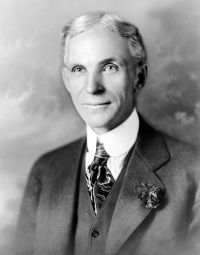
This critique extends beyond individual character to the broader societal fabric. Some analysts have viewed widespread charity as an economic inefficiency—a 'dead weight' on the productive members of society [12]. From this perspective, the true failure of much charitable work is its inability to address the root causes of need. Henry Ford, writing in the early 20th century, argued forcefully that any charitable system that does not actively work to make itself unnecessary is fundamentally flawed [14]. This line of reasoning suggests that genuine benevolence should not be about providing handouts but about creating opportunities for self-sufficiency, a sentiment also expressed in the late 19th century idea that a more meaningful form of generosity is to provide a chance for people to help themselves [13].
The tension between private charity and other forms of support also complicates the picture. Barry Goldwater, for instance, drew a sharp distinction between voluntary giving and government welfare, arguing that the former involves a clear understanding of humanitarian impulse from the giver, which is lost in the context of state-provided benefits [15]. This concern over the nature and effect of aid highlights a recurring theme: that the intent to do good is not sufficient. Without careful consideration of its consequences, charity risks weakening both the individuals who receive it and the public's confidence in the very idea of constructive social assistance .
Vanity, Power, and the Ambiguities of Giving
The most incisive critiques of generosity move beyond its practical efficacy to question the underlying motives and moral integrity of the act itself. Generosity can easily become a cloak for vanity, as Paul Janet observed, where individuals give beyond their means not out of true benevolence but for public acclaim, sometimes at the unjust expense of their own families . This critique is particularly potent in a society where the accumulation of wealth is a primary ideal, potentially rendering charitable acts a form of hypocrisy or a way to launder reputations built on ruthless competition [17, 19, 20]. From this vantage point, American benevolence can appear as a 'virtue of prosperity'—a circumstantial habit rather than a deep-seated moral commitment, easily coexisting with a reckless disregard for human life in the pursuit of profit [18].
The act of giving is also inherently fraught with a power imbalance. Jane Addams, a pioneer of social work, pointed out the 'cruel advantage' held by the charity visitor, whose advice carries the weight of the resources she controls, potentially pressuring vulnerable families into decisions against their long-term interests . This inequality shapes the experience for both parties; as George Herbert Palmer noted, traditional giving assigns the recipient an inferior, egoistic role, raising the question of whether a more reciprocal form of exchange is possible [24]. The giver and receiver often have fundamentally different perspectives on what constitutes a generous act, leading to mismatched expectations and potential resentment [25].
Ultimately, this critical perspective insists that generosity without wisdom is not a virtue. The ancient philosopher Seneca argued that for an impulse to become virtuous, it must be guided by discretion, preventing benevolence from devolving into thoughtless extravagance [27]. This requires moving beyond a superficial engagement with philanthropy—such as managing committees or patronizing causes—to a more personal and direct effort to ameliorate suffering [28]. Whether viewed as a cover for materialism , an investment for social control , or simply a form of weakness [23], generosity is revealed as a profoundly complex human interaction. Without humility [22] and a clear-eyed understanding of its potential for both good and ill, the celebrated virtue risks becoming an empty gesture or, worse, a tool of social and moral complacency.
The concept of generosity in the American context reveals a profound and enduring duality. On one hand, it is upheld as a pillar of national identity, a civic virtue that promotes compassion, strengthens community, and reflects the best of the nation's character . This idealized narrative, consistently reinforced by political and cultural leaders, celebrates the personal and societal benefits that flow from a culture of giving . On the other hand, a persistent and multifaceted critique has consistently challenged this rosy picture, exposing the practice to sharp scrutiny. This counter-narrative highlights how poorly executed charity can foster dependence and undermine self-respect , and it questions the very motives of givers, suggesting that vanity, self-interest, and power dynamics often taint the altruistic act .
This tension between the ideal and the reality of generosity suggests that its moral worth is not inherent in the act of giving itself but is contingent upon the wisdom, humility, and foresight with which it is practiced. The debate is not merely about whether to give, but how to give in a way that truly empowers rather than diminishes, and that addresses root causes rather than symptoms . As long as vast disparities in wealth and power persist, the practice of charity will continue to navigate this complex ethical terrain, forcing a continual re-evaluation of what it means to be a truly generous society—one defined not just by the scale of its donations, but by the justice and equity of its core structures.