 Alexander Pope,
An Essay on Criticism
(1711)
Alexander Pope,
An Essay on Criticism
(1711)
“ Some positive persisting fops we know, Who, if once wrong will needs be always so; But you, with pleasure, own your errors past, And make each day a critique on the last. ”
Alexander Pope,
An Essay on Criticism
(1711)
“ Some positive persisting fops we know, Who, if once wrong will needs be always so; But you, with pleasure, own your errors past, And make each day a critique on the last. ”
 Josepha Kodis,
Richard Avenarius
(1896)
Josepha Kodis,
Richard Avenarius
(1896)
“ It is a rather popular exposition of the chief ideas of the Critique, namely, of the critical realism, which consists in the critical and conscious acceptation of the facts first given to a naïve mind, namely, that the world consists of ‘things’ and ‘ideas,’ in opposition to those idealistic theories, which consider the world as ‘representation’ or ‘will,’ or ‘will and representation,’ etc. ”
 Immanuel Kant,
Prolegomena to Any Future Metaphysics
(1783)
Immanuel Kant,
Prolegomena to Any Future Metaphysics
(1783)
“ This much is certain, that whoever has once tasted critique will be ever after disgusted with all dogmatical twaddle which be formerly put up with, because his reason must have something, and could find nothing better for its support. Critique stands in the same relation to the common metaphysics of the schools, as chemistry does to alchemy, or as astronomy to the astrology of the fortune-teller. I pledge myself that nobody who has read through and through, and grasped the principles of critique, even in these Prolegomena only, will ever return to that old and sophistical pseudo-science ”
Immanuel Kant,
Prolegomena to Any Future Metaphysics
(1783)
“ Critique, therefore, and critique alone, contains in itself the whole well-proved and well-tested plan, and even all the means required to accomplish metaphysics, as a science; by other ways and means it is impossible. The question here therefore is not so much how this performance is possible, as how to set it going, and induce men of clear heads to quit their hitherto perverted and fruitless cultivation for one that will not deceive, and how such a union for the common end may best be directed. ”
Immanuel Kant,
Prolegomena to Any Future Metaphysics
(1783)
“ Ever since I have come to know critique, whenever I finish reading a book of metaphysical contents, which, by the preciseness of its notions, by variety, order, and an easy style, was not only entertaining but also helpful, I cannot help asking, "Has this author indeed advanced metaphysics a single step?" ”
Immanuel Kant,
Prolegomena to Any Future Metaphysics
(1783)
“ Had the Critique of Pure Reason done nothing but first point out this distinction, it had thereby contributed more to clear up our conception of, and to guide our inquiry in, the field of metaphysics, than all the vain efforts which have hitherto been made to satisfy the transcendent problems of pure reason, without ever surmising that we were in quite another field than that of the understanding, and hence classing concepts of the understanding and those of reason together, as if they were of the same kind. ”
Immanuel Kant,
Prolegomena to Any Future Metaphysics
(1783)
“ There will therefore always be metaphysics in the world; nay, every one, especially every man of reflection, will have it, and for want of a recognized standard, will shape it for himself after his own pattern. What has hitherto been called metaphysics, cannot satisfy any critical mind, but to forego it entirely is impossible; therefore a critique of pure reason itself must now be attempted or, if one exists, investigated, and brought to the full test, because there is no other means of supplying this pressing want, which is something more than mere thirst for knowledge. ”
 Alfred North Whitehead,
The Function of Reason
(1929)
Alfred North Whitehead,
The Function of Reason
(1929)
“ The most important effect on the relations of philosophy to natural science was, however, produced neither by Hobbes nor by Berkeley, but by Kant. The effect of his Critique of Pure Reason was to reduce the system of nature to mere appearance — or, to use the Greek word, the order of nature is phenomenal. But whether we prefer the word “appearance,” or the word “phenomenon,” the effect is the same. There can be no metaphysics of nature, and no approach to metaphysics by scanning the order of nature. For nature is a mere derivative appearance ”
Immanuel Kant,
Prolegomena to Any Future Metaphysics
(1783)
“ We have been long accustomed to seeing antiquated knowledge produced as new by taking it out of its former context, and reducing it to system in a new suit of any fancy pattern under new titles. Most readers will set out by expecting nothing else from the Critique; these Prolegomena may persuade [a reader that metaphysics] is a perfectly new science, of which no one has ever even thought, the very idea of which was unknown, and for which nothing hitherto accomplished can be of the smallest use, except it be the suggestion of Hume's doubts. ”
 Ralph Waldo Emerson,
English Traits — Literature
(1856)
Ralph Waldo Emerson,
English Traits — Literature
(1856)
“ Might I, an unlettered man, venture to prescribe bounds to the latitude of criticism, I should exclude, in estimating the merit of such a production, all rules drawn from the ancient or modern literature of Europe, all references to such sentiments or manners as are become the standards of propriety for opinion and action in our own modes, and, equally, all appeals to our revealed tenets of religion and moral duty. ”
Francis Adams, Australian Essays
“ This, then, it seems, is Culture—knowing the best that has been thought and known in the world—not only knowledge, but right tact and justness of judgment, forming themselves by and with judgment—reading, but reading with a purpose to guide it, and with system. ”
 William Wordsworth,
Poems
(1815)
William Wordsworth,
Poems
(1815)
“ Whither then shall we turn for that union of qualifications which must necessarily exist before the decisions of a critic can be of absolute value? For a mind at once poetical and philosophical; for a critic whose affections are as free and kindly as the spirit of society, and whose understanding is severe as that of dispassionate government? Where are we to look for that initiatory composure of mind which no selfishness can disturb? For a natural sensibility that has been tutored into correctness without losing any thing of its quickness ”
Boyd Henry Bode, Creative Intelligence: Essays in the Pragmatic Attitude
“ Criticism led to the separation of the many from the one, the imperfect copy from the perfect type, the sensuous and passionate from the rational and the intrinsically good, the impermanent particular from the incorruptible universal. The line of demarcation ran between the lasting reality that answered to critical objective thought and the realm of perishing imperfect instances, of partially realized forms full of unmeaning differences due to distortion and imperfection, the realm answering to a sensuous passionate unreflective experience. ”
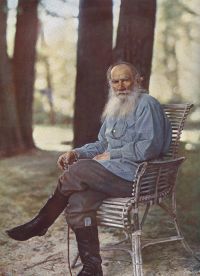 Leo Tolstoy,
The Kingdom of God Is Within You
(1894)
Leo Tolstoy,
The Kingdom of God Is Within You
(1894)
“ All modern literature—philosophical, political, and artistic—is striking in this respect. What wealth of idea, of form, of color, what erudition, what art, but what a lack of serious matter, what dread of any exactitude of thought or expression! ”
Mervin James Curl, Expository Writing
“ But that is exactly what we are doing, whether we praise or blame, accept or reject, so long as we base our opinion on sincere personal or sound principles, we criticize. For criticism is the attempt to estimate the worth of something—object or idea—either abstractly on a basis of principles and relations, or personally on the basis of our reactions to the subject of criticism. ”
 Charles Dudley Warner,
Some Causes of the Prevailing Discontent
Charles Dudley Warner,
Some Causes of the Prevailing Discontent
“ The world is ruled by ideas, by abstract thought. Society, literature, art, politics, in any given age are what the prevailing system of philosophy makes them. We recognize this clearly in studying any past period. ”
 Theodore Dwight Weld,
Shakespeare in the Class-Room
(1886)
Theodore Dwight Weld,
Shakespeare in the Class-Room
(1886)
“ It comes to us where we are, points us to where we should be, and lifts and lures us along the way. Without it we should have neither ideals, nor standards of excellence in art, science, literature, or moral attainment. ”
 Victor Cousin,
Lectures on the true, the beautiful and the good
Victor Cousin,
Lectures on the true, the beautiful and the good
“ A criticism that should be founded on the principle of expression, would somewhat derange, it must be confessed, received judgments, and would carry some disorder into the hierarchy of the renowned. We do not undertake such a revolution; we only propose to confirm, or at least elucidate our principle by an example, and by an example that is at our hand. ”
 Walter Pater,
Appreciations, with an Essay on Style
Walter Pater,
Appreciations, with an Essay on Style
“ The philosophic critic, at least, will value, even in works of imagination, seemingly the most intuitive, the power of the understanding in them, their logical process of construction, the spectacle of a supreme intellectual dexterity which they afford. ”
“ In circles highly civilised the great things, the real things, the hard, the cruel and even the tender things, the true elements of any tension and true facts of any crisis, have ever, for the outsider’s, for the critic’s use, to be translated into terms—terms in the distinguished name of which, terms for the right employment of which, more than one situation of the type I glance at had struck me as all irresistibly appealing. ”
Charles Dudley Warner,
The Works of Charles Dudley Warner
“ There runs through all his work, as a critic of manners and men, as well as of art, a wisdom of life born of wide and keen observation; put not into the form of aphorisms, but of shrewd comment, of keen criticism, of nice discrimination between the manifold shadings of insincerity, of insight into the action and reaction of conditions, surroundings, social and ethical aims on men and women. ”
Richard Hurd, The works of Richard Hurd, volume 1…
“ Criticism, considered in its ancient and noblest office of doing justice to the merits of great writers, more especially in works of poetry and invention, demands, to its perfect execution, these two qualities: a philosophic spirit, capable of penetrating the fundamental reasons of excellence in every different species of composition; and a strong imagination, 282 the parent of what we call true taste, enabling the critic to feel the full force of his author’s excellence himself, and to impress a lively sense of it upon others. ”
 Joseph Jacobs,
Literary studies by Joseph Jacobs
(1896)
Joseph Jacobs,
Literary studies by Joseph Jacobs
(1896)
“ What strikes one in his criticisms of life even more than their penetration is their sanity and completeness. Many a controversial victory he has won in discussions about letters or life, or sometimes even in politics, by attending to the one question, What are the actual and complete facts of the case? He takes human nature all round, and sees how far a proposed remedy answers to all its needs. ”
 Josiah Royce,
The World and the Individual, First Series
(1899)
Josiah Royce,
The World and the Individual, First Series
(1899)
“ For you in reply ask this critic whence he gets the assurance of the being of his various men, of his diverse experiences, of his many human feelings and points of view. Has he himself experienced immediately, or felt at any one moment what the supposed other real men and women feel? ”
Lord Henry Home Kames, Elements of Criticism, Volume II
“ But it is not sufficient that these terms be understood in practice; the critical art requires, that their meaning be traced to its foundation in human nature. The relations that connect objects together, have been examined in more than one view. ”
Sarah E. Wall, Orange Grove (1866)
“ We naturally shrink from exposing to the cold criticism of the public, those hidden influences and inward experiences that contribute most powerfully to the formation of character, the benefit of which may be imparted under the combined imagery of fact and fancy. ”
 Percy Bysshe Shelley,
A Defence of Poetry
Percy Bysshe Shelley,
A Defence of Poetry
“ Hence men, even in the infancy of society, observe a certain order in their words and actions, distinct from that of the objects and the impressions represented by them, all expression being subject to the laws of that from which it proceeds. But let us dismiss those more general considerations which might involve an inquiry into the principles of society itself, and restrict our view to the manner in which the imagination is expressed upon its forms. ”
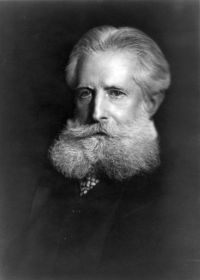 Edmund Clarence Stedman,
Genius, and other essays
(1911)
Edmund Clarence Stedman,
Genius, and other essays
(1911)
“ Above all, I conform to the belief that the great and final office of the critic is to distinguish between what is temporary or modish, and what is enduring, in any phase, type, or product, of human work. ”
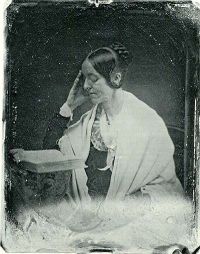 Sarah Margaret Fuller,
Papers on Literature and Art
(1846)
Sarah Margaret Fuller,
Papers on Literature and Art
(1846)
“ Critics are poets cut down, says some one by way of jeer; but, in truth, they are men with the poetical temperament to apprehend, with the philosophical tendency to investigate. The maker is divine; the critic sees this divine, but brings it down to humanity by the analytic process. The critic is the historian who records the order of creation. ”
active 19th century Harry Willson, The Use of a Box of Colours, in a Practical Demonstration on Composition…
“ It places you under the guidance of your own judgment and discretion by comparison with the best efforts of others; it enables you 'to criticise, compare, and rank their works in your own estimation, as they approach to, or recede from, the standard of perfection which you have formed in your own mind—but which those masters themselves have taught you to make, and which you will cease to make with correctness when you cease to study them. ”
 John Stuart Mill,
A System of Logic, Ratiocinative and Inductive
(1881)
John Stuart Mill,
A System of Logic, Ratiocinative and Inductive
(1881)
“ Now, the imperative mood is the characteristic of art, as distinguished from science. Whatever speaks in rules, or precepts, not in assertions respecting matters of fact, is art; and ethics, or morality, is properly a portion of the art corresponding to the sciences of human nature and society. ”
 I. A. Richards,
Principles of literary criticism
(1928)
I. A. Richards,
Principles of literary criticism
(1928)
“ Between the general inquiry into the nature of the good and the appreciation of particular works of art, there may seem to be a wide gap, and the discussion upon which we are about to embark may appear a roundabout way of approaching our subject. Morals have often been treated, especially in recent times, as a side-issue for criticism, from which the special concern of the critic must be carefully separated. ”
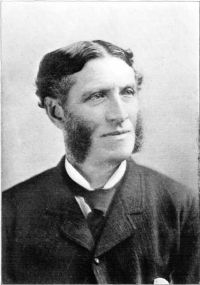 Matthew Arnold,
On translating Homer. Last words…
(1862)
Matthew Arnold,
On translating Homer. Last words…
(1862)
“ Seeking a negative result from them,—personal altercation and wrangling,—one gets no fruit; seeking a positive result,—the elucidation and establishment of one’s ideas,—one may get much. Even bad criticisms may thus be made suggestive and fruitful. I declared, in a former lecture on this subject, my conviction that criticism is not the strong point of our national literature. ”
Sir Joshua Reynolds, Sir Joshua Reynolds' Discourses
“ The nobility or elevation of all arts, like the excellency of virtue itself, consists in adopting this enlarged and comprehensive idea; and all criticism built upon the more confined view of what is natural may properly be called shallow criticism, rather than false: its defect is, that the truth is not sufficiently extensive. ”
Robert E. Speer, The Stuff of Manhood: Some Needed Notes in American Character (1917)
“ Finally, in the formation of an opinion as to the abstract preferableness of one course of action over another, or as to the truth or falsehood or right significance of a proposition, the fact that the majority of one’s contemporaries lean in the other direction is naught, and no more than dust in the balance. ”
 George E. Ellis,
The Red Man and the White Man in North America
(1882)
George E. Ellis,
The Red Man and the White Man in North America
(1882)
“ Of course common-sense, after all, must be trusted on such themes to draw the line not only between opinions and theories, but even in the statement and interpretation of facts, as they come from romancers, sentimentalists, idealists, and philanthropists, or from literal, practical, matter-of-fact persons, speaking from experience. ”
 Johann Wolfgang von Goethe,
Letters from Switzerland and Travels in Italy
Johann Wolfgang von Goethe,
Letters from Switzerland and Travels in Italy
“ What benefit can a common man draw from all this, when he is unable to consider the whole context and connection? How is such a person to see his way clear out of the seeming contradictions which occasionally occur?—out of the difficulties which arise from the ill arrangement of the books, and the differences of style, when the learned themselves find it so hard, and while so many passages make them hold their reason in abeyance? ”
 Jean-Jacques Rousseau,
The Social Contract
(1913)
Jean-Jacques Rousseau,
The Social Contract
(1913)
“ Matters once at this pitch, it is easy to imagine the rest. I shall not detain the reader with a description of the successive invention of other arts, the development of language, the trial and utilisation of talents, the inequality of fortunes, the use and abuse of riches, and all the details connected with them which the reader can easily supply for himself. I shall confine myself to a glance at mankind in this new situation. ”
William Wordsworth,
The Prose Works of William Wordsworth
“ Among the chief of these causes is to be reckoned a principle which must be well known to those who have made any of the Arts the object of accurate reflection; namely, the pleasure which the mind derives from the perception of similitude in dissimilitude. This principle is the great spring of the activity of our minds, and their chief feeder. ”
 Alfred Austin,
The Bridling of Pegasus: Prose Papers on Poetry
Alfred Austin,
The Bridling of Pegasus: Prose Papers on Poetry
“ I should think you must have observed, in the course of your reading, that even in the most accredited organs of opinion, principles of literary criticism, either explicitly stated or tacitly assumed, are often utterly ignored, in the notice of some work or other in the self-same number. The result can only be to create confusion in the public mind. ”
Traditionally, satire shamed vice into submission. But in a world increasingly immune to public disgrace, the satirist's lash seems blunted. To remain relevant, this ancient art must evolve, moving beyond condemnation to reveal deeper truths in a society that prides itself on being unshockable.
While politicians celebrate generosity as a cornerstone of American identity, a centuries-old critique warns that ill-conceived charity can create dependence, serve vanity, and mask profound systemic injustices, forcing us to re-evaluate the true meaning of a generous society.
