Theodore Dwight Weld

Biographical details

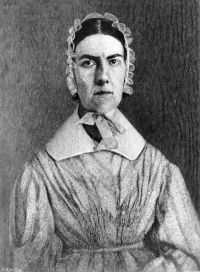
Portrait of Theodore Dwight Weld Theodore Dwight Weld,  The Bible Against Slavery (1838)

“ To take from a man his earnings, is theft. But to take the earner, is a compound, life-long theft—supreme robbery, that vaults up the climax at a leap—the dread, terrific, giant robbery, that towers among other robberies a solitary horror, monarch of the realm. The eighth commandment forbids the taking away, and the tenth adds, "thou shalt not covet any thing that is thy neighbor's;" thus guarding every man's right to himself and his property, by making not only the actual taking away a sin, but even that state of mind which would tempt to it. ”
Source: Wikisource

Portrait of Theodore Dwight Weld Theodore Dwight Weld,  Shakespeare in the Class-Room (1886)

“ I mean its recognition every where of the fact that nature is a universal educator.
There is in our literature, but one book besides, that thus teems throughout with nature, and that is Shakespeare. Many other writers move us with her melodies, some with her grand harmonies, but Shakespeare alone sweeps the diapason of all nature's symphonies besides. In others, nature glows in the beauty of her leaf, bud and blossom, but in Shakespeare only, in all the wealth and glory of her golden fruitage too. Other writers represent nature while she sits passive, as her picture is sketched.
”
Source: Wikisource

Portrait of Theodore Dwight Weld Theodore Dwight Weld,  The Bible Against Slavery (1838)

“ Just after the Israelites were emancipated from their bondage in Egypt, while they stood before Sinai to receive the law, as the trumpet waxed louder, and the mount quaked and blazed, God spake the ten commandments from the midst of clouds and thunderings. Two of those commandments deal death to slavery. "Thou shalt not steal," or, "thou shalt not take from another what belongs to him." All man's powers are God's gift to him. That they are his own, is proved from the fact that God has given them to him alone,—that each of them is a part of himself, and all of them together constitute himself. ”
Source: Wikisource

Get perspective with Kwize: daily news enlightened by great literature