Summary

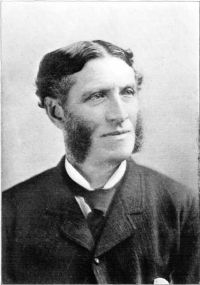
Portrait of Matthew Arnold Matthew Arnold On translating Homer. Last words… (1862)

But take the whole range of Greek epic poetry,—take the later poets, the poets of the last ages of this poetry, many of them most indifferent,—Coluthus, Tryphiodorus, Quintus of Smyrna, Nonnus. Never will you find in this instrument of the hexameter, even in their bands, the vices of the ballad-style in the weak moments of this last: everywhere the hexameter,—a noble, a truly epical instrument,—rather resists the weakness of its employer than lends itself to it. Quintus of Smyrna is a poet of merit, but certainly not a poet of a high order
Source: Wikisource

Portrait of Matthew Arnold Matthew Arnold On translating Homer. Last words… (1862)

Temper destroys it, a crotchet destroys it, even erudition may destroy it. To press to the sense of the thing itself with which one is dealing, not to go off on some collateral issue about the thing, is the hardest matter in the world. The ‘thing itself’ with which one is here dealing,—the critical perception of poetic truth,—is of all things the most volatile, elusive, and evanescent; by even pressing too impetuously after it, one runs the risk of losing it. The critic of poetry should have the finest tact, the nicest moderation, the most free, flexible, and elastic spirit imaginable
Source: Wikisource

Portrait of Matthew Arnold Matthew Arnold On translating Homer. Last words… (1862)

That the poetical translator, in his rendering of them, is to give us a sense of the difficulties of the scholar, and so is to make his translation obscure? If he does not mean that, how, by bringing forward these hard words, does he touch the question whether an English version of Homer should be plain or not plain? If Homer’s poetry, as poetry, is in its general effect on the poetical reader perfectly simple and intelligible, the uncertainty of the scholar about the true meaning of certain words can never change this general effect.
Source: Wikisource

Get perspective with Kwize: daily news enlightened by great literature