Thomas Babington Macaulay

Definition and stakes

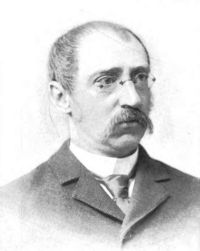
Portrait of Henry Coppée Henry Coppée English Literature, Considered as an Interpreter of English History

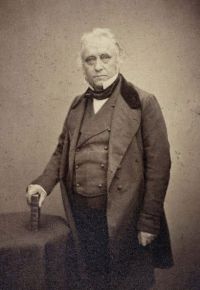
Lord Macaulay.—Thomas Babington Macaulay was born at Rothley, in Leicestershire, on the 25th of October, 1800. His father, Zachary Macaulay, a successful West Indian merchant, devoted his later life to philanthropy. His mother was Miss Selina Mills, the daughter of a bookseller of Bristol. After an early education, chiefly conducted at home, he was entered at Trinity College, Cambridge, in 1818, where he distinguished himself as a debater, and gained two prize poems and a scholarship.
Source: Gutenberg

Portrait of Henry A. Beers Henry A. Beers From Chaucer to Tennyson

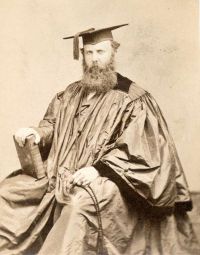
Indeed, many longish books, like Carlyle's Heroes and Hero Worship and Ruskin's Modern Painters, are, in spirit, rather literary essays than formal treatises. The most popular essayist and historian of his time was Thomas Babington Macaulay (1800-1859) , an active and versatile man, who won splendid success in many fields of labor. He was prominent in public life as one of the leading orators and writers of the Whig party. He sat many times in the House of Commons, as member for Calne, for Leeds, and for Edinburgh, and took a distinguished part in the debates on the Reform bill of 1832.
Source: Gutenberg

Robert Huntington Fletcher A History of English Literature

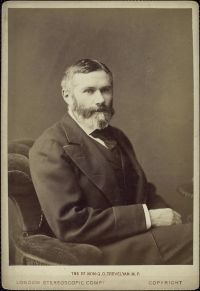
LORD MACAULAY. The first great figure, chronologically, in the period, and one of the most clearly-defined and striking personalities in English literature, is Thomas Babington Macaulay, [Footnote: The details of Macaulay's life are known from the; famous biography of him by his nephew, Sir George Trevelyan.] who represents in the fullest degree the Victorian vigor and delight in material progress, but is quite untouched by the Victorian spiritual striving. The descendant of Scottish ministers and English Quakers, Macaulay was born in 1800.
Source: Gutenberg

Get perspective with Kwize: daily news enlightened by great literature