Summary

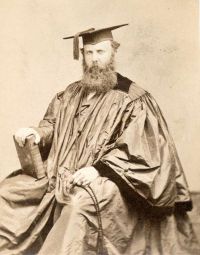
Portrait of Henry Coppée Henry Coppée English Literature, Considered as an Interpreter of English History

What an exquisite creation is my Uncle Toby!--a soldier in the van of battle, a man of honor and high tone in every-day life, a kind brother, a good master to Corporal Trim, simple as a child, benevolent as an angel. "Go, poor devil," quoth he to the fly which buzzed about his nose all dinner-time, "get thee gone; why should I hurt thee? This world is surely wide enough to hold both thee and me!"
And as for Corporal Trim, he is a host in himself. There is in the English literary portrait-gallery no other Uncle Toby, there is no other Corporal Trim.
Source: Gutenberg

Portrait of Henry Coppée Henry Coppée English Literature, Considered as an Interpreter of English History

One realm in which Poetry rules with an enchanted sceptre is the land of reverie and day-dream,—a land of fancy, in which genius builds for itself castles at once radiant and, for the time, real; in which the beggar is a king, the poor man a Crœsus, the timid man a hero: this is the fairy-land of the imagination. Among Wordsworth's poems are a number called Poems of the Imagination. He wrote learnedly about the imagination and fancy; but the truth is, that of all the great poets,—and, in spite of his faults, he is a great poet,—there is none so entirely devoid of imagination.
Source: Gutenberg

Portrait of Henry Coppée Henry Coppée English Literature, Considered as an Interpreter of English History

He was a poet, an essayist, a dramatist, and an historian; a writer who, in the words of his epitaph,—written by Dr. Johnson, and with no extravagant eulogium,—touched all subjects, and touched none that he did not adorn,—nullum quod tetigit non ornavit. His life was a strange melodrama, so varied with laughter and tears, so checkered with fame and misfortune, so resounding with songs pathetic and comic, that, were he an unknown hero, his adventures would be read with pleasure by all persons of sensibility. There is no better illustration of the subjective in literature.
Source: Gutenberg

Get perspective with Kwize: daily news enlightened by great literature