J. C. Snaith, Anne Feversham (1914)
“ We makers of plays, your grace, often have but a small part in our own contrivances. Many a time have I devised a play in the spirit of comedy, but it is ever the characters themselves who spin the plot. ”
Plays, as structured dramatic works intended for stage performance, have long served as vehicles for exploring human experience through dialogue, action, and storytelling. From Joanna Baillie’s psychological depth to Shakespeare’s timeless universality, authors have approached the form with diverse priorities: J.C.
Snaith emphasized characters’ agency over plot, while Harold Brighouse debated the balance between physical action and moral inquiry. William Archer highlighted the allure of “delightful improbability,” and Delia Salter Bacon connected plays to broader societal progress. These perspectives collectively reveal the genre’s dual role as both a technical craft and a reflection of human complexity, where theatricality and substance intertwine.
J. C. Snaith, Anne Feversham (1914)
“ We makers of plays, your grace, often have but a small part in our own contrivances. Many a time have I devised a play in the spirit of comedy, but it is ever the characters themselves who spin the plot. ”
Harold Brighouse, Three Lancashire Plays: The Game…
“ While you must have wordless pantomime at the basis of every play, it is those plays which exhibit in high degree the use of action in the form of dialogue that are the more comfortable reading; and, always postulating that a play is a play—not necessarily a playwright's play, the admiration of his brother craftsmen, but a thing practicable, actable and effective on the stage—the more physical action is subordinated to character, to the exploration of the springs of human motive, the better it is for reading purposes and the better for all purposes. ”
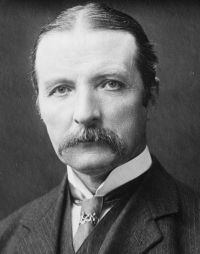 William Archer,
Play-Making: A Manual of Craftsmanship
William Archer,
Play-Making: A Manual of Craftsmanship
“ There is a large class of plays--or rather, there are several classes of plays, some of them not at all to be despised--the charm of which resides, not in probability, but in ingenious and delightful improbability. ”
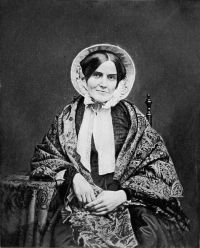 Delia Salter Bacon,
The Philosophy of the Plays of Shakspere Unfolded
Delia Salter Bacon,
The Philosophy of the Plays of Shakspere Unfolded
“ For it is the movement of the new time that makes this Play, and all these Plays: it is the spirit of the newly-beginning ages of human advancement which makes the inspiration of them; the beginning ages of a rational, instructed—and not blind, or instinctive, or demoniacal—human conduct. ”
William Archer,
Play-Making: A Manual of Craftsmanship
“ And if this be so in the case of plays which have held the stage for generations, are studied in schools, and are every day cited as matters of common knowledge, how much more certain may we be that even the most popular modern play will have to appeal night after night to a considerable number of people who have no previous acquaintance with either its story or its characters! ”
 John Ruskin,
The Crown of Wild Olive
John Ruskin,
The Crown of Wild Olive
“ There's playing at literature, and playing at art—very different, both, from working at literature, or working at art, but I've no time to speak of these. I pass to the greatest of all—the play of plays, the great gentlemen's game, which ladies like them best to play at,—the game of War. It is entrancingly pleasant to the imagination ”
Harold Brighouse, Three Lancashire Plays: The Game…
“ Nor do plays of action make the best reading. There are no plays but plays of action, but action is of many kinds, and the play whose first concern is situation and rapid physical movement is so specifically a stage-play, so sketchy in its ground-plan until the collaborators work in unison upon it, as to make reading more of a torment than a pleasure. ”
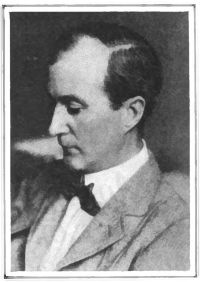 Harvey J. O'Higgins,
Don-A-Dreams
(1906)
Harvey J. O'Higgins,
Don-A-Dreams
(1906)
“ Tell me—can't you suggest something?" "Oh, a thousand things!" She laughed. "For instance, here you are, behind the scenes, watching the machinery of a play—with a college education and lots of imagination, I know. Why don't you begin to write plays?" ”
Bonamy Dobree, Timotheus; or, the future of the theatre (1925)
“ That was why plays with few words were better than plays with many words, as in the latter case the number of gestures became very tiring both to the eyes of the audience and the muscles of the actors. ”
Percy Holmes Boynton, A History of American Literature
“ As a result of this discussion he undertook to write seven plays: each for five men and two women, each holding the mien between a heightened and decorative romance and an objective and unimaginative realism, each dealing with a separate great central theme in life, each attempting a new or revived technical difficulty in play construction, and each subjected to the most rigid conformity to the dramatic unities, being written with no break in time sequence or shift of scene. ”
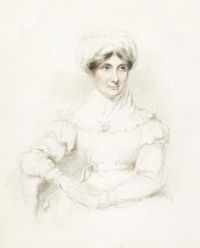 Joanna Baillie,
A Series of Plays in which it is intended to delineate The Stronger Passions of the Mind
(1798)
Joanna Baillie,
A Series of Plays in which it is intended to delineate The Stronger Passions of the Mind
(1798)
“ As the great object here is to trace passion through all its varieties, and in every stage, many of which are marked by shades so delicate, that in much bustle of events they would be little attended to, or entirely overlooked, simplicity of plot is more necessary, than in those plays where only occasional bursts of passion are introduced, to distinguish a character, or animate a scene. ”
 Brigham Young,
Discourses of Brigham Young
Brigham Young,
Discourses of Brigham Young
“ I want such plays performed as will make the spectators feel well; and I wish those who perform to select a class of plays that will improve the public mind, and exalt the literary taste of the community. ”
 Sarah Margaret Fuller,
Papers on Literature and Art
(1846)
Sarah Margaret Fuller,
Papers on Literature and Art
(1846)
“ The plays written for them, though no genuine dramas, are not without value as spectacle, and the opportunity, however lame, gives freer play to the actor’s powers, than would the simple recitation, by which some have thought any attempt at acting whole plays should be superseded. ”
 Martin Ross,
Some Experiences of an Irish R.M
Martin Ross,
Some Experiences of an Irish R.M
“ PLAYS AND BOOKS ON DRAMA NELSONS publish several hundred plays, in one act and longer, for players of all ages and all tastes—and many excellent books on drama, play-production, concerts, ballet, acting, costume, etc., etc. ”
Joanna Baillie,
Miscellaneous Plays
(1804)
“ People are in the habit of reading but one new play at a time, which by this means makes a full undivided impression upon the mind; and though we are not obliged to read all the plays of a volume, one following another, so that they must crowd, and jostle, and tread upon one another's heels ”
"Everyman," with other interludes…
“ The ten plays that follow in this volume represent in brief the late remnant of this early drama, rescued at the point where it was ending its primitive growth, soon to give way to plays written with a consciously artistic sense of the stage. ”
Richard Burton, How to See a Play
“ To one who in this way makes the effort to inform himself with regard to the things of the theater—plays, players and playwrights—concerning dramatic history both as it appertains to the drama and the theater; and concerning the intellectual as well as esthetical and human values of the theater-going experience, it will soon become apparent that it offers him cultural opportunity that is rich, wide and of ever deepening enjoyment. ”
Richard Burton, How to See a Play
“ But if the playwright have the skill and inventive power to merge the two elements of story and idea in a final act which adds stimulating material while it brings out clearly the underlying theme, then he will have performed a kind of double function of the drama. In the new technic of to-day and to-morrow this may come to be, more and more, the accepted aim of the resourceful, thoughtful maker of plays. ”
“ A play and a story blend insensibly into each other. The most fanciful plays of children rarely lose all touch with the mutual fitness and pertinency of various meanings to one another; the "freest" plays observe some principles of coherence and unification. ”
 M. E. W. Sherwood,
Home Amusements
M. E. W. Sherwood,
Home Amusements
“ In selecting a play, amateurs should try and find one, as we have said, which “plays itself.” They should not attempt those delicate and very difficult plays which only great artists can make amusing. ”
Richard Burton, How to See a Play
“ And this idea has grown along with the now very evident re-birth of a drama which, while practical stage material, has taken on the literary graces and makes so strong an appeal as literature that much of our best in letters is now in dramatic form: the play being the most notable contribution, after the novel, of our time. Leading writers everywhere are practical dramatists; men of letters, yet also men of the theater, who write plays not only to be read but to be acted, and who have conquered the difficult technic of the drama so as to kill two birds with the one stone. ”
 Eliza Ruhamah Scidmore,
Jinrikisha Days in Japan
(1891)
Eliza Ruhamah Scidmore,
Jinrikisha Days in Japan
(1891)
“ New plays, while rare, are not theatrical events, and first nights by no means indicate success or failure. The play is tried on the audience, changed, cut, and altered as actors, manager, scene-painter, carpenter, and patrons desire, without consideration of the author’s rights or feelings. ”
Elsie Hobart Carter, Christmas Candles: Plays for Boys and Girls
“ Children's plays should not be over-rehearsed. The smoothness and finish which it is right to demand of older players is hardly possible, or even desirable, for them. The charm of their acting lies in its sweet simplicity and freshness, a part of which is almost sure to be lost in any attempt at professional perfection. ”
William Archer,
Play-Making: A Manual of Craftsmanship
“ There is, indeed, a large class of plays, often popular, and sometimes meritorious, in relation to which the architectural metaphor entirely breaks down. They are what may be called "running fire" plays. ”
“ The illusion, I tell you, sir, which we've got to create for the audience....THE LEADING MAN. With our acting.THE MANAGER. The illusion of a reality.THE FATHER. I understand; but you, perhaps, do not understand us. Forgive me! You see ... here for you and your actors, the thing is only—and rightly so ... a kind of game....THE LEADING LADY (interrupting indignantly) . A game! We're not children here, if you please! We are serious actors.THE FATHER. I don't deny it. What I mean is the game, or play, of your art, which has to give, as the gentleman says, a perfect illusion of reality. ”
J. Henry Harris, Cornish Saints & Sinners
“ If one may believe, tens of thousands of [Pg 116] people used to tramp over the pathless downs to see a miracle-play, or a series of plays, performed in some natural amphitheatre. The plays speak for themselves. ”
 Bernard Shaw,
The Dark Lady of the Sonnets
Bernard Shaw,
The Dark Lady of the Sonnets
“ For this writing of plays is a great matter, forming as it does the minds and affections of men in such sort that whatsoever they see done in show on the stage, they will presently be doing in earnest in the world, which is but a larger stage. Of late, as you know, the Church taught the people by means of plays ”
Joanna Baillie,
A Series of Plays in which it is intended to delineate The Stronger Passions of the Mind
(1798)
“ A play, but of small poetical merit, that is suited to strike and interest the spectator, to catch the attention of him who will not, and of him who cannot read, is a more valuable and useful production than one whose elegant and harmonious pages are admired in the libraries of the tasteful and refined. ”
Barrett H. Clark, How to Produce Amateur Plays: A Practical Manual
“ In the main, there are three sorts of setting which may be used for practically all kinds of plays. They have been successfully tried out on numerous occasions, and few plays have been found which cannot fit at least one of them. ”
 William Shakespeare,
The Plays of William Shakspeare
(1778)
William Shakespeare,
The Plays of William Shakspeare
(1778)
“ I have preserved the common distribution of the plays into acts, though I believe it to be in almost all the plays void of authority. Some of those which are divided in the later editions have no division in the first folio, and some that are divided in the folio have no division in the preceding copies. The settled mode of the theatre requires four intervals in the play, but few, if any, of our author’s compositions can be properly distributed in that manner. An act is so much of the drama as passes without intervention of time, or change of place. A pause makes a new act. ”
Richard Burton, How to See a Play
“ When our theater has become thoroughly artistic, plays will not, as at present, be stretched out beyond the natural size, but will be confined to a shorter playing time and the evening filled out with a curtain raiser or after piece, as is now so common abroad. ”
Richard Burton, How to See a Play
“ It raises the interesting question whether the blasé modern theater world will not respond, even as did the primitive audiences of the middle ages, to plays of spiritual appeal, even of distinct didactic purpose. ”
Lewis Beach, Washington Square Plays
“ The one-act play in our country to-day is an ally of the amateurs and the innovators. For that very reason, perhaps, it is the form which will bear the most watching for signs of imagination and for flashes of insight and interpretative significance. ”
Harold Brighouse, Three Lancashire Plays: The Game…
“ But a writer of plays should be the last person in the world to resent the novelist's victory, for plays are written to be acted, and reach a full completeness only by means of the collaboration of author with producer, scene-painter, actors and, finally and essentially, audience. The author's script bears to the completed play a relationship similar to that of an architect's plan to a completed building. ”
Joanna Baillie,
Miscellaneous Plays
(1804)
“ Though I have already met with so much indulgence from the public for a work obscured with many faults, and might venture, without great mistrust, to bring before it the Plays which I now offer, unaccompanied by any previous demand upon the attention of my reader, which is generally an unwelcome thing, I must nevertheless beg for a few minutes to trespass upon his patience.—It has been and still is, my strongest desire to add a few pieces to the stock of what may be called our national or permanently acting plays, how unequal forever my abilities may be to the object of my ambition [1] . ”
Richard Burton, How to See a Play
“ For the Sheridan-Goldsmith plays a convenient edition is that in the Drama section of the Belles Lettres series of English Literature, where the representative plays of an author are printed with enlightening introductions and other critical apparatus. In becoming familiar with these aids the reader will receive the necessary hints to a further acquaintance with the more technical books which study the earlier, more difficult part of dramatic evolution, and give attention to the complex story of the development of the theater as an institution. ”
Richard Burton, How to See a Play
“ Plenty of plays fail of their full effect because the climax is come at before every ounce of value has been wrung out of preceding events. If the screen scene in The School for Scandal be studied with this principle in mind, the student will have as good an object lesson as English drama can show of skilled leading up to a climax by so many little steps of carefully calculated effect that the final fall of the screen remains one of the great moments in the theater, despite the mundane nature of the theme and the limited appeal to the deeper qualities of human nature. ”
Elsie Hobart Carter, Christmas Candles: Plays for Boys and Girls
“ They will share the spirit of adventure in the matter of obtaining or contriving the most difficult things in the way of costumes, scenery, and properties. Their inventiveness will be quickened, their hands will grow skillful, and their triumphant enjoyment of success in these preliminary labors will stimulate them to greater success in the acting of the story. In this, they will be quick to appreciate hints—frequently to offer them—as to the best ways of expressing the meaning and spirit of the play, and work with them becomes an inspiration to all alike. ”
Harold Brighouse, Three Lancashire Plays: The Game…
“ Sincerity, anyhow, may be beside the point, and the term Repertory play, though unsatisfactory, stands for something perfectly well understood. No definition would be apt to the whole body of Repertory plays, but one would like, diffidently, to suggest that Repertory plays are written by men and women of intellectual honesty who postulate that their audience will be composed of educated people—and that attempt at a definition fails. ”
Richard Burton, How to See a Play
“ For these reasons, the well wisher of the theater welcomes as most helpful and encouraging the now established habit of the prompt printing of current plays. It is no longer a reproach from the view of literature to have your play acted; it may even be that soon it will be a reproach not to have the printed play presented on the boards. The young American man of letters, like his fellow in France, may feel that a literary début is not truly made until his drama has been seen and heard, as well as read. ”
 Oscar Wilde,
Intentions
(1891)
Oscar Wilde,
Intentions
(1891)
“ In designing the scenery and costumes for any of Shakespeare’s plays, the first thing the artist has to settle is the best date for the drama. This should be determined by the general spirit of the play, more than by any actual historical references which may occur in it. ”
William Shakespeare,
The Plays of William Shakspeare
(1778)
“ The plays not having been before so much as distinguished by Acts and Scenes, they are in this edition divided according as they played them; often when there is no pause in the action, or where they thought fit to make a breach in it, for the sake of musick, masques, or monsters. ”
 Arthur Waley,
The Nō Plays of Japan
Arthur Waley,
The Nō Plays of Japan
“ No actor is on the stage, no word is uttered, but the sharp rap sounds with the thimbled finger as on a box and the stumpy little thud of the bare hands follows, or coincides, from the second drum and both players give a crooning whoop. In some way, which I can’t catch, that rhythm surely plays into the measure of the recitation when it comes and into the movements of the actors when they come. You know how people everywhere will persist in justifying the admirable in an art on the ground of the beautiful ideas it presents. ”
Joanna BaillieRichard BurtonHarold BrighouseWilliam ArcherWilliam ShakespeareBarrett H. ClarkElsie Hobart CarterLewis BeachDelia Salter BaconJ. C. SnaithBonamy DobreeJohn RuskinMartin RossSarah Margaret FullerBrigham YoungPercy Holmes BoyntonHarvey J. O'HigginsM. E. W. Sherwood John DeweyBernard Shaw
