Probability, a mathematical concept measuring the chance of events occurring on a scale from 0 to 1, has developed from philosophical speculation into a rigorous field with applications in science, economics, and philosophy. Authors such as Pierre-Simon Laplace viewed it as a method for deriving probabilities from observed data, emphasizing foundational principles. John Stuart Mill distinguished it from certainty, contending that probability indicates the strength of evidence supporting an event, rather than an intrinsic characteristic.
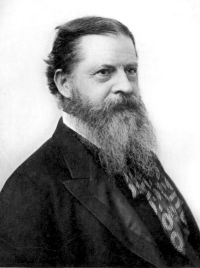
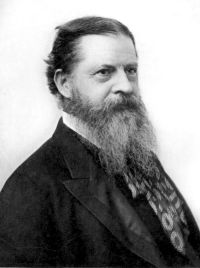
Charles Sanders Peirce underscored its dependence on both estimated probability and the depth of knowledge supporting it. These viewpoints illustrate probability as both a mathematical structure and a philosophical perspective, connecting objective computation with subjective judgment. The integration of these ideas highlights its function as a dynamic interaction between empirical data and theoretical reasoning.
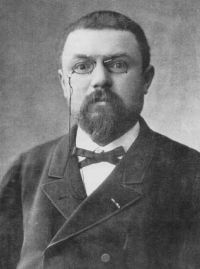 Henri Poincaré,
Science and Hypothesis
(1905)
Henri Poincaré,
Science and Hypothesis
(1905)