Charles Sanders Peirce

Charles Sanders Peirce

Summary

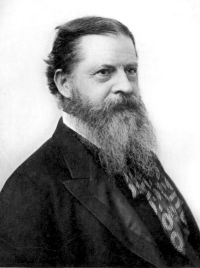
Portrait of Charles Sanders Peirce Charles Sanders Peirce Popular Science Monthly (1877)

The peaceful and sympathetic man will, therefore, find it hard to resist the temptation to submit his opinions to authority. But most of all I admire the method of tenacity for its strength, simplicity, and directness. Men who pursue it are distinguished for their decision of character, which becomes very easy with such a mental rule. They do not waste time in trying to make up their minds what they want, but, fastening like lightning upon whatever alternative comes first, they hold to it to the end, whatever happens, without an instant's irresolution.
Source: Wikisource

Portrait of Charles Sanders Peirce Charles Sanders Peirce Popular Science Monthly (1877)

These minds do not seem to believe that disputation is ever to cease; they seem to think that the opinion which is natural for one man is not so for another, and that belief will, consequently, never be settled. In contenting themselves with fixing their own opinions by a method which would lead another man to a different result, they betray their feeble hold of the conception of what truth is.
Source: Wikisource

Portrait of Charles Sanders Peirce Charles Sanders Peirce Popular Science Monthly (1877)

But before asking that question he ought to have asked the more general one, "How are any synthetical judgments at all possible?" How is it that a man can observe one fact and straightway pronounce judgment concerning another different fact not involved in the first? Such reasoning, as we have seen, has, at least in the usual sense of the phrase, no definite probability; how, then, can it add to our knowledge? Tins is a strange paradox; the Abbé Gratry says it is a miracle, and that every true induction is an immediate inspiration from on high.
Source: Wikisource

Get perspective with Kwize: daily news enlightened by great literature