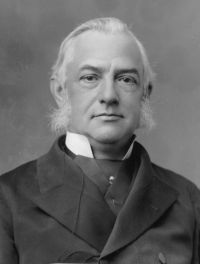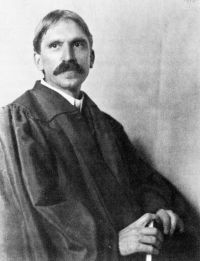
“ If I doubt whether a certain handful gives a fair sample, or representative, for purposes of judging value, of a whole carload of grain, I take a number of handfuls from various parts of the car and compare them. If they agree in quality, well and good; if they disagree, we try to get enough samples so that when they are thoroughly mixed the result will be a fair basis for an evaluation. This illustration represents roughly the value of that aspect of scientific control in induction which insists upon multiplying observations instead of basing the conclusion upon one or a few cases. ”
Sample
Definition and stakes
The concept of a "sample" refers to a representative portion used to infer characteristics of a larger whole, serving as a foundational element in analysis, philosophy, and practical application. Authors have explored this theme through varied perspectives: John Dewey emphasized its role in scientific induction, advocating for multiple observations to ensure reliability, while Henri Amiel viewed individual experience as a "specimen of general value," bridging personal and universal insights.
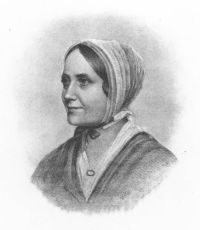
Charles Fort connected samples to the interconnectedness of all phenomena, suggesting that any sample reflects underlying unity. Meanwhile, Eliza Lee Cabot Follen humorously depicted "samples" as literal portions of goods, contrasting with technical contexts like Arthur Jennings’ focus on comparative standards in paint testing. These diverse approaches underscore the sample’s dual role as both a methodological instrument and a metaphor for understanding broader realities.
Quotes about “sample”
Henri Frédéric Amiel, Amiel's Journal: The Journal Intime of Henri-Frédéric Amiel
“ What interests me in myself, in spite of my repulsions is, that I find in my own case a genuine example of human nature, and therefore a specimen of general value. The sample enables me to understand a multitude of similar situations, and numbers of my fellow-men. ”
Charles Fort,
The Book of the Damned — Chapter 3
“ Our Intermediatist concept is that, because of the continuity of all "things," which are not separate, positive, or real things, all pseudo-things partake of the underlying, or are only different expressions, degrees, or aspects of the underlying: so then that a sample from somewhere in anything must correspond with a sample from somewhere in anything else. ”
Washington Gladden,
The Church and Modern Life
“ What we need, then, first of all, to convince men of its reality, is a good sample of it, in active operation--a great variety of good samples, indeed. When we have these to show, we can get people interested. ”
C. Beringer, A Text-book of Assaying: For the Use of Those Connected with Mines
“ With a well-taken sample, we may rely on a great majority of our results falling within normal limits of error; but nothing can be more certain than that, in a moderately large experience we shall get, now and again, deviations much more considerable. ”
Mihai Nadin, The Civilization of Illiteracy
“ Others will follow the path of deduction, noticing general patterns and seeing how they apply in concrete cases. Others will follow abductions, i.e., applying knowledge about a representative sample in order to infer for a broader collection of facts or processes. ”
Eliza Lee Cabot Follen,
Who Spoke Next
“ They say that he almost lives upon samples." "Lives upon samples? What does that mean? I never heard of such a thing. What kind of victuals is samples?" "Why, Lois Ward, don't you know what a sample is? Why, he goes to a shop, and he asks for samples of all the different kinds of sugar, and so of tea and coffee, and he makes these last a great while, and then he goes to another, and does the same thing; and, when he thinks they know his tricks, he walks clear over to another town after samples; and so he lives upon almost nothing. ”
Arthur Seymour Jennings, Paint & Colour Mixing
“ It is important to notice that in all cases of practically testing paints the results are obtained by comparisons being made, and hence it is necessary in every case to have a standard with which to compare the sample to be tested. ”
U.S. Census Bureau, Geographic Areas Reference Manual (1994)
“ By contrast, the PUMS files use a sample of raw data for areas of 100,000 or greater population; PUMS areas typically comprise large cities, groupings of counties, or remainders of counties. From these samples, the data users can select and manipulate specific responses to create customized decennial census tabulations in much the same way as if they had collected the information in their own census or sample survey. Strictly speaking, the PUMS microdata areas are not official geographic units, as the Census Bureau provides neither totals nor summary information for them. ”
Marcus B. Huish, Samplers and Tapestry Embroideries
“ It is true that the feature of samplers which, perhaps, interests and amuses persons most is the quaint and incongruous legends that so many of them bear, but I shall, I believe, have quite sufficiently illustrated this aspect of the subject if I divide it into various groups, and give a few appropriate examples of each. ”
Leta S. Hollingworth, Special talents and defects (1923)
“ The application of quantitative methods to the study of mental functions as thus defined, quickly revealed the fact that human beings, sampled at random, in large numbers, do not fall into distinct types. ”
Henry James, Notes on Novelists, with Some Other Notes
“ This is exactly why illustration breaks down when reference, otherwise application, runs short, and why before any assemblage of figures or aspects, otherwise of samples and specimens, the question of what these are, extensively, samples and specimens of declines not to beset us—why, otherwise again, we look ever for the supreme reference that shall avert the bankruptcy of sense. ”
National Institute for Occupational Safety and Health, NIOSH Manual of Analytical Methods… (1994)
“ For instance, if one is trying to show compliance with an 0.5 fiber/mL standard using a single sample on which 100 fibers have been counted, then Figure 1 indicates that the 0.5 fiber/mL standard must be 213% higher than the measured air concentration. This indicates that if one measures a fiber concentration of 0.16 fiber/mL (100 fibers counted) , then the mean fiber count by a group of laboratories (of which the compliance laboratory might be one) has a 95% chance of being less than 0.5 fibers/mL ”
National Institute for Occupational Safety and Health, NIOSH Manual of Analytical Methods… (1994)
“ SF 6* into sample bag containing a metered volume of clean air. Compressed argon or other gas* at approximately 30 psi for use as carrier gas. See SPECIAL PRECAUTIONS. 1. Portable gas chromatograph (GC) , with electron capture detector, gas sampling loop if desired (use of loop will limit variability of injection volume and therefore restrict range of method) , and strip chart recorder if appropriate. 2. Personal sampling pump, 0.02 to 1 L/mim or other rate suitable for filling sample bags, with flexible connecting tubing. NOTE: Pumps lubricated with petroleum products should not be used. ”
William Whewell,
Novum organon renovatum
(1858)
“ Manipulation.—The process of applying practically methods of experiment and observation, is termed Manipulation; and the value of observations depends much upon the proficiency of the observer in this art. This skill appears, as we have said, not only in devising means and modes in measuring results, but also in inventing and executing arrangements by which elements are subjected to such conditions as the investigation requires: in finding and using some material combination by which nature shall be asked the question which we have in our minds. ”
William Larminie, West Irish folk-tales and romances (1893)
“ When, however, we come to an actual survey of the material, certain appearances present themselves which lead us to expect that, possibly, a large part of our gain will accrue from the observation of the differences which characterise different parts of the material within itself. ”
Herbert Spencer,
Popular Science Monthly
(1873)
“ Beyond those vitiations of evidence due to random observations, to the subjective states of the observers, to their enthusiasms, or prepossessions, or self-interests beyond those that arise from the general tendency to set down as a fact observed what is really an inference from an observation, and also those that arise from the general tendency to omit the dissection by which small surface results are traced to large interior causes there come those vitiations of evidence consequent on its distribution in Space. ”
George Hastings McNair, A Class Room Logic
“ In observation we simply watch the phenomenon; in experiment we make it. In experiment we not only observe, but we manipulate the circumstances so as to present the phenomenon under the most favorable conditions for observation. ”
John Stuart Mill,
A System of Logic, Ratiocinative and Inductive
(1881)
“ On Observation and Experiment. § 1. It results from the preceding exposition, that the process of ascertaining what consequents, in nature, are invariably connected with what antecedents, or in other words what phenomena are related to each other as causes and effects, is in some sort a process of analysis. That every fact which begins to exist has a cause, and that this cause must be found in some fact or concourse of facts which immediately preceded the occurrence, may be taken for certain. ”
John Stuart Mill,
A System of Logic, Ratiocinative and Inductive
“ Observation extends only to the sensations by which we recognize objects; but the propositions which we make use of, either in science or in common life, relate mostly to the objects themselves. In every act of what is called observation, there is at least one inference—from the sensations to the presence of the object ”
Gustave Lemattre, Popular Science Monthly (1873)
“ In our day the true method, the method of observation, is rightly honored, and scientific questions, no longer agitated with mere parade of eloquence, are modestly studied by their facts in the seclusion of laboratories. ”
Josiah Parsons Cooke Jr., Popular Science Monthly (1875)
“ Science offers us not only a mass of phenomena to be observed, but also a body of truths which have been deduced from these observations; and, without the power of drawing correct inferences from the data acquired, exact observations would be of little value. I have already described the inductive method of reasoning, and illustrated it by two noteworthy examples, and, in a humbler measure, we must apply the same method in our daily work in the laboratory. ”
Robert Sessions Woodworth,
Psychology
“ What is true of tests in differential psychology is true of the majority of experiments in general psychology: the performer is one person, the observer another, and the observation is objective in character. ”
Alfred Stillé,
The Essentials of the Art of Medicine
(1897)
“ But clinical, experimental, and, indeed, every form of observation is intended not only to preserve a photographic picture of bare facts, but also to produce a special grouping and sequence of facts that will demonstrate their natural and logical interdependence and their relation to the end or purpose for which their investigation is made. ”
William Hazlitt, The Collected Works of William Hazlitt…
“ The difficulty and the charm of the combination begins with the truth of imitation, that is, with the resemblance to a given object in nature, or in other words, with the strength, coherence, and justness of our impressions, which must be verified by a reference to a known and determinate class of objects as the test. ”
David C. Taylor, The Psychology of Singing
“ CHAPTER I THE MEANS OF EMPIRICAL OBSERVATION OF THE VOICETo all knowledge obtained through the observation of facts and phenomena, the term empirical is properly applied. Empirical knowledge must be the basis of every science. To be available in forming a science, empirical knowledge of a subject must be so carefully gathered that all probability of error is eliminated ”
George Jacob Holyoake,
A Logic of Facts; Or, Every-day Reasoning
“ Discursive observation and experiment are the sources of facts or particular truths. Nature, poetically says Dr. Reid, is put to the question by a thousand observations and experiments, and forced to confess her secrets. ”
F. Max Müller,
Lectures on the Science of Language
“ The object of classification is clear. We understand things if we can comprehend them; that is to say, if we can grasp and hold together single facts, connect isolated impressions, distinguish between what is essential and what is merely accidental, and thus predicate the general of the individual, and class the individual under the general. This is the secret of all scientific knowledge. Many sciences, while passing through this second or classificatory stage, assume the title of comparative. ”
George Gore, The Scientific Basis of National Progress…
“ In each of these subjects, we first, either with or without the aid of experiment, make observations, record facts, compare them, and draw conclusions from our comparisons; we also group the facts, and the conclusions, in every possible way, and then draw other conclusions; we also analyse, combine, and permutate the various truths arrived at, and cross examine the evidence in every possible manner in order to extract from it the greatest amount of new knowledge. ”
Carveth Read, Logic: Deductive and Inductive
“ To this subject we shall return in chap. xix., after treating of Methodical Induction, or the means of determining that a relation of events is of the nature of cause and effect, because the relation can be shown to have the marks of causation, or some of them.§ 5. Observations and Experiments are the material grounds of Induction. An experiment is an observation [Pg 199] made under prepared, and therefore known, conditions; and, when obtainable, it is much to be preferred. Simple observation shows that the burning of the fire depends, for one thing, on the supply of air ”
Donald Mackenzie Wallace,
Russia
“ Vague general phrases, founded on a priori reasoning rather than on observation, together with a few statistical tables—which the cautious investigator should avoid as he would an ambuscade—are too often all that is to be found. ”
H. G. Wells,
The Invisible Man
(1897)
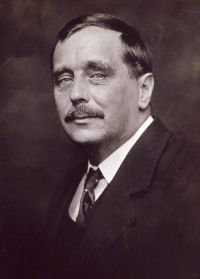
“ I got nearer and nearer making my formula into an experiment, a reality. I told no living soul, because I meant to flash my work upon the world with crushing effect and become famous at a blow. I took up the question of pigments to fill up certain gaps. ”
Edwin Sidney Hartland, The Science of Fairy Tales (1891)
“ It is the absence of direct evidence that, not only in the science of Folklore, but also in the physical sciences, causes resort to the evidence afforded by comparison of other structures and processes. ”
Josiah Willard Gibbs,
Elementary Principles in Statistical Mechanics
(1902)
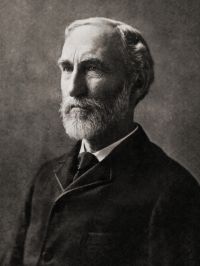
“ To human observation the effect would be, that in ensembles in which and had certain critical values, would be indeterminate within certain limits, viz., the values which would correspond to values of and slightly less and slightly greater than the critical values. ”
William Walker Atkinson,
The Art of Logical Thinking; Or…
“ We have first, as we have seen, the presentation of the crude material from which the concept must be formed. Our attention being attracted to or directed toward an object, we notice its qualities and properties. Then we begin a process of comparison of the object perceived or of our perception of it. We compare the object with other objects or ideas in our mind, noting similarities and differences and thereby leading towards classification with similar objects and opposed dissimilar ones. ”
James Frederick Ferrier,
Blackwood's Magazine
(1843)
“ We bring the matter to the test or actual experiment. We make certain experiments, seriatim, upon each of the items that lie within the sentient sphere, and we note the effect which each experiment has upon that portion of the contents which is not meddled with. ”
Bertrand Russell,
The Analysis of Mind — Lecture VII: The Definition of Perception
(1921)
“ The first plan tells us what he does; the second the impressions he produces. This second way of classifying particulars is one which obviously has more relevance to psychology than the other. It is partly by this second method of classification that we obtain definitions of one "experience" or "biography" or "person." This method of classification is also essential to the definition of sensations and images, as I shall endeavour to prove later on. But we must first amplify the definition of perspectives and biographies. ”
John Stuart Mill,
A System of Logic, Ratiocinative and Inductive
(1881)
“ There are only two modes in which laws of nature can be ascertained--deductively and experimentally; including under the denomination of experimental inquiry, observation as well as artificial experiment. Are the laws of the formation of character susceptible of a satisfactory investigation by the method of experimentation? ”
George D. Strayer, A brief course in the teaching process (1911)
“ It is always advisable to test the success of the observations while they are being made. There is nothing more difficult than to correct a misconception growing out of careless or inadequate observations.6. It is well to remember that not merely number of observations counts in the solution of a problem. It is rather observations under varying conditions which give weight to our conclusions. One intensive observation may be worth a thousand careless ones. ”
“ In short, observation becomes scientific in nature. Of such observations it may be said that they should follow a rhythm between the extensive and the intensive. Problems become definite, and suggested explanations significant by a certain alternation between a wide and somewhat loose soaking in of relevant facts and a minutely accurate study of a few selected facts. ”
Antoine Lavoisier,
Elements of Chemistry
(1790)
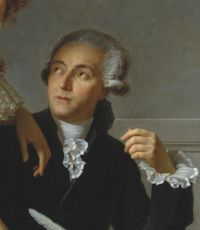
“ We must trust to nothing but facts: These are presented to us by Nature, and cannot deceive. We ought, in every instance, to submit our reasoning to the test of experiment, and never to search for truth but by the natural road of experiment and observation. ”