Summary

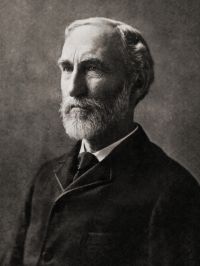
Portrait of Josiah Willard Gibbs Josiah Willard Gibbs Elementary Principles in Statistical Mechanics (1902)

In the cases which we have been considering, and in those which we shall consider, it is not only possible to conceive of the motion of an ensemble of similar systems simply as possible cases of the motion of a single system, but it is actually in large measure for the sake of representing more clearly the possible cases of the motion of a single system that we use the conception of an ensemble of systems. The perfect similarity of several particles of a system will not in the least interfere with the identification of a particular particle in one case with a particular particle in another.
Source: Wikisource

Portrait of Josiah Willard Gibbs Josiah Willard Gibbs Elementary Principles in Statistical Mechanics (1902)

When we wish to give a body a certain temperature, we place it in a bath of the proper temperature, and when we regard what we call thermal equilibrium as established, we say that the body has the same temperature as the bath. Perhaps we place a second body of standard character, which we call a thermometer, in the bath, and say that the first body, the bath, and the thermometer, have all the same temperature.
Source: Wikisource

Portrait of Josiah Willard Gibbs Josiah Willard Gibbs Elementary Principles in Statistical Mechanics (1902)

It would seem, therefore, that we might find a sort of measure of the deviation of an ensemble from statistical equilibrium in the excess of the average index above the minimum which is consistent with the condition of the invariability of the distribution with respect to the constant functions of phase. But we have seen that the index of probability is constant in time for each system of the ensemble. The average index is therefore constant, and we find by this method no approach toward statistical equilibrium in the course of time.
Source: Wikisource

Get perspective with Kwize: daily news enlightened by great literature